

Community run safari camps in Botswana are camps on land held by a local trust, where residents share in the income from tourism. Some are owned and staffed by the community, and others are operated by a safari company under an agreement with the trust. For travelers, they offer a Botswana safari experience that sits close to a national park but often feels quieter, with fewer crowds and a more personal feel.
This guide explains how the model works, why it matters, and what to ask before you book. Details differ from trust to trust, so confirm specifics with your operator. Our wider Botswana safari guide covers the rest of your planning.
A community trust holds the land and shares the income
In a typical arrangement, a group of villages forms a trust. The trust receives rights to use an area of land for wildlife tourism, then leases it to a safari company or runs camps itself. Fees, lease payments, and wages can flow back to the people living nearby. Community trusts manage wildlife concessions and often run sustainable, low-impact campsites.
This approach is known as community-based natural resource management. Local communities hold legal rights to manage and benefit from wildlife resources, which is why Botswana is often described as a leader in community-based tourism.
According to a paper by an officer of Botswana’s Department of Wildlife and National Parks, collaborative management with communities dates back to 1989, when a pilot project began with communities in the Chobe Enclave. The same paper says the pilot’s success led the government to expand the idea into a countrywide program.
The money can support local jobs and services, such as clinics, schools, or support for local businesses. How it is spent is decided by each trust, so ask your operator rather than assume.
Direct income gives people a reason to protect wildlife
The idea is simple. When wildlife brings direct financial benefits to local communities, people have a reason to protect it. Elephants, lions, leopards, buffalo, and wild dogs become assets rather than problems for farmers and herders, and that can help deter poaching.
The stakes are large. According to the 2022 KAZA elephant survey, Botswana holds about 132,000 elephants, the biggest national population in the region.
Direct economic benefits from ecotourism can also support local development and infrastructure. How much reaches each household depends on the trust.
Khwai shows how a community area can sit beside the Okavango Delta
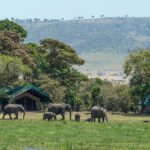
Khwai sits on the northern edge of Moremi Game Reserve and is known for community involvement in tourism. Travelers come for the river, the floodplains, and the chance to see predators such as lions, leopards, and cheetah, and for large herds of elephants. The area is part of the wider Okavango Delta landscape, so wildlife moves freely between the reserve and the community land. UNESCO inscribed the Okavango Delta as its 1,000th World Heritage site in June 2014.
Camps here range from simple to upscale, and their location shapes the scenery, from river views to quieter bush settings with welcome shade. Because the land is not inside the reserve boundary, the rules can differ. Ask each camp what activities it offers, since game drives, walking, night drives, and mokoro outings depend on the camp and the current regulations.
Mokoro safaris offer unique water-level wildlife viewing, and time near a lagoon or channel can bring hippos and birds. Each stay brings its own sense of adventure. Nearby areas such as Savuti and Linyanti are also worth comparing when you plan a route.
The Makgadikgadi Pans region has community-linked projects too
The salt pans region has its own mix of private and community-linked tourism. The Makgadikgadi Pans are known for open horizons, seasonal zebra movements, and striking scenery, with room to explore at a slower pace. Some experiences in the wider region involve local communities as guides, trackers, or partners.
Ownership is not always obvious from a brochure, so ask directly. Remote areas elsewhere in the country, including the Central Kalahari, also have lodges and camps with varied ownership.
A community camp can feel different from a large safari lodge
A typical community camp is small and offers an immersive nature experience. You may stay in simple tents or in more comfortable tented accommodations, and luxury tented camps combine comfort with close wildlife encounters. For a closer look at the trade-offs, see our guide to lodges vs tented camps.
Meals are often shared, with breakfast before an early morning game drive and a late afternoon outing after rest and tea. Many guests spend the middle of the day relaxing at camp, looking through photos, before dinner and drinks. Some camps serve local beverages, and a few offer extras such as photographic hides or horse riding, so ask what is available.
A big safari lodge may offer guests a pool, a spa, and a wider menu. A community camp may offer something else: authentic cultural experiences, time with a guide who grew up nearby, a wilderness setting with fewer vehicles, and front row seats in a wonderful place. Neither is better, so choose the style that fits your trip.
The practical trade-offs matter too. Community camps may have simpler facilities, fewer staff, and less choice at meals, while a large lodge usually offers more amenities and a wider range of activities.
Community camps often cost less, but not always
Because the land is outside national parks, a community camp can offer good wildlife at a lower price than a luxury lodge. That is not a rule. Some community-linked camps are high end, and some private camps are modest.
Parks cover only part of the picture. Botswana’s national biodiversity strategy says about 17 percent of the country is national parks and game reserves, and that adding wildlife management areas and forest reserves brings protected land to about 40 percent.
Prices, trust fees, and park or concession fees change from year to year, so confirm them with your operator. For context on what drives costs, see our Botswana safari cost guide and our comparison of luxury vs budget camps. The choice between a concession and a park is covered in private concessions vs national parks.
Your visit supports guides, trackers, and local jobs
When a camp employs people from nearby villages, your money stays closer to home. Local communities can take part as guides and hospitality staff, and guides and trackers from the area often carry deep knowledge of animal behavior and seasonal patterns. A camp team made up largely of people from the surrounding villages is a good sign.
How to choose a community run camp for your Botswana safari experience
Not every camp that uses the word community is run by one. The focus of your research should be who holds the rights and who decides how the income is used. Use these questions to choose well:
- Who owns the camp, and who holds the lease?
- Is the trust involved in decisions about the camp, and how are trust fees shared?
- How are staff hired, and how many come from nearby villages?
- Do staff have training and career paths?
- What activities are allowed in this area?
- Does the camp limit vehicles at sightings?
- What does a sample itinerary look like, including transfers to and from the airport?
A good operator will answer plainly. If answers are vague, keep looking.
Where to place a community camp in your itinerary, from Chobe to Cape Town
Community areas work well as one stop in a longer trip. You can fly in or depart by road from Maun or Kasane, and easy access to an airstrip or road can shape which camp suits you. A few nights near Khwai can sit between the Okavango Delta and Chobe National Park, which is famous for its large elephant population. Combining areas makes for a richer journey.
Longer itineraries can also combine Botswana with Victoria Falls, Cape Town, or Zimbabwe as part of a wider southern Africa trip. For more ideas, see things to do in Botswana and our notes on mobile camping safaris.
The dry season runs roughly May to October, and game viewing is often at its best then, since animals gather near water. The Okavango Delta floods roughly June to August. The green season, roughly November to April, brings lush landscapes and bird migrations. Exact timing varies from year to year, so check our best time to visit Botswana for safari guide and confirm conditions with your operator before you set dates.
FAQ
What is a community run safari camp?
It is a camp on land held by a local trust, where residents share in the income. Some are fully community owned, while others are run by a private operator under agreement with the trust.
Are community camps cheaper than private lodges?
Often, but not always. Prices vary by camp, season, and fees, so confirm current rates with your operator.
Can you see big game at community camps?
Yes, in areas like Khwai, wildlife moves between park and community land. Sightings are never guaranteed.
How do I know a camp truly benefits the community?
Ask who owns it, how staff are hired, how fees are shared, and whether the trust is involved in decisions. Clear, specific answers are a good sign.
What is the difference between a community camp and a private lodge?
A community camp is tied to a local trust that holds land use rights, while a private lodge is owned and run by a company. Many community camps are run in partnership between the two.
Practical tips
- Ask about trust fees and what they fund.
- Book through an operator that can explain the ownership model.
- Tip guides and staff fairly.
- Respect local rules on photography of people and villages.
- Confirm activities, vehicle limits, and fees before you pay.
- Confirm how you will reach camp, whether by air transfer or by road.