
Key Takeaways
Moremi Game Reserve sits on the eastern Okavango Delta and covers roughly 5,000 square kilometers. Game viewing peaks during the dry season from May to October, when wildlife concentrates around permanent water.
Most visitors fly from Maun by light aircraft into camps like Camp Moremi, Camp Xakanaxa, or Chief’s Camp for guided game drives, boat excursions, and mokoro outings.
The reserve protects all of Africa’s Big Five, including reintroduced rhinos and endangered African wild dogs, with strong predator sightings around Chief’s Island and the Khwai River.
Moremi pairs well with Chobe National Park and private concessions such as Khwai Private Reserve, adding night drives, walking safaris, and riverfront wildlife to a longer itinerary.
Three nights is the minimum recommended stay; booking well ahead is standard for high season.
Moremi Game Reserve anchors the Okavango safari experience
Moremi Game Reserve is located in the eastern portion of the Okavango Delta in Botswana, and it delivers some of the most reliable wildlife sightings in southern Africa. If you want to visit Moremi Game Reserve for the first time or return for a deeper look, this is the protected area where classic Delta safaris begin.
The reserve was established in 1963 by the local Batawana community under the leadership of Chief Moremi III. It was the first wildlife sanctuary in Africa to be established by an indigenous community, created in direct response to declining game from hunting and overgrazing.
Moremi is the main officially protected area within Botswana’s Okavango Delta. Its incredible landscapes, from permanent waterways and seasonal floodplains to mopane forests and acacia forests, create a patchwork of habitats that supports a vast number of species. This is not a once-off destination. Most Trav Heir travelers treat the Moremi area as a hub, pairing it with nearby private concessions and parks for a complete safari circuit through northern Botswana.
Location, layout, and how the ecosystems fit together
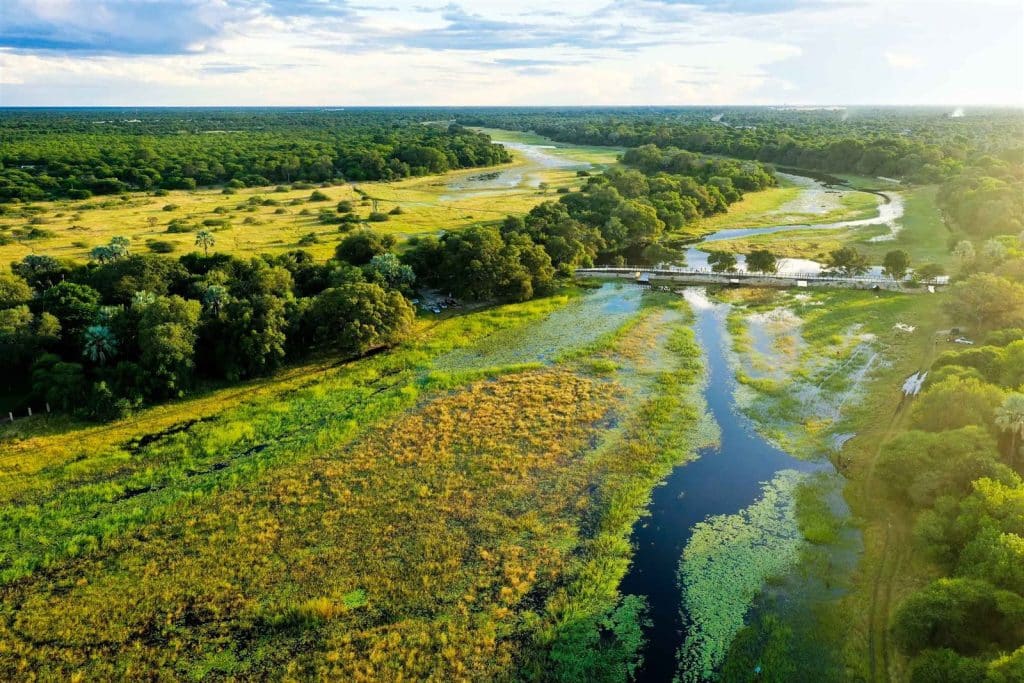
Moremi covers roughly 5,000 square kilometers on the Okavango Delta’s eastern and central islands. The park features diverse ecosystems including floodplains and woodlands. Here is how the reserve’s geography breaks down:
Chief’s Island is the largest dry-land island in the Delta, created by tectonic uplift. It holds much of the reserve’s predator and rhino density, with higher ground that stays accessible even when flood waters peak.
The Moremi Tongue and Xakanaxa region form the watery heart of the reserve. Xakanaxa Lagoon, reed beds, and deeper channels define this zone, known for boat-based game viewing and bird watching.
The Khwai River runs along the reserve’s northern boundary. On the opposite bank sit the Khwai Community Concession (NG19) and Khwai Private Reserve (NG18), both offering activities that the public reserve restricts.
South Gate provides the primary self-drive entry from Maun, along a long sandy track. North Gate connects to the Khwai area. Both gates require advance campsite bookings.
Third Bridge, located between the two gates along the Moremi Tongue, is a popular campsite and a crossing point over one of the delta waterways.
The reserve is accessible from Maun, which serves as the main gateway to the Okavango Delta. Fly in safaris by light aircraft bring most lodge guests directly to airstrips near their camps.
Wildlife in Moremi rewards patient game viewing
The reserve is renowned for its high biodiversity and concentration of wildlife. What you actually see on a given day depends on water levels, the season, and the skill of your guide. Moremi is not a zoo; large predators are tracked by spoor, vocalizations, and knowledge of natural water sources rather than by radio tip-offs alone.
Wildlife sightings include elephants, lions, and leopards, along with buffalo, hippos, giraffes, zebras, wildebeest, cheetahs, spotted hyenas, and reintroduced white and black rhinos. The reserve is home to all of Africa’s Big Five when you combine it with adjacent concessions where night drives improve chances for leopard viewing.
Moremi is a key location for viewing African wild dogs, an endangered species. Packs are regularly tracked around Chief’s Island and along the Khwai River during the dry season.
Moremi Game Reserve supports hundreds of bird species. On an early morning boat cruise around Xakanaxa, you can expect to see African fish eagles, herons, kingfishers, wattled cranes, and seasonal water birds. Birders rate the wet months for breeding plumage and migratory arrivals.
Beyond big cats and wild dogs, other game such as red lechwe and roan antelope inhabit grassy plains and seasonal pans that few reserves elsewhere in the region can match.
Dry and green seasons reshape your Moremi experience
The dry season and the green season produce two different safaris in the same place. The best time to visit is May to October, when wildlife viewing is optimal during the dry season. Dry months improve visibility and predator sightings because grasses thin out and more animals gather at permanent water.
During the dry season, flood waters from Angola fan through the Okavango Delta between roughly June and August. This paradox of rising water without rain pushes wildlife onto islands such as Chief’s Island and along permanent waterways. The high season from July to October is widely regarded by operators as the peak window for a Moremi safari. September and October, just before rains return, compress game around shrinking water sources, creating spectacular predator-prey encounters in open grasslands.
The green or wet season splits into two phases. Early wet season runs from November to January, bringing the first rains, calving antelope, and dramatic afternoon skies. The peak wet season is from February to April, when tall grasses obscure sightlines and wildlife disperses across the floodplains. Photographers prize the green months for vivid colors, cloud formations, and breeding bird activity, though some tracks become impassable due to water crossings and mud.
Predator sightings remain possible year-round, but calving season in early summer draws lions and hyenas to birthing grounds. If photographic light and mammal density matter most, plan around July through October. If bird watching and solitude appeal, the green season drops visitor numbers and lodge rates.
Safari activities in Moremi go beyond standard game drives
Moremi Game Reserve offers a range of safari activities including game drives, mokoro excursions, and boat safaris. What you can do depends on whether you stay inside the public reserve or in a neighboring private area.
Game drives at dawn and late afternoon are the core activity inside the reserve. Vehicles follow existing roads; off-roading is prohibited. Guides navigate sandy tracks, combining mopane woodland routes with open floodplain loops depending on seasonal access.
Boat excursions on channels and lagoons around Xakanaxa and Camp Moremi reveal hippos, crocodiles, and water-adapted antelope in the reeds. These run in areas with permanent water and are available at camps positioned on navigable channels.
Mokoro excursions provide a unique perspective of the delta while observing aquatic wildlife. Poled by experienced guides through calmer backwaters, these outings focus on frogs, waterlilies, and birdlife at water level.
Walking safaris and night drives take place in adjacent private concessions like Khwai Private Reserve rather than within the public reserve itself. Concession rules also permit off-road tracking, which makes a difference when following wild dogs or leopards through mopane woodland.
Visitors can experience both land-based and water-based safari activities in Moremi. A multi-camp itinerary that balances vehicle, boat, mokoro, and walking perspectives comes closest to a perfect safari in this part of the Delta.
Key areas: Chief’s Island, Xakanaxa, and the Khwai River
Each zone within the wider Moremi area has a distinct character. Splitting time between at least two of them over four to six nights reveals how wildlife shifts between islands, rivers, and woodland.
Chief’s Island is where predator sightings peak. Lions, leopards, cheetahs, and wild dogs concentrate on this landmass, and rhino tracking is a realistic activity. Lodges here, including Chief’s Camp and Mombo Camp, sit in private concessions on or adjacent to the island and offer an exclusive safari experience with low vehicle density.
Xakanaxa and Camp Xakanaxa occupy the classic water-and-land zone. Year-round lagoons make this region productive for boat excursions, hippo viewing, and fish eagle sightings. Game drives fan out into surrounding mopane woodland and along the Gomoti River floodplain.
Camp Moremi sits near Xakanaxa Lagoon in a forested setting. It combines strong big-cat and elephant game viewing with easy access to permanent water. Guests here often report an amazing experience watching elephants move through camp at dusk.
The Khwai River area on the reserve’s eastern edge is a hotspot for elephants, African wild dogs, and leopards. Where the Khwai Community Concession and Khwai Private Reserve meet the park boundary, animals cross freely. Local communities manage some of the concession camps, and their guides know the Khwai floodplain intimately.
Choosing where to stay in and around Moremi
Moremi camps range from intimate tented properties to top-tier lodges, each shaping your daily rhythm. Accommodation choice determines which activities you can access, how many vehicles share a sighting, and how early your morning starts. Rates vary widely by season and camp, so request current quotes from operators before you plan a budget.
Inside the reserve:
Camp Moremi offers lodge-style accommodation in forested surroundings near Xakanaxa Lagoon.
Camp Xakanaxa provides a water-and-land base with game drives and boating from its lagoon position.
Chief’s Island and surrounds:
Chief’s Camp focuses on predator and rhino tracking in a high-end setting with spacious suites.
Mombo Camp is a luxury stay widely regarded as one of the top game viewing lodges in southern Africa.
Xigera Safari Lodge features luxurious accommodation on the western side of the Delta, with a swimming pool and private deck overlooking the floodplain.
Khwai concessions:
Sable Alley and Little Sable Camp sit in Khwai Private Reserve. Little Sable Camp offers tented accommodation with night drives and walking safaris included.
Khwai Guest House provides more affordable stays for travelers seeking warm hospitality at a lower price point.
Some lodges now provide Wi-Fi in common areas, though connectivity varies. Most Moremi camps keep the focus on the bush rather than the screen.
Planning your Moremi safari itinerary with Trav Heir insight
Most Trav Heir travelers spend at least three nights in or near Moremi, often as part of a longer Botswana circuit. Three nights is the minimum recommended stay for a safari, but four to five nights split between a water-rich area such as Xakanaxa and a drier, predator-heavy island like Chief’s Island reveal far more.
Book your safari well in advance. Moremi camps have limited rooms, and high season fills quickly.
Access: Scheduled light aircraft flights from Maun deliver guests to airstrips near Camp Moremi, Camp Xakanaxa, or Chief’s Island. Safari operators coordinate flight legs, park permits, and daily routing, especially during high-water months when some roads become impassable.
Pairing destinations: Adding Chobe National Park for two to three nights brings riverfront elephant herds and a completely different landscape. Khwai Private Reserve adds walking safaris and night drives that the public reserve does not permit.
For families and first-timers: Work with a Botswana specialist who understands seasonality and camp age policies rather than planning by map distance alone. The difference between a good trip and a perfect safari often comes down to camp sequencing and seasonal timing.
Responsible travel and conservation in Moremi
Moremi’s creation in the 1960s followed community concerns about wildlife declines. The reserve was the first protected area in Africa proclaimed by local residents, and that community ethic still shapes conservation in the region. Moremi is recognized for its conservation efforts in protecting endangered wildlife and habitats.
Today, local communities benefit from tourism through the Khwai Community Concession, where some camps are partly community-owned and revenue flows back into village services. Ongoing monitoring of rhinos and African wild dogs around Chief’s Island involves conservation groups active in the Okavango.
Practical low-impact advice for visitors:
Stay on designated roads inside the reserve.
Keep quiet at sightings; avoid standing up in the vehicle or calling to animals.
Follow guide instructions around sensitive species, especially denning wild dogs and nesting birds.
Choose camps with stated sustainability and community commitments to help keep Moremi wild for future travelers.
Frequently asked questions about Moremi Game Reserve
These FAQs cover practical details not fully addressed above, aimed at travelers finalizing their plans.
Is Moremi Game Reserve suitable for a first-time safari?
Moremi is well suited to first-time visitors. Lodges provide guided game drives, transfers, clear safety briefings, and all meals. The wildlife density offers strong chances of seeing big game without needing prior bush experience. For a first Moremi safari, pairing the reserve with one concession or Chobe National Park builds variety without complicated logistics.
Can I self-drive in Moremi, or should I only use guided camps?
Self-driving is possible but recommended only for travelers with serious 4×4 experience. A 4×4 vehicle is essential for navigating Moremi, and progress on rough sandy roads is slow. All food and drinking water must be brought with you, and campsite bookings at South Gate, North Gate, or Third Bridge must be confirmed in advance. Most first-time visitors find guided Moremi camps a safer and more productive choice.
How many days should I spend in Moremi compared with Chobe?
Many visitors allocate four to five nights split between Moremi and nearby concessions, then two to three nights in Chobe National Park. This balance gives enough time for both water-based and land-based wildlife viewing in the Delta, plus Chobe’s famous elephant herds along the river. Exact splits depend on your interests, budget, and whether you want to add walking safaris in the Khwai area.
Is Moremi Game Reserve family-friendly for children?
Many lodges accept children above a minimum age, which varies by camp. Some camps offer family tents and private vehicles for families traveling together. Strict supervision is required because wildlife moves freely through camp areas. Check each property’s age policy before booking, as luxury lodges on Chief’s Island sometimes set higher age minimums.
Do I need malaria precautions for a Moremi safari?
Botswana health guidance treats the Okavango and Moremi as a malaria-risk area, especially during the wetter months from November to April. Consult a travel medicine professional about prophylaxis before departure. On the ground, use insect repellents and wear long sleeves at dusk and after dark. Most camps provide mosquito nets and spray in tents.