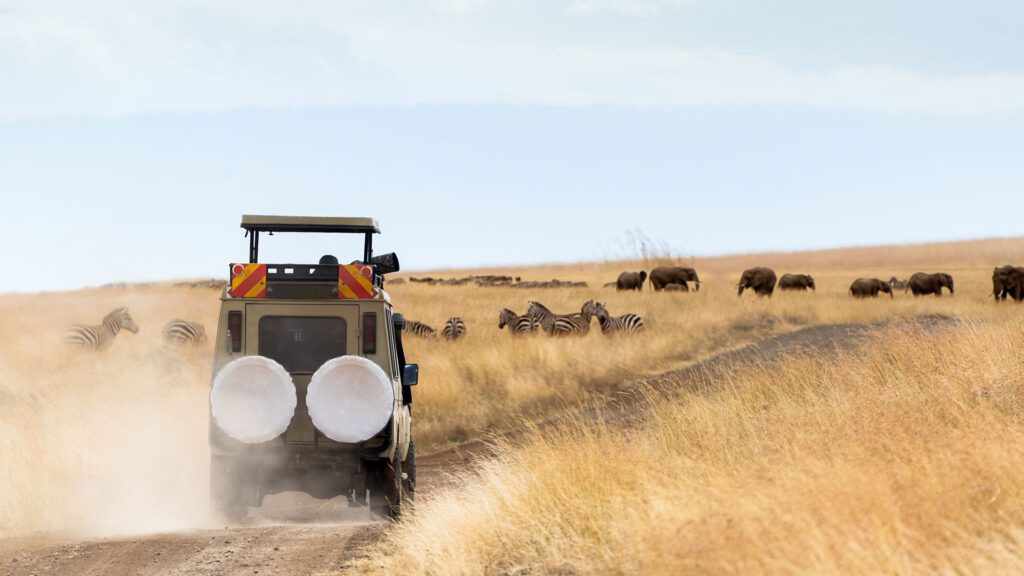
Chimpanzee trekking is a guided forest experience where travelers walk into protected habitats in search of wild chimpanzees. Unlike a classic open-vehicle safari across savanna plains, chimpanzee trekking draws you into a denser, greener world: tangled vines, tall forest trees, humid paths, birdsong, leaf movement and sudden calls echoing from the canopy.
For many travelers, the first sign of chimpanzees is not a sighting but a sound. A distant pant-hoot rises through the forest, answered by another call deeper among the trees. Your guides listen, pause, and change direction. Then the forest seems to sharpen. Branches sway. Fruit drops. A dark shape moves overhead. Moments later, you may be standing quietly below a group of chimpanzees as they feed, rest, groom or move together through the forest.
This is a powerful safari experience because it feels close without feeling staged. Chimpanzees are intelligent, social, expressive and unpredictable. Watching them in the wild is not only memorable; it also gives travelers a deeper understanding of Africa’s forests and the conservation work needed to protect them.
What Is Chimpanzee Trekking?
Chimpanzee trekking is a guided walk through forest habitat to find and observe wild chimpanzees. The experience usually takes place in national parks, forest reserves or protected conservation areas where chimpanzees are habituated to limited, controlled human presence.
A typical trek begins with a briefing from park staff or guides. Travelers learn how to behave near chimpanzees, how far to keep from them, what to do if the group moves quickly, and how to reduce stress on the animals. From there, small groups enter the forest with trained guides and trackers.
Once chimpanzees are found, viewing time is usually limited to protect the animals and preserve the quality of the encounter. The exact rules vary by destination, so travelers should always follow the guidance of local authorities and guides.
Why Chimpanzee Trekking Is Special
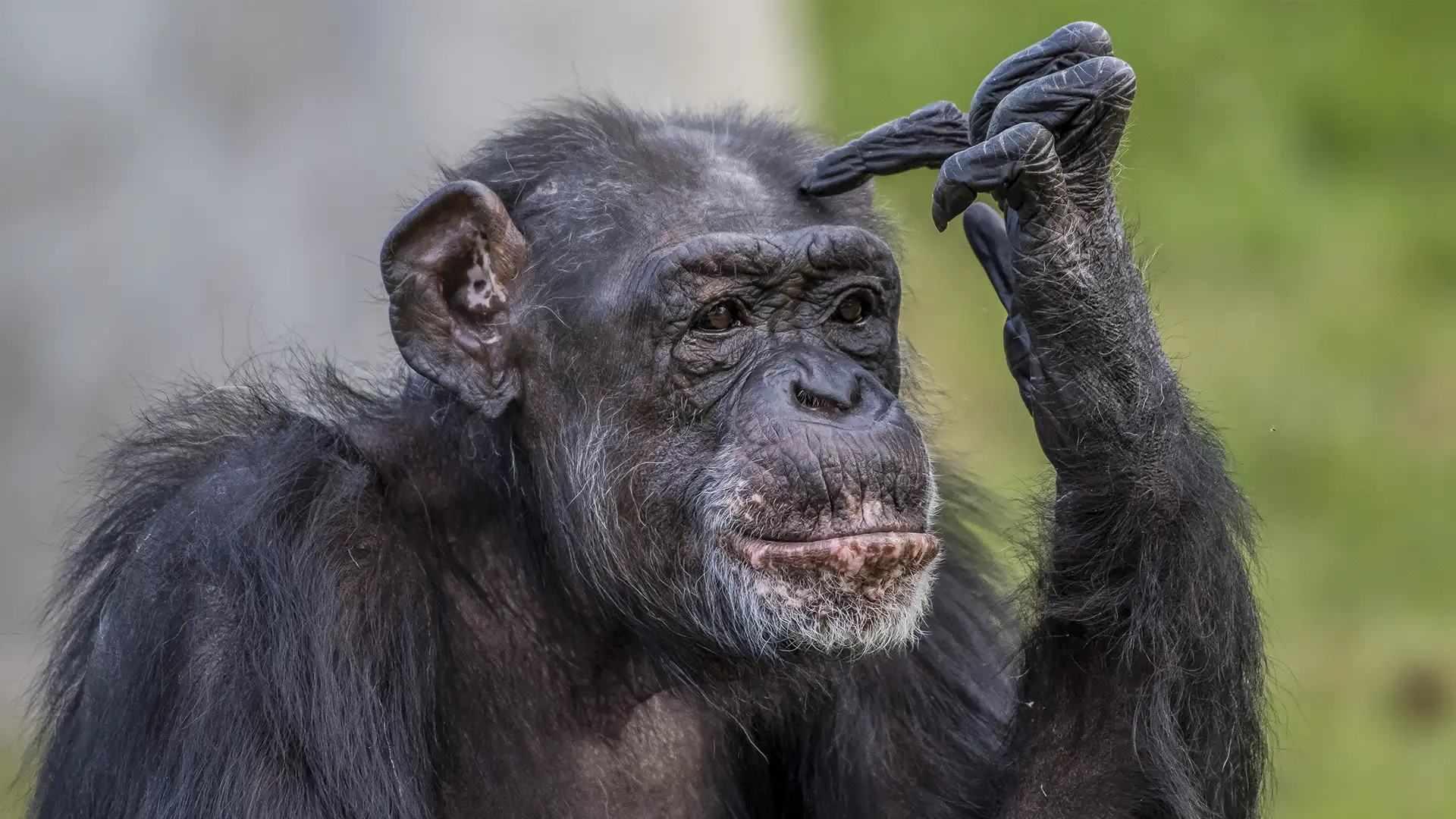
Chimpanzees are among the most fascinating animals to observe in the wild. Their behavior can feel startlingly familiar: mothers carrying infants, juveniles playing, adults grooming one another, dominant males displaying, and groups communicating through calls, gestures and body language.
A chimpanzee trek is also a forest experience. It asks travelers to slow down and notice small details: fresh fruit remains on the trail, knuckle prints in mud, broken branches, calls from unseen birds and the quiet skill of trackers reading signs in the landscape.
Where gorilla trekking often feels hushed and steady, chimpanzee trekking can feel more energetic. Chimpanzees may move fast, climb high, call loudly or shift through the forest in smaller parties. The experience can be calm one moment and thrilling the next.
Best Places for Chimpanzee Trekking in Africa
Uganda
Uganda is one of Africa’s best-known chimpanzee trekking destinations, with several strong options for travelers building a primate-focused safari.
Kibale National Park is often considered one of the leading places for chimpanzee trekking in Africa. Its forest supports a rich variety of primates, and the chimpanzee experience is well established. Travelers often combine Kibale with Queen Elizabeth National Park, Bwindi Impenetrable National Park, Murchison Falls National Park or other Uganda safari areas.
Budongo Forest, near Murchison Falls National Park, is another important chimpanzee habitat. It is a good choice for travelers who want to combine chimpanzee trekking with classic wildlife viewing and Nile scenery.
Kyambura Gorge, in Queen Elizabeth National Park, offers a different kind of setting. The gorge is dramatic, green and atmospheric, with chimpanzees living in a forested valley surrounded by broader savanna landscapes.
Rwanda
Rwanda’s Nyungwe National Park is one of Central and East Africa’s great montane forest destinations. It is known for chimpanzee trekking, canopy walks, birdlife, forest trails and a wide range of primates.
Chimpanzee trekking in Nyungwe can be active and demanding because the terrain is hilly and forested. For travelers already visiting Rwanda for gorilla trekking in Volcanoes National Park, Nyungwe adds a deeper primate and rainforest dimension to the journey.
Tanzania
Tanzania offers some of Africa’s most remote and remarkable chimpanzee experiences, especially in the western part of the country.
Mahale Mountains National Park is one of the most beautiful places to see chimpanzees in the wild. Forested mountains rise above Lake Tanganyika, creating a setting that feels far removed from ordinary safari circuits. Trekking here can be deeply rewarding, with the lake, mountains and forest all shaping the journey.
Gombe Stream National Park is famous for its long history of chimpanzee research. It is smaller than Mahale but historically significant and strongly associated with the study of wild chimpanzee behavior. For travelers interested in conservation history and primate research, Gombe has a special place in the story of African wildlife travel.
What to Expect on a Chimpanzee Trek
A chimpanzee trek usually begins early in the morning, when chimpanzees are active and guides have the best chance of locating them. After a briefing, travelers enter the forest in a small group with guides and trackers.
The walk can last from a short outing to several hours, depending on where the chimpanzees are and how quickly they are found. Terrain may include muddy paths, steep sections, roots, dense vegetation and uneven ground. Some treks are moderate, while others can be physically demanding.
When chimpanzees are located, the experience may unfold in different ways. They might be feeding high in fruiting trees, resting on the forest floor, grooming in a small group or moving through the canopy. Sometimes they are calm and easy to observe. At other times, they travel quickly and the group may need to follow carefully through the forest.
Photography is usually allowed, but flash is not appropriate. Travelers should prioritize quiet observation over chasing the perfect image.
Best Time to Go Chimpanzee Trekking
Chimpanzee trekking can be possible in many destinations throughout the year, but conditions change with the seasons.
Drier months often make forest trails easier to walk and may improve comfort for travelers. Wetter months can bring lush scenery, strong birdlife and atmospheric forest conditions, though trails may be muddier and more slippery.
Fruit availability also influences chimpanzee movement. When food is abundant in certain areas, chimpanzees may be easier to locate. When food is scattered, they may range more widely.
The best time depends on the destination and the rest of the safari itinerary. A traveler combining chimpanzee trekking with gorilla trekking, savanna game drives or birdwatching should plan around the full journey, not the chimpanzee trek alone.
How Difficult Is Chimpanzee Trekking?
Chimpanzee trekking is usually more active than a standard game drive and can be more unpredictable than many travelers expect. The difficulty depends on the forest, weather, terrain, group pace and where the chimpanzees are on the day.
Some travelers may find the trek manageable with basic fitness. Others may find steep or muddy terrain challenging. Good footwear, patience and a willingness to move at the guide’s pace make a major difference.
Travelers with mobility concerns should speak to their safari planner or lodge before booking. Some destinations and routes may be better suited than others.
What to Wear and Pack
Wear lightweight, breathable clothing in neutral colors. Long sleeves and long trousers help protect against insects, scratches and vegetation. A light rain jacket is useful even outside the wettest months, because forest weather can change quickly.
Good walking shoes or hiking boots are important. Trails may be muddy, rooted or uneven. Gaiters can be helpful in some forests, especially during wetter periods.
A small daypack should include water, insect repellent, a camera, spare batteries, any personal medication and a waterproof cover or dry bag for electronics. Binoculars are useful, especially when chimpanzees are high in the trees or when birds and other primates appear along the way.
Responsible Chimpanzee Trekking
Responsible trekking protects both chimpanzees and travelers. Chimpanzees are vulnerable to human disturbance and disease, so strict rules matter.
Keep the required distance from chimpanzees and follow guide instructions at all times. Do not eat near them, imitate their calls, make sudden movements or try to attract their attention. If you are unwell, especially with flu-like symptoms, do not trek. This can be disappointing, but it is part of ethical wildlife travel.
Choose operators and lodges that respect park rules, work with trained guides and support conservation or local community benefits. Chimpanzee trekking should contribute to the long-term protection of forests, not only to the traveler’s experience.
Chimpanzee Trekking vs Gorilla Trekking
Chimpanzee trekking and gorilla trekking are often combined, but they feel different.
Gorilla trekking is usually quieter and centered around a more settled group encounter once the gorillas are found. Chimpanzee trekking can be faster, louder and more dynamic, with chimpanzees moving through trees, calling across the forest and splitting into smaller groups.
Gorillas often impress travelers with their size and calm presence. Chimpanzees often fascinate travelers through movement, intelligence, social behavior and vocal energy. Both experiences are extraordinary, and together they create one of Africa’s richest primate safari journeys.
Who Is Chimpanzee Trekking Best For?
Chimpanzee trekking is ideal for travelers who enjoy wildlife, forest walking, photography, conservation and behavior-focused safari experiences. It suits people who want more than a checklist sighting and are willing to enter the animal’s habitat on its terms.
It is especially rewarding for travelers visiting Uganda, Rwanda or western Tanzania, and for anyone building a safari around primates, rainforest ecosystems and responsible wildlife encounters.
It may not be the best fit for travelers who prefer predictable comfort, minimal walking or open landscapes only. The forest asks for patience. That is part of its value.
Final Thoughts
Chimpanzee trekking brings a different rhythm to an African safari. It replaces the wide horizon with shadowed forest paths, distant calls and the quiet concentration of tracking. The reward is not only seeing chimpanzees, but entering a living forest where every sound and movement matters.
For travelers who want a safari that feels intelligent, active and deeply connected to conservation, chimpanzee trekking is one of Africa’s most meaningful wildlife experiences.