
Chobe National Park in northern Botswana is home to one of Africa’s largest elephant populations and one of the continent’s most accessible river-based safaris. Plan around the Chobe Riverfront for game drives, boat cruises, and big herds visible from your first afternoon in camp.
Key Takeaways
Chobe National Park in northern Botswana is famed for its Chobe Riverfront, massive elephant herds, and easy access from Kasane, Victoria Falls, and Livingstone. The park covers approximately 11,700 km² of diverse habitats.
A classic Chobe National Park safari combines 4×4 game drives along the Chobe River with a boat cruise or boat safari for close wildlife viewing across two distinct ecosystems.
Most first-time visitors base themselves around Kasane, using lodges such as Chobe Safari Lodge, Chobe Game Lodge, and Sanctuary Chobe Chilwero as examples of different styles and locations.
The best time to visit is generally May to October for dense wildlife along the river, with November to April better for birding and lush scenery.
Trav Heir is Botswana-focused. This article gives practical timing, routing, and lodge-region pairing tips rather than promoting specific tour operators.
Chobe National Park gives you a river-focused safari you feel from day one
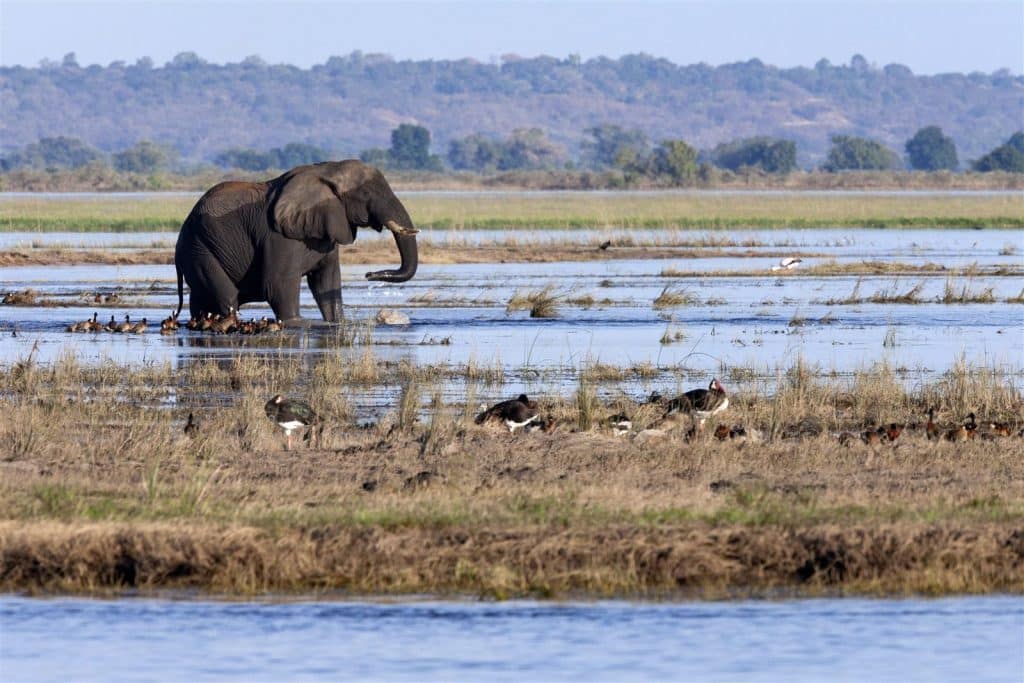
Picture a line of elephants wading belly-deep through the Chobe River at golden hour, hippos surfacing in the shallows behind them, and a herd of Cape buffalo drifting across the Chobe Riverfront floodplain. That scene is not a highlight reel. It is an ordinary afternoon on the river.
Chobe National Park was established in 1967 as Botswana’s first national park and now protects roughly 11,700 km² of woodland, floodplain, and marsh in northern Botswana. The park contains diverse ecosystems including floodplains, riverine woodlands, and edges of the Kalahari desert.
The park is located near the borders of Namibia, Zambia, and Zimbabwe, which makes it easy to pair with Victoria Falls and the Okavango Delta in one itinerary. Chobe is approximately 80 to 90 kilometers from Victoria Falls.
A quick note on names: “Chobe National” and “Chobe National Park” appear interchangeably in travel marketing but refer to the same protected area. You may also see “Chobe” used alone when locals talk about the broader region.
Chobe’s four main regions shape very different safari days
Chobe National Park is not one uniform landscape. It holds four commonly described areas, each with a distinct feel. Choosing the right one, or combining two, shapes the entire Chobe safari experience.
Chobe Riverfront (Serondela area): The busiest yet most reliable wildlife viewing zone. It sits close to Kasane and draws large herds of elephants and African buffalo to permanent water during the dry season. Most first-time visitors focus here.
Savuti region: Known for sandy plains and the unpredictable Savuti Channel that fills and dries over irregular cycles. Strong predator action, with lion prides regularly filmed by wildlife documentarians. Savute Safari Lodge and similar camps anchor stays here.
Linyanti: On the park’s western side, more remote and floodplain-based. The Linyanti Marshes offer a lush habitat for wildlife, including wild dogs and red lechwe. Usually accessed via fly-in camps in private concessions just outside the national park boundary. Visitors can enjoy night safaris to see nocturnal wildlife in these private areas.
Nogatsaa/Ngwezumba Pans: A quieter central sector of mopane woodland and seasonal pans, with fewer tourists and fewer vehicles. Better suited to repeat visitors or nature enthusiasts seeking solitude.
For a five-to-seven-night trip, pairing the Chobe Riverfront with Savuti or Linyanti gives you the contrast between big river herds and remote inland predator drama.
The Chobe Riverfront delivers iconic boat safaris and game drives
Most first-time visitors focus on the Chobe Riverfront between Kasane and Serondela, where land- and water-based safaris combine in a single day. Chobe National Park offers guided game drives in 4×4 vehicles along riverfront tracks.
A typical day starts with an early game drive along the floodplain. Common sightings include large herds of elephants and water buffalo, giraffes, graceful antelopes like impala and kudu, and in good years sable or roan antelope near the woodland edge.
Boat safaris on the Chobe River provide close wildlife viewing that no land vehicle can match. An afternoon river safari or boat cruise puts you at eye level with hippos, basking Nile crocodiles, and majestic animals cooling off in the shallows. Chobe has a large population of Nile crocodiles and hippos, so the river is never quiet.
The Chobe River forms the border with Namibia’s Zambezi Region, and boats often cruise near grassy islands while following the park’s northern boundary rules. Spectacular sunsets light up the water as fish eagles call from bare branches along the bank.
Sunrise and sunset outings tend to be quieter and offer better light than midday departures. For serious photographers, scheduling both a river cruise and a game drive in the same day is the move.
A Chobe National Park safari can be a day trip or a deep dive
You can visit Chobe National Park as part of a single day trip from Victoria Falls or Livingstone, a two-to-three-night riverfront stay, or a longer itinerary that adds Savuti and Linyanti.
A typical day trip follows a common pattern: early pickup, Kazungula border crossing, morning boat cruise, buffet lunch at a Kasane lodge, then an afternoon game drive before returning to Zambia or Zimbabwe. If you are already visiting Victoria Falls, this is the easiest way to add Botswana to your trip.
Multi-night stays usually include two scheduled activities per day, such as a game drive and a boat safari, plus optional photographic or birding-focused outings. Chobe offers unique dual-ecosystem experiences combining land and water activities, which makes even a short stay feel substantial.
The Chobe safari experience is relaxed yet wildlife-rich compared with more rustic fly-camping in other parts of Botswana. Self-drive visitors typically structure their days similarly but should account for gate hours and park speed limits inside the national park.
Best time to visit Chobe depends on whether you love elephants or green season drama
Most Botswana-based operators highlight the dry season from roughly May to October as prime for a Chobe National Park safari. Wildlife viewing peaks from July to October, when large numbers of elephants and other animals press against the Chobe River for water.
Dry season conditions mean clear skies, lower malaria risk compared with the rains, thinner vegetation, and wildlife drawn to permanent water. Boat safaris are particularly productive because animals concentrate along predictable stretches of riverbank. You are likely to see more animals per hour during this window.
The wet season runs from November to April, bringing afternoon thunderstorms, lush grass, and excellent birding. Birdwatching is excellent during the wet season due to the arrival of migratory species, and January to March is ideal for birdwatching. Migratory birds from Europe and central Africa swell the count. Rich birdlife and newborn antelope add green season drama, though visibility in thick bush can be more challenging.
Shoulder months like April and early May sometimes deliver a mix: reduced rains, green landscapes, fewer tourists, and already-strong game viewing. If your schedule is flexible, these weeks often offer good value.
Choosing where to stay: lodges on the river, in the park, and beyond
Most safari accommodation linked to Chobe National Park clusters around Kasane and the Chobe Riverfront. A smaller number of camps sit in Savuti and private Linyanti concessions. Kasane offers various affordable lodges and guesthouses, while Chobe National Park has luxury tented camps and budget campsites.
Chobe Game Lodge is the only permanent lodge inside the park on the river. It has operated for decades and now runs a growing fleet of electric safari vehicles, reducing noise and emissions for a quieter wildlife experience.
Chobe Safari Lodge and similar Kasane-based properties sit river-adjacent, combining game drives inside the park with boat cruises that depart from private jetties.
Sanctuary Chobe Chilwero and other high-end riverside lodges sit just outside the park boundary but offer inclusive activities that feel no less wild, often appealing to families and honeymooners.
Ngoma Safari Lodge and Muchenje Safari Lodge occupy quieter stretches of the Chobe River front west of Kasane, delivering diverse landscapes and fewer vehicles on the road.
Chobe also offers houseboat experiences along the river, with vessels like the Zambezi Queen providing a floating lodge option.
In Savuti and Linyanti, lodges are typically smaller and accessed by light aircraft, creating a more remote Chobe safari experience that pairs well with a few nights on the Chobe River. Experienced rangers at these camps know the predator territories intimately.
Trav Heir does not rank or promote specific properties over others. The goal is to help you understand which lodge style fits your travel personality.
What you are likely to see: elephants, predators, and rich birdlife
Chobe is home to one of Africa’s largest elephant populations, drawn from the wider Kalahari elephant range that spans several countries. The Chobe Riverfront hosts large herds of African elephants and African buffalo, making it one of the most reliable spots on the continent for a large elephant population sighting.
Core mammals wildlife enthusiasts frequently report on game drives and boat cruises include:
Cape buffalo and water buffalo in large herds
Hippos in the river channels
Giraffes, zebras, impala, kudu, and waterbuck
Lion prides and spotted hyena in open areas
Sable antelope in riverine woodlands during good years
Leopard, wild dogs, and cheetah are present but more elusive, with better chances in quieter areas like Savuti and Linyanti where vehicle densities are lower. Chobe is a Big Five safari destination, with lions, leopards, and elephants all present. The park also contains large prides of lions, leopards, cheetahs, and spotted hyenas across its diverse habitats.
More than 450 bird species have been recorded in Chobe National Park. Highlights for wildlife enthusiasts include the African fish eagle, Pel’s fishing owl in riverine canopy, sacred ibis, Egyptian geese, martial eagle, and migratory species like carmine bee-eaters in season. The bird life along the Chobe River is consistently strong, and fish eagles are heard before they are seen.
Every Chobe safari is different. Sightings depend on season, guide skill, and time spent in the park. An unforgettable safari experience is never guaranteed, but Chobe stacks the odds in your favor.
How to reach Chobe and combine it with Victoria Falls or the Okavango Delta
Kasane is the main access point for the Chobe Riverfront. Chobe National Park is accessible via Kasane International Airport, and Chobe’s main entrance is just a short drive from Kasane town.
Common routing options include:
Fly into Kasane from Johannesburg or Maun
Drive north from Nata on tarred roads
Cross the Kazungula Bridge from Zambia or Zimbabwe
Adding a day trip or short stay in Chobe when visiting Victoria Falls is straightforward. The Kazungula border post connects the two, and many travelers use a tour operator to handle the crossing logistics.
Many multi-country safaris link the Okavango Delta, Savuti or Linyanti, the Chobe Riverfront, and Victoria Falls in a logical west-to-east or east-to-west sequence. Chobe National Park is part of a broader southern Africa safari circuit that ranks among the top safari destinations on the continent.
Check current border, visa, and health requirements with official government sources before traveling. Regulations shift, and outdated blogs can steer you wrong.
What a typical Chobe day looks like, from coffee to campfire
Safari days begin early. A wake-up call comes before sunrise, followed by morning tea or coffee and rusks on the lodge deck. Then you load into a 4×4 for a dawn game drive when animals are most active.
By mid-morning you return for a late breakfast or brunch. The midday hours belong to rest. Heat pushes both wildlife and visitors into shade. Lodges with pools make this part easy.
An afternoon boat cruise or second game drive fills the golden hours. Many Chobe lodges offer a buffet lunch or plated meals between activities, with dietary requirements accommodated if requested in advance.
Evenings bring lantern-lit decks, the sound of hippos grunting on the Chobe River, and a chance to review photos or let children note sightings in a wildlife journal. Stars over the river, with no city glow, are their own kind of incredible wildlife show.
Practical tips: park rules, safety, families, and health
Chobe National Park is a true wildlife area without internal fencing. Visitors must respect park rules and lodge safety briefings at all times.
Key regulations and norms:
Stay in your vehicle on drives unless your guide says otherwise
Keep noise low at sightings
Never feed other animals or approach them on foot
Observe posted speed limits inside the park
Park fees apply at all gates; confirm current amounts with official sources
Children are welcome on many Chobe safaris. Lodges often apply minimum age limits for shared vehicles or boat cruises. Private vehicle options are sometimes recommended for younger kids.
Chobe National Park is located in a malaria area. Malaria risk is highest during the rainy season. Visitors should take antimalarial medication before traveling as advised by a travel clinic, and insect repellent is recommended. Wear long sleeves at dusk and sleep under nets or in screened rooms.
Swimming in the Chobe River is unsafe because of crocodiles and hippos. Use only the pools provided by lodges. This is non-negotiable.
FAQs about planning a Chobe National Park safari
These FAQs cover common planning questions that may not have been fully answered above.
How many nights should I spend in Chobe for a first safari?
Many safari planners suggest at least two nights on the Chobe Riverfront to fit in multiple game drives and a boat cruise without feeling rushed. Three to four nights allows time to slow down, repeat favorite activities, and recover from international flights before moving to the Okavango Delta or Victoria Falls. Travelers wanting to include Savuti or Linyanti often allocate five to seven nights split between river and inland areas.
Is Chobe suitable for a family safari with school-age children?
Many Chobe lodges welcome families. The combination of short boat cruises, relatively smooth riverfront tracks, and abundant wildlife suits children who can sit quietly for a couple of hours. Age rules vary, with some properties setting minimum ages for shared activities, so families should confirm policies before booking. Look for lodges with family rooms, flexible mealtimes, and child-friendly guiding.
Can I self-drive in Chobe National Park, or do I need a guide?
Self-drive safaris are allowed in Chobe National Park on designated roads for visitors with suitable 4×4 vehicles. Deep sand and seasonal mud make experience important. Many travelers choose guided drives and boat safaris because local experienced rangers know animal habits and safe riverfront routes. First-time visitors with limited off-road experience may enjoy a mix of guided activities and limited self-drive.
What should I pack specifically for a Chobe safari?
Pack neutral-colored clothing, a light jacket or fleece for cool mornings on the river, a wide-brimmed hat, sunglasses, and high-SPF sunscreen. Bring binoculars, a camera with a moderate zoom lens, and dust covers for gear. Essentials include insect repellent, prescription medication, a reusable water bottle, and closed shoes suitable for getting in and out of vehicles and boats.
How does Chobe compare with the Okavango Delta for a safari?
Chobe is stronger on large herds and river scenes, especially along the Chobe Riverfront where the sheer density of elephants and African buffalo is hard to match. The Okavango Delta is known for its mosaic of channels, islands, and quieter, often more exclusive camps with mokoro outings and walking safaris. Many travelers choose both, starting with Chobe for its classic big-herd drama and then moving to the Delta for a more intimate feel. Neither is “better.” It depends on whether you prefer boat-based wildlife spectacles, watery wilderness, or a mix of both. Kruger National Park in South Africa offers yet another comparison point, but Chobe’s river focus sets it apart from most safari destinations in southern Africa.