
The wildlife in Botswana does not check your room rate. A leopard dragging an impala into a tree looks the same from a vehicle whether you slept on a pillow-top mattress or in a dome tent. What changes between luxury and budget camps is how you sleep, eat, move between areas, and share the bush with other travelers. For price ranges, see our Botswana safari cost guide.
Find Your Camp Style Fast
Botswana favors high-value, low-impact tourism across its parks and private concessions. That policy shapes every tier of accommodation, from remote lodges in the Okavango Delta to simple campsites along the Chobe riverfront. This guide compares camp tiers across the Okavango Delta, Moremi, Khwai, Chobe, the Makgadikgadi Pans, and the Central Kalahari.
Choose luxury camps if you:
- Value privacy, quiet between drives, and personal service
- Travel with older relatives, young children, or anyone with mobility concerns
- Want off-road driving, walking, and night drives, which are usually offered in private concessions
- See this as a once-in-a-decade trip and want comfort to match
Choose budget camps if you:
- Would rather spend more total nights on safari than upgrade your tent
- Enjoy sharing vehicles, campfires, and stories with other travelers
- Travel solo, with friends, or as a repeat visitor who can skip some amenities
- Want to see two or three regions on a tighter budget
What Makes Luxury and Budget Camps Different?
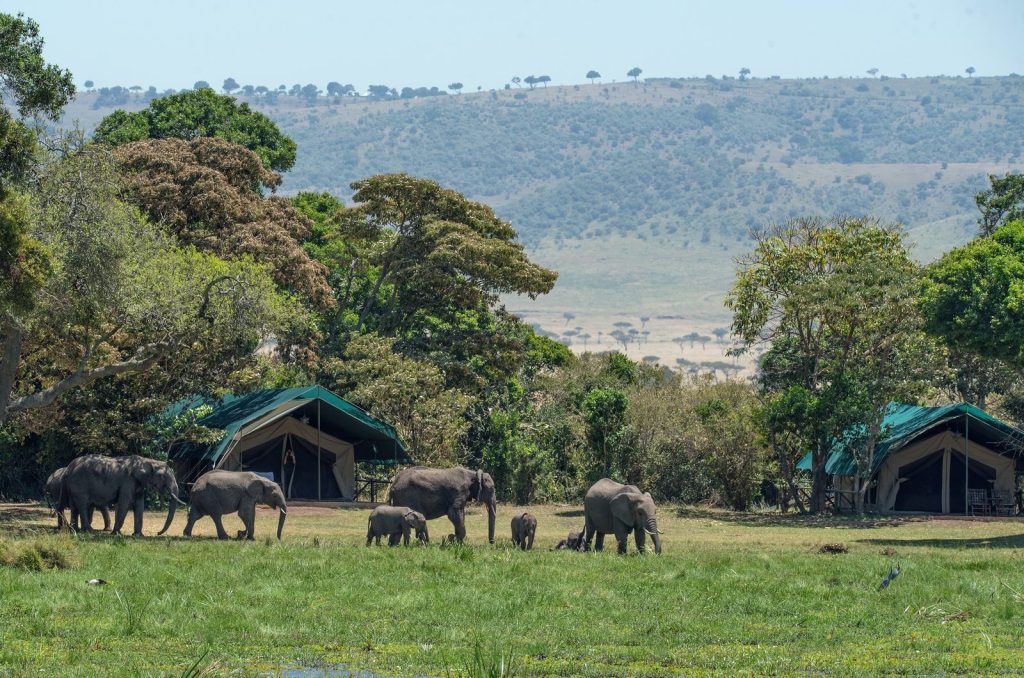
Both tiers put you in the same bush, watching the same species, including Big Five animals and African wild dogs. The differences are camp size, location, comfort, and how much of the logistics you handle yourself.
Luxury Camps Offer Comfort in Remote Wilderness
A luxury camp is usually a small, high-service tented camp or lodge in a private concession or a quiet corner of a reserve. It hosts few guests and runs with a high staff-to-guest ratio.
- Small guest numbers. Many luxury camps have only a handful of tents or suites.
- Spacious rooms. Canvas suites or chalets with full-size beds, quality linens, fans or cooling, and charging points. Thick canvas dampens noise from the bush.
- Private bathrooms. En-suite bathrooms with hot water and flush toilets, often with an outdoor shower. Some suites have plunge pools.
- Private concession locations. Camps sit on islands, permanent channels, or woodland clearings away from public roads, which means fewer vehicles at sightings and, usually, permission for off-road driving and night drives.
- Tailored guiding. Small groups allow drives shaped around photography, birding, or walking.
- Many activity types. From one base you may get game drives, night drives, mokoro trips, boat safaris, and walks, depending on water levels and rules.
The overall feel is unhurried. Time between drives is part of the experience.
Budget Camps Keep You Closer to the Ground
Budget accommodation strips back the frills and prioritizes time in the field over time in your tent.
- Simpler shelters. Dome tents, basic permanent tents, or simple chalets with decent but plain beds.
- Shared or basic bathrooms. Shared ablution blocks are common, and some camps use bucket or gravity showers filled by staff.
- Public-access or community locations. Camps cluster near park gates, public riverfronts, or community areas like Khwai. Access is easier, but more vehicles share the same roads.
- Group structure. Shared vehicles, set departure times, and a sociable campfire each evening.
- Hands-on experience. Expect some dust, thinner walls, limited electricity hours, and sometimes longer drives to prime wildlife areas.
The feel is informal and adventure-focused. A middle tier of mid-range camps sits between the two for travelers who want some comfort without full luxury.
How Camp Life Feels Different
The daily rhythm is similar in both tiers: early wake-up, morning drive, midday rest, afternoon drive, dinner. The texture differs.
Location and Exclusivity
Luxury camps in the Delta tend to occupy private concessions that you reach by light aircraft. Private concessions limit vehicle numbers at sightings, so a leopard kill might draw a few vehicles instead of many.
- Luxury camps: Inside private concessions, often with off-road driving and night drives. Few vehicles at a sighting.
- Budget camps: Near public park gates or busy riverfronts. More vehicles share viewing spots, especially in peak season.
At a luxury camp, your guide may leave the road to follow a pack of wild dogs into a thicket. On public land, you watch from the track.
Rooms, Tents, and Sleep
Dry-season mornings can be very cold, and green-season afternoons can be hot, so sleep quality depends on how well your tent handles both. Luxury camps use better mattresses, thick canvas, and more power outlets. Budget camps use simpler bedding and thinner walls, where you hear the full range of night sounds. For light sleepers, families with children, and older travelers, the difference matters.
Bathrooms and Comfort Details
Luxury camps provide en-suite bathrooms with hot running water. Budget camps vary. Some have simple private units, and others rely on shared ablution blocks a short walk away. Walking to a shared toilet block at 2 a.m. in a camp where elephants wander through takes a headlamp and some nerve. For anyone with back, joint, or mobility issues, easier bathroom access is a real advantage.
Food, Drinks, and Campfire Time
- Luxury camps: Multi-course meals, often at individual or small shared tables, with flexibility for dietary needs.
- Budget camps: Wholesome plated or buffet meals, often stews, braai-style grills, salads, and starches.
Campfires are standard at almost every camp. Budget camps often have longer, louder evenings, while luxury camps tend toward quieter, more intimate settings.
Vehicles, Group Size, and Guiding
Open-sided safari vehicles are standard in both tiers. The difference is how many people share each vehicle and how much freedom the guide has. Luxury camps usually mean smaller groups and more flexible routes, and guides based in one concession know individual animals and territories. Budget safaris use larger shared vehicles with more standardized routes and less time to linger. Safety standards should be consistent at reputable operations in every tier.
Transfer Days and Logistics
Luxury camps in remote areas typically require fly-in access by light aircraft between bush airstrips, and staff handle baggage and logistics. Budget camps often involve overland transfers on sandy tracks that can take much of a day. The trade-off: luxury buys more time in the field on transfer days, while budget travelers spend more hours on the road but save money that can fund extra nights.
Wildlife Viewing: What Stays the Same
Lions, elephants, buffalo, hippos, and plains game are present regardless of your camp’s tier.
- Both tiers give access to key ecosystems: Delta floodplains, Moremi’s woodlands, Khwai’s channels, and Chobe’s riverfront.
- Daily drives follow nearly identical schedules.
- The chance of major sightings depends on region, season, and water levels, not on what you pay per night.
- The dry season, roughly May to October, is generally best for wildlife in any tier.
The concrete differences are access and vehicle density. Private concessions often allow off-road driving and fewer vehicles. On public land you stay on the track and share sightings.
How the Tiers Are Spread Across Botswana
Where you go matters at least as much as what you spend.
Okavango Delta and Moremi Game Reserve
The Okavango Delta is ideal for water-based safaris, with floodplains, palm-fringed islands, and strong predator viewing. Moremi Game Reserve protects the eastern Delta.
- Luxury camps: Cluster in private concessions on islands or permanent channels, with game drives and water activities from camp.
- Budget camps: Concentrate around Moremi’s public gates and the Khwai community area, using drives to reach wildlife zones. Facilities are simpler, but big cats and wild dogs are still within reach.
Chobe National Park and Linyanti
Chobe’s riverfront draws huge elephant herds in the dry season, and river cruises are among the most accessible wildlife experiences in Botswana. Budget stays are most common around Kasane, with day trips into the park. Luxury camps in Linyanti and nearby concessions sit away from riverfront traffic, with quieter drives and fewer shared sightings, but usually need a charter flight.
Makgadikgadi Pans and Central Kalahari
The Makgadikgadi Pans fill with zebra and wildebeest in the green season. The Central Kalahari offers open desert grassland and arid-adapted species. Luxury camps here sit on the edge of the pans or in the Kalahari, with dramatic views. Budget options are simpler campsites or lodges near park entrances. Most travelers add this region as a two- or three-night contrast to the Delta.
Who Benefits Most From Luxury Camps?
This is about fit, not about one option being right.
- Honeymooners and couples marking milestones, who value privacy and personal touches.
- Families with young children and multi-generational groups, where accessible bathrooms and short walks help.
- Serious photographers, who want smaller groups and the freedom to stay at a sighting.
- First-time safari travelers on a once-in-a-decade trip, who want comfort to match the wildlife.
- Travelers with mobility issues, who may find rough camping hard.
Who Thrives in Budget Camps?
- Solo travelers and groups of friends, who enjoy shared vehicles and campfire conversation.
- Backpackers and younger travelers, used to hostels or camping.
- Repeat safari goers, who trade down on amenities to fund more nights.
- Self-drivers and overlanders, who bring their own gear and want flexible routes.
- Photographers who want more days in the field and accept simpler camps.
Be honest about how much roughing it you actually enjoy.
Luxury vs Budget Camps at a Glance
| Feature | Luxury camps | Budget camps |
|---|---|---|
| Location | Private concession interiors, remote islands | Public park edges, community areas, riverfronts |
| Camp size | Small, few tents or suites | Larger, or public campsites |
| Comfort | Full-size beds, thick walls, fans or cooling | Simpler beds, thinner canvas |
| Bathrooms | Private en-suite, hot water | Shared blocks or simple en-suite |
| Vehicles | Smaller groups | Larger shared groups |
| Guiding flexibility | Routes adjusted to guest interests, off-road driving often allowed | Set routes on public tracks |
| Activities | Day and night drives, mokoro, boat, walking | Day drives standard, other activities limited by location |
| Overall feel | Curated and unhurried | Social and hands-on |
| Wildlife quality | Excellent | Excellent |
Wildlife quality is high in both. Comfort, exclusivity, and activity variety increase with price.
A Simple Checklist to Decide
Group A signals:
- I want as much privacy and quiet as possible between drives.
- I would feel uneasy walking to a shared bathroom at night.
- I tire easily and value a strong mattress and good bedding.
- I want a guide who adjusts the drive to my pace.
Group B signals:
- I am happy with shared bathrooms if it means more days on safari.
- I like group dinners and swapping stories with other travelers.
- I would rather spend more nights in Botswana than upgrade my room.
- Dust and thin canvas are part of the adventure.
More matches in Group A point toward luxury. More in Group B point toward budget. Many travelers land in the middle, and a blended itinerary is the answer: a few nights in a luxury Delta camp, then simpler camps around Chobe or Khwai.
Matching Your Camp to Your Botswana Plan
The animals and landscapes are the same whether you sleep in a canvas suite or a dome tent. The real choice is between curated comfort and hands-on adventure. Luxury wraps the experience in service, small groups, and private concession access. Budget stretches your days in the field.
Consider your companions honestly. A partner with a bad back, a young child who needs a real toilet at 3 a.m., or a parent who has never camped all influence the decision. Also consider whether this is your first safari, and how many nights you can afford.
Many independent travelers are happiest with a blend over seven to ten days, covering two or three regions. For a broader plan, start with our Botswana safari guide, and check ranges in the safari cost guide.
Frequently Asked Questions
Do you see more animals at a luxury camp?
Both tiers offer the same species. What differs is vehicle density and guide flexibility. Private concessions see fewer vehicles at sightings and often allow off-road driving, while public land means shared tracks, especially along Chobe’s riverfront in peak season.
Is a luxury camp worth it for a first safari?
If you are nervous about the bush, have mobility concerns, or are celebrating a honeymoon, luxury removes friction. If simpler accommodation suits you, a mid-range or budget camp in a strong wildlife area like Khwai delivers the same core experience for less.
Are budget camps in Botswana safe?
Reputable budget camps follow similar safety protocols to luxury lodges: trained guides, rules about walking at night, secure food storage, and staff escorts after dark. Wildlife risk does not change with your room rate.
Can I mix luxury and budget camps in one itinerary?
Yes, and it is one of the most practical approaches. Try a few nights at a luxury Delta camp, followed by budget or mid-range camping near Chobe for elephants and river cruises.
What should I pack differently?
For budget camps, bring a headlamp, a power bank, a towel, and possibly a sleep liner. For luxury camps, pack lighter, since laundry is usually included. Both need neutral-colored clothing and warm layers for cold dry-season mornings.
When should I book Botswana camps?
Small camps fill early, especially in the dry season, so book as far ahead as you can. The green season is usually easier to book on shorter notice, and shoulder months offer a middle ground between availability and wildlife viewing.