

A Botswana safari in 2026 typically costs from about $250 per person per night for participation camping to $1,000 to $2,250 or more for luxury fly-in camps, with a 7-night trip often landing around $4,500 per person before international flights. For travelers planning a Botswana safari and wanting clear, accurate budgeting before they choose a route or lodge, this guide breaks down prices by style, season, and region, along with what those rates include and exclude.
Because Botswana is built around low-impact, high-value safari travel, with exclusive camps, remote access, and premium wildlife areas, small choices can change the total quickly. Below, you will see regional cost differences, transport options, accommodation levels, itinerary budgeting, and the key planning FAQs that help you compare options and avoid expensive surprises.
Key Takeaways
Operator and agent rate sheets for 2026 show Botswana safari rates from about $250 per person per night for participation camping up to roughly $1,000 to $2,250 for luxury fly-in camps, with a few flagship camps priced higher.
Fly-in camp rates usually include meals, drinks, activities, park fees, laundry and airstrip transfers (this varies by camp), making the headline price more inclusive than in most other African destinations.
Botswana’s safari costs can vary widely by season, with green season (December to March) typically offering the steepest discounts.
Accommodation is a major expense, typically representing a large share of safari budgets, so the level of comfort you choose matters more than almost any other factor.
Trav Heir is based in Botswana and focuses on honest, experience-based guidance rather than selling specific lodges or packages.
Botswana Safari Cost at a Glance Gives You Fast Answers
A 7-night Botswana safari usually starts from about $4,500 per person, excluding international flights. A 7- to 10-night trip can run from the low four figures for self-drive safaris or basic group camping up to well into five figures for a luxury Botswana safari with fly-in transfers. Exact prices depend heavily on season, safari style, and how many camps you visit.
All figures in this guide are in US dollars, per person per night, sharing, excluding international flights. They are published by safari operators and agents for 2026, not an official source, and they change every year. Green season runs December to March, shoulder season is April to June and November, and peak season is July to October.
Here is how typical Botswana safari prices per person per night compare by style:
Mobile or participation camping: about $250 to $400 in green season and $350 to $550 in peak season (a one-source range)
Moderate camps: $600 to $800 in green season, $725 to $1,050 in shoulder season, and $850 to $1,200 in peak season
Premier camps: from $825 to $975 in green season up to $1,250 to $1,675 in peak season
Luxury camps: $1,000 to $1,300 in green season, $1,350 to $1,850 in shoulder season, and $1,700 to $2,250 in peak season, with a few very top camps reaching roughly $1,850, $2,500 and $3,100
Botswana safari prices typically run higher than in Kenya or Tanzania. But those per person per night rates include more than many East Africa packages: park fees, activities like game drives, and most drinks are often bundled in. A 7- to 10-day safari trip is the sweet spot for first-timers, long enough to combine Chobe National Park, the Okavango Delta, and one desert or salt pan area without constant transfers.
How Per Person Per Night Pricing Really Works
Almost all safaris in Botswana are sold “per person per night, sharing,” meaning two guests share a room or tent and the rate covers a fully loaded experience. This is the best way to compare Botswana safari prices across operators and safari companies.
Typical inclusions in that rate at fly-in camps (this varies by camp):
Accommodation in your chosen safari camp or lodge
Three meals per day and drinks
Shared game drives, boat trips, and mokoro trips in the Okavango Delta
Guided walking safaris where permitted
Park entry fees, which are set by the government and vary by park and visitor type
Laundry and airstrip transfers
Common exclusions:
International flights to Maun or Kasane
Light aircraft sectors between camps on bespoke itinerary trips
Visas and travel insurance
Spa treatments, premium imported wines, and gratuities
Park fees in Botswana are generally lower than the accommodation costs that make up most of a safari bill. Group camping safaris typically cost far less than mid-range lodge safaris. Activities like game drives are usually included in safari packages, so what you see on the rate sheet is close to what you actually pay once on the ground.
Park fees are set by the Department of Wildlife and National Parks. The schedule reported in force since April 2022 lists P270 per non-resident per day for parks such as Moremi and Chobe, or P190 for clients of a licensed Botswana tour operator. A planned increase was postponed, and a US$30 tourism levy announced in 2017 is reported inconsistently. Confirm current fees with DWNP before you travel.
Single travelers often pay a “single supplement” to cover the empty half of the tent. Many camps waive this in green season to fill beds.
Why Botswana Safaris Cost More Yet Feel Worth It
Botswana is known for a high-value, low-impact tourism model. The government intentionally limits beds in key wildlife areas through private concessions and strict camp-size rules. This makes Botswana an expensive safari destination compared with most other African destinations, but it protects the very thing you are paying to see.
The main cost drivers:
Tiny remote camps with limited beds on private reserves
Food, fuel, and staff flown or ferried into locations with no roads
Conservation and community fees charged per person per night
The Okavango Delta, one of the world’s largest inland deltas and a UNESCO World Heritage Site, where many camps are reachable only by light aircraft and small boats
What you get in return is fewer vehicles at every sighting compared with busier parks in East Africa, more time with experienced guides, and the ability to do night drives and walking safaris in private concessions. Group size significantly affects per-person costs, and smaller groups mean more personal attention.
For many travelers, Botswana’s serenity, wildlife density, and lack of crowds justify the premium safari price compared with other African safari destinations across southern Africa.
Cost by Safari Style: From Mobile Camping to Fly-In Luxury
Safari style has the biggest impact on what you pay per person per night, often more than the specific reserve. Here is how the main styles compare.
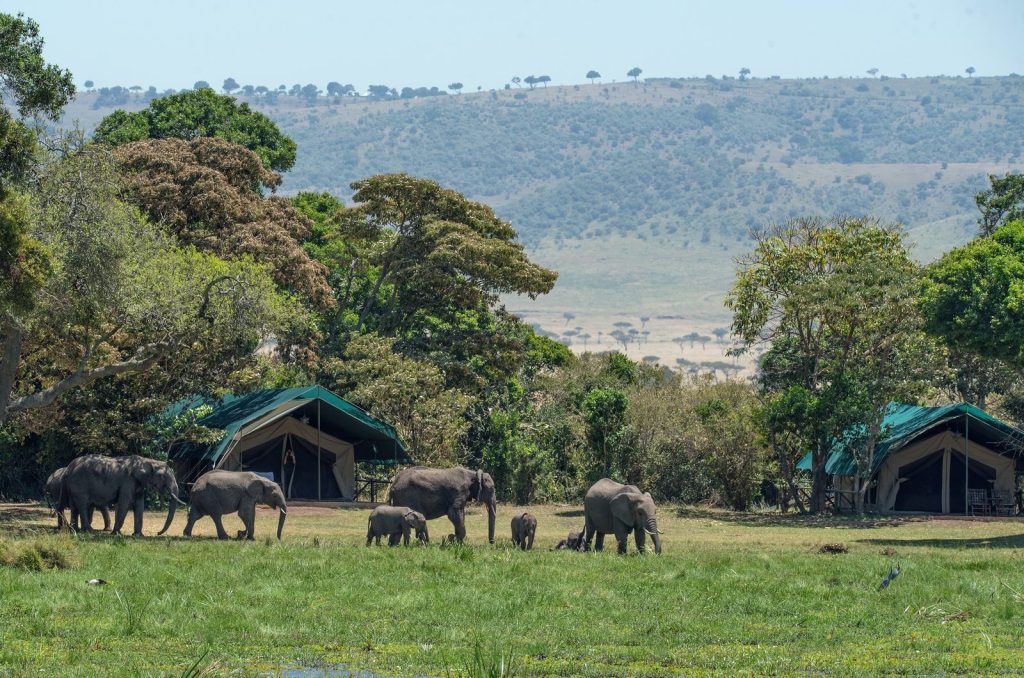
Basic group camping is the entry point. Shared dome tents in public campsites, ablution blocks, and guests helping with chores. Group camping safaris are typically the cheapest guided option. Self-drive safaris can be cheaper still, and self-drive options are available in many national parks, including Chobe and Moremi.
Mobile camping safari is the classic Botswana value choice. A full camp with walk-in mobile tented camps, stretcher beds, and bush bathrooms moves every few days through areas like Moremi Game Reserve, Savute, and Chobe. Published rates for mobile or participation camping run about $250 to $400 in green season and $350 to $550 in peak season (a one-source range). Luxury mobile tented camps typically cost more than standard mobile camping.
Fixed mid-range tented camps and permanent lodges near parks offer en suite bathrooms, hot water, and a swimming pool. Moderate camps are published at $600 to $800 in green season, $725 to $1,050 in shoulder season, and $850 to $1,200 in peak season. Premier camps run from $825 to $975 in green season up to $1,250 to $1,675 in peak season.
Luxury safari and fly-in safaris on private Okavango Delta concessions sit at the top. Luxury camps are published at $1,000 to $1,300 in green season, $1,350 to $1,850 in shoulder season, and $1,700 to $2,250 in peak season. A few very top camps reach roughly $1,850, $2,500 and $3,100 across those same seasons. Luxury safari packages often cover light-aircraft transfers between camps. These remote camps and land camps deliver an exclusive safari destination experience that few places on earth can match.
How Season Changes Your Botswana Safari Price
Seasonality is often the single biggest swing factor in Botswana safari cost. The same camps can be priced very differently between January and August.
Botswana’s broad seasons:
Green season (December to March): the lowest accommodation prices. January and February are typically very wet months. Prices can drop substantially compared with peak months.
Shoulder season (April to June and November): shoulder months offer mid-range pricing and good wildlife viewing as water recedes and vegetation thins.
Peak season (July to October): the highest rates and the densest game along shrinking waterholes.
Trade-offs matter. Green season brings storms, heat, and lush scenery alongside spectacular birding, lower rates, and fewer vehicles. Peak dry season delivers exceptional wildlife viewing with animals congregating at water sources, but you pay a premium and camps fill early. An affordable Botswana safari often means traveling in the shoulder or green window.
Region Matters: Okavango, Chobe, Kalahari, and Salt Pans
Botswana safari costs vary by region because access, wildlife density, and safari activities differ sharply between areas in northern Botswana and beyond.
The Okavango Delta is the costliest core, especially private concessions that allow night drives, walking, and off-road tracking. Many of the continent’s priciest safari camp properties sit on Delta islands or floodplains and are usually reached by fly-in safaris. Boat safaris and mokoro trips here are signature experiences you will not find elsewhere.
Chobe National Park and the Chobe Riverfront are relatively more affordable. Road access from Kasane allows simpler lodges and day tours. Some budget Botswana safari itineraries base here to combine game drives and river cruises.
Linyanti, Kwando, and Selinda concessions are priced similarly to top Delta camps because of remoteness, strong predator populations, and strict limits on camp size.
The Central Kalahari Game Reserve and Makgadikgadi or Nxai Pans offer meerkat visits, desert-adapted wildlife, and seasonal zebra migrations. These typically sit at slightly lower rates than the priciest Okavango islands but remain firmly in premium African safari territory.
Transport Choices: Road, Mobile Safaris, and Fly-In Safaris
How you move between areas can add thousands of dollars to a Botswana safari itinerary. Transportation can significantly impact safari costs due to the remote nature of some areas.
Road-based mobile safaris use overland 4×4 travel between Moremi Game Reserve, Savute, and Chobe, with camp staff leap-frogging to set up private mobile camping sites. This keeps the per person per night safari cost lower than staying in permanent Delta lodges every night. Self-drive safaris cost less again in areas where self-drive options are available, though you must budget for vehicle hire, fuel, and camping fees.
Light aircraft transfers are standard from Maun or Kasane into Delta and Linyanti concessions, usually priced per sector per person. A light-aircraft sector costs about $150 to $400 per person (a one-source range). Most operators enforce a 20 kg soft-bag luggage limit. Internal flights and light aircraft transfers add up quickly if your itinerary visits several camps.
Mixing road and air manages cost well. For example, driving to Chobe and Savute, then taking a single flight into a water-based Okavango Delta camp completes a dream safari without flying every leg. Plan a logical circuit to avoid backtracking, and always confirm whether charter flights are included in quoted Botswana safari prices.
What Level of Comfort You Choose Changes the Bill
Accommodation type typically accounts for a large share of safari costs, a point echoed repeatedly by specialist agents and tour operator websites.
Budget safari options include basic mobile camping and simple lodges outside park gates. Rooms are smaller, amenities limited, but wildlife viewing can still rival that of neighboring luxury safari camps. Private safaris at this level focus on game drives rather than frills.
Mid-range lodges offer walk-in tents or suites with en suite bathrooms, steady hot water, and often a swimming pool. Per person per night the rate is higher, but comfort approaches luxury without the most extravagant design touches. All-inclusive safaris at this tier cover meals, drinks, and two activities daily.
High-end luxury safari and ultra-luxury camps feature private plunge pools, customized menus, and artful architecture surrounded by floodplains. In 2026 a few very top camps publish rates of roughly $1,850, $2,500 and $3,100 per person per night across green, shoulder and peak seasons.
When comparing comfort tiers, look at room size, bathroom style, guiding ratios, and activity flexibility. These details reveal where the premium delivers real value on your safari trip.
Designing a Realistic Safari Itinerary and Total Trip Budget
Most travelers build 7- to 10-night Botswana safari itineraries that combine at least one dry land camp and one water-based camp in the Okavango Delta, often with a night or two in Chobe or at Victoria Falls.
Example structures worth considering:
A mobile camping safari for six nights through Moremi, Savute, and Chobe
A three-camp fly-in circuit across the Okavango Delta and Linyanti
A mix of mid-range and luxury stays where the balance of nights in expensive versus moderate same camps controls the overall safari cost
Two sample budgets show the range, both excluding international flights. A 7 to 8 night trip in peak season at premier camps comes to about $9,000 to $13,000 or more per person. An 8 night trip in shoulder season at moderate camps comes to about $6,000 to $8,500 per person.
Account for expenses outside the camp. International airfare to Maun, Kasane, or Johannesburg is a significant extra cost, so check current fares for your dates. Add travel insurance, visas where required, vaccinations recommended by health authorities, and tipping. Give your planner an honest budget range. Clear Botswana safari price limits make it easier for any tour operator to balance season, regions, and comfort level across your bespoke itinerary.
Trav Heir’s role is to help you sense-check sample safari itineraries and safari packages, understand trade-offs, and compare costs honestly, not to lock you into one operator or chain of camps.
FAQ: Botswana Safari Costs Answer Common Planning Questions
These FAQs address cost questions not fully covered above, focusing on practical planning details.
How far in advance should I book a Botswana safari to get good value?
Many Delta and Linyanti camps recommend booking a year or more ahead for peak season, since small camp sizes mean premium dates sell first. For green season and shoulder months, a shorter window can still work, though specific tent categories or family rooms may already be limited. Last-minute deals exist, but travelers with fixed school holidays or specific camps in mind usually do better planning early.
Is a Botswana safari suitable for families without breaking the bank?
Many Botswana camps welcome children, often above a minimum age, though some require private vehicles for younger kids. Mobile camping safari options and family rooms at mid-range lodges around Chobe and the Okavango Delta spread the per person per night cost more effectively than booking multiple luxury suites. Traveling in shoulder or green season, when many camps discount family stays, often makes an affordable Botswana safari realistic for families.
Can I combine a cheaper African safari country with Botswana to manage cost?
Many travelers pair a shorter, higher-end Botswana segment with more affordable time in places such as South Africa or Zimbabwe. A common pattern is a few nights in the Okavango Delta or Chobe, then a few nights near Victoria Falls or in a South African reserve reachable by scheduled flights, so the average nightly safari price drops. Factor in extra regional flights and visas when comparing a pure Botswana safari to a two-country itinerary.
Are mobile camping safaris comfortable enough for a first Botswana trip?
Higher-end mobile camping safaris in Botswana feature walk-in tents, proper beds, linen, and private bush bathrooms. Guests do not pitch tents on these upmarket mobile safaris. Staff handle camp setup while travelers are on game drives, making them suitable for first-timers who like adventure but want comfort. Participation camping trips, where guests help with chores and use shared ablution blocks, are rougher and cheaper, better for travelers seeking the lowest Botswana safari prices.
Is tipping included in Botswana safari prices, and how much should I budget?
Tipping is customary in Botswana and is almost never included in quoted safari prices. Many lodges provide suggested tipping guidelines for guides, trackers, and general staff in pre-arrival information, so ask your camp for its current recommendations. Bring small denominations of US dollars or Botswana pula and confirm preferred currencies with your chosen camps before departure.