
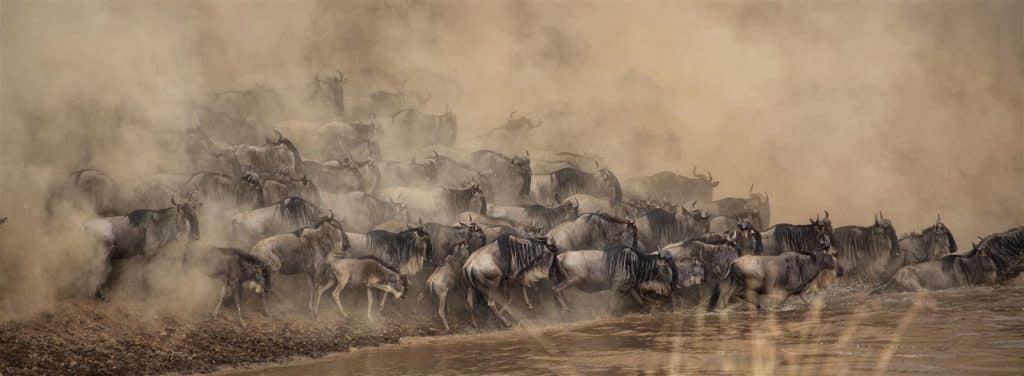
The Great Migration is the world’s largest overland mammal migration: a year-round cycle in which more than a million wildebeest, along with zebra and Thomson’s gazelle, loop through Tanzania’s Serengeti and Kenya’s Masai Mara following rain and fresh grass.
You can see the Great Migration in different places each month, and no two years follow the same calendar. This guide walks through the timing and locations through the year, what to expect from calving, rutting, and river crossings, where to stay, and how to plan responsibly.
Key Takeaways
The Great Migration is the largest overland mammal migration on Earth. It covers hundreds of kilometers each year through Serengeti National Park and the Masai Mara Reserve. Here is what matters most for planning.
The migration route runs from the south side of the Serengeti near Ndutu and the Ngorongoro Conservation Area during calving season, through the western corridor, then to the northern Serengeti and Kenya’s Maasai Mara for dramatic river crossings.
All dates and locations are approximate. Timing shifts each year with rainfall, sometimes by several weeks. Tanzania National Parks and Kenya Wildlife Service publish general patterns, not guarantees.
Mara River crossing events and crossings on the Grumeti River are hardest to predict. The southern calving season from January through March is usually more reliable for planning.
Mobile camps and flexible routing with your guide give the best chance of staying close to the herds without overcrowded viewpoints.
The Great Wildebeest Migration creates a constant wildlife circuit, not a single seasonal event
The Great Migration involves more than a million wildebeest moving in a roughly clockwise direction through the Serengeti plains and Masai Mara ecosystem. Hundreds of thousands of Thomson’s gazelle and plains zebra join them. Conservation bodies describe this as a continuous loop of several hundred kilometers through northern Tanzania and southern Kenya.
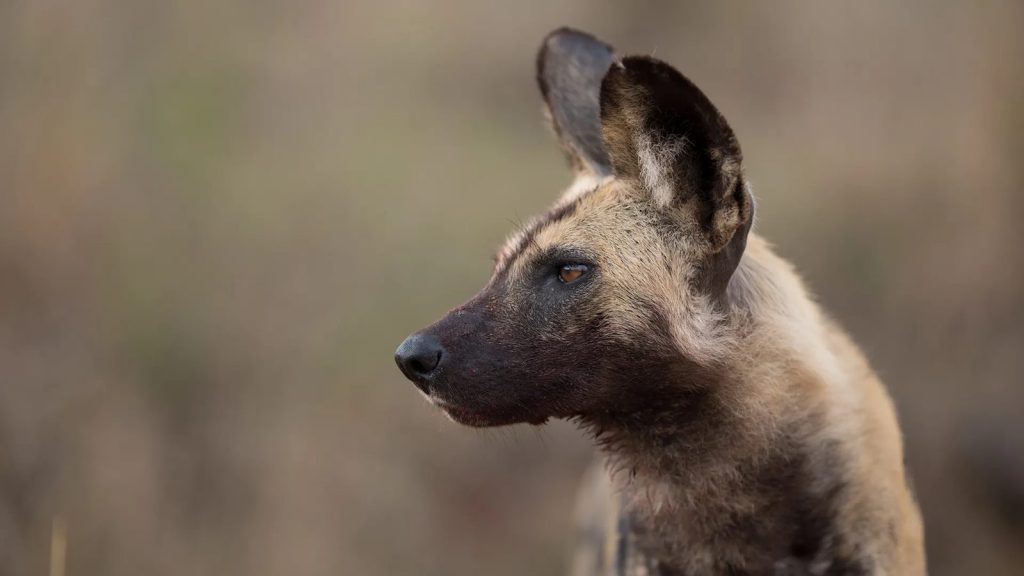
This cycle is often called both the Great Migration and the Great Wildebeest Migration. It includes calving season, the long northward trek, dramatic river crossings, and the return heading south. The Serengeti hosts one of Africa’s largest lion populations, drawn by the migration, along with hyena, cheetah, wild dog, and Nile crocodile.
For travelers, what it means to see the Great Migration depends entirely on the month. Calving delivers young calves and big cats hunting on open plains. Rutting season brings male combat. River crossings bring chaos and hungry crocodiles. Each phase offers a distinct experience.
Rain and grass, not the calendar, drive wildebeest migration patterns
Ecologists attribute the wildebeest migration mainly to following fresh grass and seasonal water. Wildebeest herds respond to rainfall rather than fixed dates. Guides across the Serengeti report massive herds appearing to follow the rain, possibly reacting to distant thunderstorms on the horizon.
The volcanic soils of the southern Serengeti plains and Ngorongoro highlands produce short, nutritious grasses after the short rains. These grasses are ideal for heavily pregnant females approaching calving. The rainy season transforms the landscape into a green season of dense grazing.
Once the plains dry and grazing quality drops, the herds begin moving north and further west in long columns. These columns are loosely synchronized but often split into several fronts. Migration patterns shift by several weeks from year to year, which is why no operator can promise a specific scene on a specific date.
Calving season on the south side delivers intense predator action and easy viewing
Calving season begins in late December and generally runs through March. Huge herds cluster on the short grass plains around Ndutu, Lake Masek, and the northern Ngorongoro Conservation Area. The Great Migration starts in January with calving season, and the southern Serengeti plains become the stage.
Hundreds of thousands of wildebeest calves are born each year, most within a few weeks of each other in February. At the peak, thousands of calves can arrive in a single day. Calves typically begin to take their first steps within minutes of birth.
Calving season attracts numerous predators like lions and hyenas. The open terrain near the calving grounds makes predator action easier to observe. Wildebeest calves draw lion prides, spotted hyena clans, and occasionally cheetah into the open.
This period often suits families and photographers. Herd locations are more predictable, dust is lower during the green season, and vehicle pressure is lighter than at peak river crossings. Grant’s gazelle and zebra also congregate nearby, adding variety.
The long march north brings dramatic columns, rutting, and quieter river crossings
From roughly April to June, the herds leave the southern plains. The wildebeest migrate north in May after the long rains, pushing through central Serengeti toward the western corridor and western Loliondo. Exact timing depends on how quickly the grass dries.
Columns of animals stretch for kilometers, mixed with zebra and Thomson’s gazelle, offering sweeping landscape views rather than tight predator scenes.
May and June coincide with mating season, when male wildebeest battle and chase rivals across open plains and low kopjes. The rut is energetic and loud.
Part of the migration often brushes the Grumeti River in the Grumeti Reserve. Crossing the Grumeti River poses a significant risk to wildebeest, as Nile crocodiles patrol the banks. These crossings tend to be smaller than those on the Mara.
The atmosphere shifts here. Herds are moving north in long highways rather than concentrated in one calving zone. The Lobo area and central Serengeti offer quieter game drives and wide-angle photography.
Iconic river crossings on the Mara River reward patience and flexible plans
River crossings typically occur from July to October. This is the classic window to witness a Mara River crossing in the northern Serengeti or Masai Mara. Exact weeks depend on localized rain in each country, and herds arrive at the river on their own schedule.
The Mara River crossing is the most dangerous part of the migration. Wildebeest face strong currents, steep banks, and ambush by large crocodiles. Crocodiles wait at river crossings to prey on wildebeest. A multi-year study of Mara River drownings by ecologists found that mass drownings occur most years and leave thousands of carcasses that feed the river ecosystem.
Herds mass on the riverbanks for hours or days, testing the water before sudden crossings erupt. Different crossing points along the Mara and its tributaries see activity at different times. Guides spend long days waiting at likely sites. Thousands of animals may cross in just a few weeks of intense activity.
River crossings attract large crowds of tourists each year. Vehicle density at crossings peaks in August. Staying in mobile camps or private conservancies near the Mara in Kenya can reduce crowding. No operator can guarantee a crossing on a specific date. Treat this period as a chance, not a certainty.
Southbound migration closes the loop and brings herds back toward calving grounds
As storms return to the south from about early November, the herds drift out of the Masai Mara and northern Serengeti. The herds return to southern Serengeti by late November, heading south through the Lobo area, central Serengeti, and eventually toward Ndutu and the Ngorongoro crater region.
This return phase often feels more scattered. Long lines and broken clusters of wildebeest mix with resident wildlife. The movement follows a general southerly direction but can stall or reverse if storms pull segments back north.
This can be an appealing window for travelers who prefer fewer vehicles and varied landscapes. Visitor numbers decline after October. Guides track fresh dung, hoof prints, and radio reports to find the herds. November and December still deliver large numbers of animals on the move, greener pastures emerging in the south, and the beginning of the next cycle.
Choosing where to stay can make or break your Great Migration safari
Lodge location relative to the moving herds matters more than star ratings. Many outfitters use mobile camps shifted seasonally along the migration route.
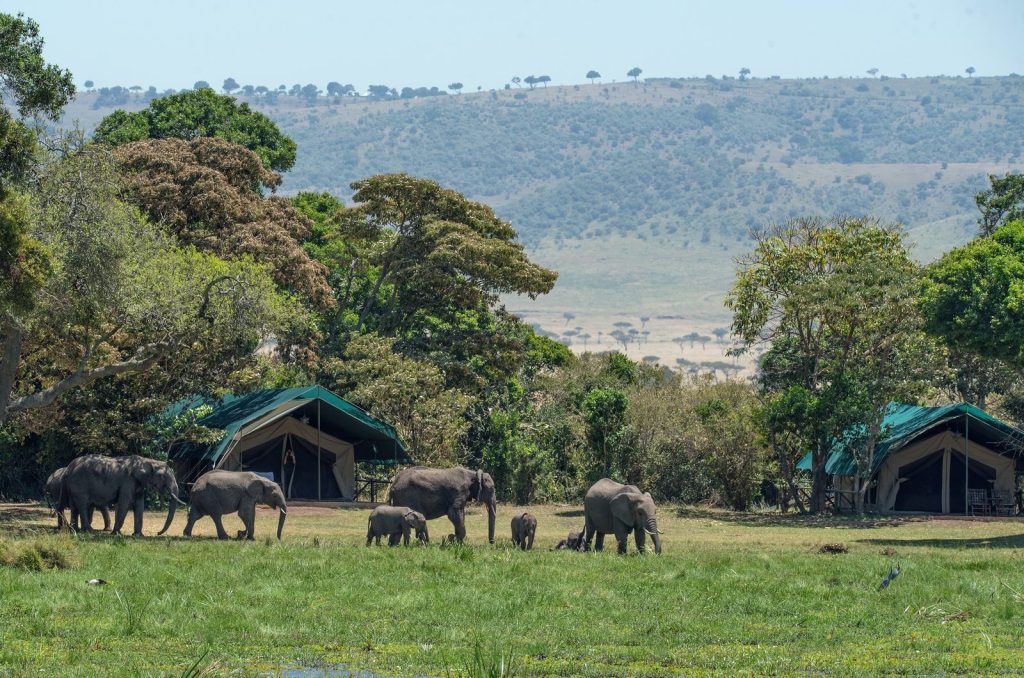
Fixed lodges in central Serengeti offer reliable year-round wildlife. Mobile camps relocate between the south side calving areas, the western corridor, and the far north near the Mara River.
In the Masai Mara Reserve, staying in nearby private conservancies reduces crowding at sightings while allowing full-day visits to the national reserve for river crossing searches.
Ask how many vehicles your camp allows at a single sighting and whether the camp sits within quick driving distance of likely migration routes during your chosen month.
Specialist safari planners can help match camp location to travel dates. Guides’ flexibility and willingness to reposition often matter more than thread count.
Practical planning: when to see which side of the Great Migration
Travelers generally choose between three broad experiences: calving season, long-distance trekking and rutting, or river crossings. Each has its own best months and locations.
Months | Location | What you see |
|---|---|---|
Dec to Mar | Southern Serengeti, Ndutu, Ngorongoro | Calving, predators, short grass plains |
Apr to Jun | Central Serengeti, western corridor | Columns moving north, rutting, Grumeti crossings |
Jul to Oct | Northern Serengeti, Maasai Mara | Mara River crossings, big cats, crocodiles |
Nov to Dec | Central to southern Serengeti | Return south, scattered herds, green season |
Families with younger children may prefer calving season for shorter drives and concentrated sightings. Repeat travelers and photographers often aim for the most dramatic crossings. Combining regions, such as splitting time between the southern Serengeti and the Ngorongoro crater or between the northern Serengeti and Masai Mara, increases your chances of intersecting a million wildebeest on the move.
Responsible ways to see the Great Migration support the ecosystem that sustains it
The Great Wildebeest Migration depends on intact grasslands, predator populations, and protected corridors between the Serengeti and Masai Mara. Fencing and agricultural encroachment have already reduced some subpopulations. Travelers can help by choosing operators that follow park rules at river crossings, avoid surrounding animals with vehicles, and stick to designated tracks.
Smaller, low-impact mobile camps and community conservancies near the Masai Mara contribute to local livelihoods while reducing pressure inside core reserves. Simple choices matter: avoid single-use plastics, respect quiet time at sightings, and let predators feed undisturbed.
Thoughtful travel behavior helps keep the Great Migration intact for future generations of safari-goers and local communities across Kenya and Tanzania.
FAQ about the Great Migration
These questions cover practical points for travelers planning a wildebeest migration safari.
How many days should I plan for a Great Migration safari?
Most travelers benefit from at least four to six nights in migration areas, plus travel days. This buffer allows for weather shifts and long searches for the herds. If you are combining regions, such as the southern and northern Serengeti, plan at least three nights on the ground in each location.
Is it better to base in the Serengeti or the Masai Mara to see the Great Migration?
The Serengeti usually offers better access to calving season and the early northbound journey from December through June. The Masai Mara is known for river crossings from July to October. Many repeat visitors eventually experience both sides of the ecosystem across separate trips.
Are Great Migration safaris suitable for children?
Many camps welcome children, especially during calving season when drives are shorter and sightings are dense. Check age limits and vehicle policies before booking. Some mobile camps and walking experiences are better suited to older children or teens.
What kind of vehicle is best for watching river crossings?
A 4×4 safari vehicle with a pop-up roof or open sides works well. The key factor is having a clear sightline and a patient guide willing to wait at crossings. Private vehicles give families or photographers more flexibility to sit at one river bend all day rather than following a shared schedule.
Do I need special health preparations for a Great Migration safari?
Parts of Tanzania and Kenya lie in malaria zones. Consult a qualified travel doctor about prophylaxis, vaccinations, and general health well before departure. Use insect repellent, sleep under nets where provided, and carry personal medicines for possible delays in remote areas.