
Key Takeaways
- Northern Botswana, especially the Okavango Delta, Moremi Game Reserve, the Linyanti and Kwando area, and Chobe National Park, is one of the best places in Africa to see African wild dogs.
- African wild dogs live in cooperative packs led by a dominant breeding pair and are most active in the cool hours of early morning and late afternoon.
- The dry season, May to October, is the best window. The denning period, roughly June to August, makes packs more predictable because they stay near the den.
- Sightings are never guaranteed, so plan several nights in each area and choose strong local guides.
Why Botswana Is a Stronghold for African Wild Dogs
African wild dogs are one of Botswana’s top safari draws. Picture a line of painted dogs trotting in single file across a golden floodplain at first light, mottled coats catching the low sun as they head toward a hunt. Few experiences on safari match it.
The species is endangered, with far fewer animals left than lions or leopards. Botswana protects one of Africa’s most important wild dog populations across vast, unfenced wilderness, which gives packs the room they need. African wild dogs survive mainly in Southern and East Africa, are rare in North Africa, and are largely absent from West Africa. Estimates suggest Botswana holds a significant share of the remaining wild population, though exact numbers vary by survey. This guide explains where wild dogs occur, how pack life works, when sightings are most likely, and how to watch them responsibly.
Meet the African Wild Dog
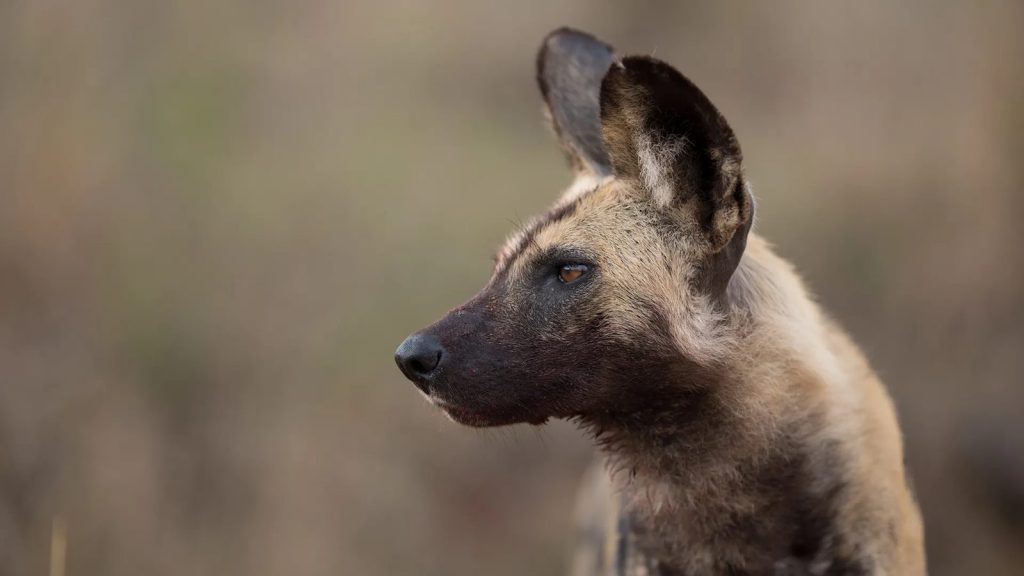
The African wild dog, Lycaon pictus, is unlike any other canid on the continent. Its coat is a patchwork of black, white, tan, and gold, unique to each animal like a fingerprint. Large rounded ears, a lean frame, and long legs make it built for endurance running across open ground.
Conservationists often prefer the names painted dog or painted wolf, which avoids confusion with feral domestic dogs. African wild dogs are the only living species in their genus, adapted to a diet that is almost entirely meat. They are classified as Endangered on the IUCN Red List and have disappeared from most of their historical range.
Pack size varies with the year and conditions. Packs in Botswana’s large wilderness areas can be bigger than in smaller, fenced reserves, because vast habitat can support larger groups. Males usually outnumber females in a pack.
Pack Life: Social Structure and Daily Routine
Wild dog packs are tight family units centered on a dominant breeding pair. Usually only the dominant female and her mate reproduce, while the other adults, yearlings, and older pups cooperate in hunting, guarding the den, and caring for the young. Females often leave their birth pack to join other packs or form a new one, which helps prevent inbreeding.
A typical day follows a clear rhythm:
- Pre-dawn: The pack stirs and greets with high-pitched twittering.
- Early morning: The pack hunts, chasing prey over open ground in a coordinated run.
- Midday: The dogs rest in shade.
- Late afternoon: The pack regroups and often hunts again near dusk.
They are efficient hunters. They mainly hunt medium-sized antelope such as impala and lechwe, though they can tackle larger prey as well, and they eat quickly to reduce the risk of losing a kill to larger predators. Pups usually eat first. During denning, adults regurgitate food for pups and for pack members left at the den. These are very social animals, and they share almost everything. Their communication includes vocal sounds as well as body language.
Where African Wild Dogs Live in Botswana
Northern Botswana is the core. Packs need large territories, often hundreds or even thousands of square kilometers, and prefer open plains and sparse woodland where they can see and run. The main areas for sightings are:
- The Okavango Delta and its surrounding concessions
- Moremi Game Reserve
- Chobe National Park and surrounding areas
- The Kwando, Linyanti, and Selinda area
These areas connect through wildlife corridors and form part of a larger transfrontier conservation landscape, which lets dogs roam, disperse, and establish new territories.
Okavango Delta: A Painted Dog Stronghold
The Okavango Delta is consistently ranked among the best places in Africa for painted dog sightings. Floodplains, palm islands, and mopane woodland create ideal habitat, and abundant prey such as impala and red lechwe supports resident packs.
Many of the best sightings come from private concessions on the edge of the reserve system. In concessions, off-road driving is often permitted and there are fewer vehicles, which means longer and closer sightings. Mobile camps and permanent lodges in the Delta regularly report wild dogs during the dry season, so it makes a strong anchor for a trip focused on this species.
Moremi Game Reserve: A Key Denning and Viewing Area
Moremi Game Reserve, on the eastern edge of the Delta, is one of Botswana’s most reliable areas for wild dog sightings. Packs den in woodland and mopane thickets, and local guides often know which dens are active.
Wild dogs are often seen in the middle of the year because denning anchors pack movements. For weeks, a pack stays close to its den, returning several times a day to feed pups. For travelers, that raises the odds of finding a pack in a given area.
Game drives along roads and floodplain edges are the main viewing method. If your guide knows an active den, your chance of a long, close sighting rises significantly.
Chobe, Linyanti, and Kwando
The northern system extends beyond the Delta. Chobe National Park is best known for elephants, but it delivers painted dog encounters too, especially in the Savuti area and along riverine woodland.
West of Chobe, the Linyanti and Kwando areas are especially productive. Low vehicle density, off-road tracking, and large continuous habitat suit wild dogs well. Some private concessions here also offer night drives, although wild dogs are less active after dark and sightings then are uncommon. Adding two or three nights here to a broader itinerary creates another window for a sighting in a quieter setting. For the wider picture, see our Botswana safari guide.
How Botswana Compares With Other Wild Dog Destinations
Botswana is not the only country to see painted dogs. Mana Pools in Zimbabwe is famous for seeing wild dogs on foot, and parts of Zambia hold populations too. Botswana stands out for scale. Its unfenced landscapes let packs range freely without hitting barriers, which gives travelers focused on one country strong odds of a sighting within a single trip.
Best Time of Year and Day to See African Wild Dogs
The dry season, roughly May to October, is the best window. Thinner vegetation improves visibility, and prey concentrates around remaining water.
| Period | Conditions | Wild dog activity |
|---|---|---|
| May to June | Cool and dry, denning begins | Packs localize near dens |
| July to August | Peak dry season | Denning continues, sightings most predictable |
| September to October | Late dry, hotter | Packs more mobile, still good viewing |
| November to March | Wet season, thick vegetation | Harder to find, packs range widely |
Activity peaks around dawn and again in late afternoon. Midday is for resting. Prioritize your earliest morning and latest afternoon drives for the best action.
What Wild Dog Behavior to Watch For
Knowing what to look for turns a distant glimpse into a memorable encounter.
- Rally and greeting ceremonies: Before a hunt, the pack twitters, licks faces, and signals readiness.
- Sneeze voting: Researchers in the Okavango have documented packs using repeated sneezes as a form of group decision-making before they set off.
- Hunting: A quiet approach, then an explosive chase in which dogs take turns leading.
- Feeding: Pups and injured pack members often eat first.
- Play and grooming: Pups wrestle, adults groom each other, and bonds are reinforced constantly.
Wild dogs also help keep southern Africa’s savanna ecosystems healthy by regulating herbivore populations.
Conservation: Threats and Protection
Wild dogs are one of the world’s most endangered mammals and face serious threats across Africa. Habitat loss and fragmentation are the biggest drivers of decline. Human-wildlife conflict with livestock farmers leads to snaring, shooting, and poisoning. Diseases from domestic dogs, such as rabies and canine distemper, can devastate whole packs, and fragmentation brings them closer to people and domestic animals, increasing disease risk where habitat meets people.
Botswana’s advantage is space. Large unfenced ecosystems and low human density in the north have kept populations more stable than in many other countries. The wider Kavango-Zambezi conservation landscape helps young animals disperse and keeps packs genetically connected.
Conservation work includes long-term pack monitoring, GPS collaring of selected animals, vaccination of domestic dogs near protected areas, and community outreach to reduce retaliatory killing.
Tourism plays a direct role. Nights spent in parks and concessions help justify protecting the landscapes these animals need.
Planning Your Safari: Tips for Independent Travelers
- Combine destinations: Link the Okavango Delta, Moremi, and Chobe or the Linyanti area to cover the main strongholds.
- Stay longer in each area: Spend at least three nights per location. Packs may pass through only occasionally.
- Target the denning window: June to August improves the odds because packs stay near dens.
- Ask about recent sightings: Ask camps whether any packs are active or denning nearby.
- Choose strong guiding: Experienced local guides with tracking skills are the biggest factor in turning a drive into a wild dog encounter.
Seeing a pack is never guaranteed, but northern Botswana offers some of the best odds on the continent. See our Botswana safari cost guide to budget for the extra nights.
Responsible Viewing and Ethical Encounters
Wild dogs are sensitive to disturbance, especially around dens.
- Keep noise low and voices to a whisper near a pack.
- Never block their path or cut off a hunt.
- Follow your guide’s instructions on distance.
- Limit time at den sites, especially where several vehicles gather.
Choosing camps that fund research, anti-poaching, or community programs multiplies your impact.
FAQ: African Wild Dogs and Safaris in Botswana
Are African wild dogs dangerous to humans on safari?
Wild dogs are generally wary of people. Travelers in vehicles who follow their guide face virtually no risk, and attacks on humans are extraordinarily rare. Most packs simply ignore vehicles.
How likely am I to see African wild dogs in Botswana?
Botswana is one of the best places to see them, but sightings cannot be guaranteed because packs cover long distances. Several days in the Delta, Moremi, or northern Chobe improves your odds, especially during denning. Treat a sighting as a special highlight, not a certainty.
Can I see wild dogs on a self-drive safari?
Possibly, in places like Moremi and Chobe. Guides usually have better, more current knowledge of pack locations, which gives guided drives an advantage. Keep to designated tracks and share the road with other vehicles.
What camera gear works best for painted dogs?
A telephoto zoom in the 100 to 400mm range suits open terrain. Use a fast shutter speed to freeze running dogs and burst mode for interactions. Dawn and late afternoon offer the best light and coincide with peak activity.
How can my trip help wild dog conservation?
Visiting protected areas helps fund habitat protection. Choose camps that support research and community programs, and share accurate information about the species when you get home.