

In Botswana, a safari lodge usually offers solid buildings and more amenities, while a tented camp puts you under canvas with a closer connection to the bush. Both can deliver a world-class safari experience with great wildlife sightings, so the choice comes down to comfort versus immersion, not one being better. This guide compares permanent lodges, permanent tented camps and temporary fly camps by experience, comfort and location.
Botswana offers three main types of safari accommodation
Botswana offers a range of accommodation options, and every safari camp falls into three broad groups. Permanent lodges, including luxury lodges, are fixed properties with permanent infrastructure. Permanent tented camps combine canvas tents with proper beds and bathrooms. Mobile and fly camps are temporary setups, moved to follow the season and the wildlife. A mobile tented camp suits mobile camping safaris and mobile safaris in remote wilderness areas.
Many itineraries mix more than one type. A trip might start at a lodge near a town or river, then move to a tented camp in a remote concession. Our Botswana safari guide shows how regions fit together, and many camps and lodges sit in prime wildlife areas or private conservancies.
An African safari lodge offers permanent structures and more amenities
Lodges in Botswana are typically built from solid materials such as timber, stone and thatch. That means better insulation against weather and noise, and a secure feel that many families appreciate.
Lodges often host more guests and provide guests with more extensive amenities, such as a dining room, a bar, communal areas, comfortable beds, hot showers and sometimes private pools, a swimming pool or a spa. You get all the comforts, plus game drives and river cruises at many riverside properties. The experience is closer to a hotel, with a slower pace and reliable comfort. Facilities differ by property, so check what is on offer before you book.
A safari camp trades walls for closeness to the wild
Most tented camps are built from heavy-duty canvas on wooden platforms. Permanent tented camps usually have spacious tents with real beds, linen and en suite bathrooms. Premium camps add extra touches, so you are not necessarily sacrificing comfort. You still hear hyenas, hippos and birds through the canvas at night, which is a unique way to feel the land.
Tented camps generally have a more intimate, exclusive atmosphere, with fewer rooms than a big lodge. Many run on solar power and aim for a lower ecological impact. In Botswana, luxury tented camps can be just as expensive as lodges, so a tent does not always mean a lower price. See our safari cost guide and confirm current rates with each camp.
Fly camps and mobile camps are the simplest and most remote
A fly camp or mobile camp is temporary. Tents are set up in a remote spot, used for a short period, then packed away. Mobile camps can be relocated seasonally to follow wildlife movements and reach areas that fixed lodges do not.
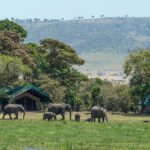
They are usually simpler than permanent camps, with smaller tents and basic amenities, though some operators offer larger tents and en-suite bathrooms. Guests often join bush walks and sometimes help with camp tasks. The reward is a more immersive, intimate experience in remote locations, with elephants and other wildlife close to camp. Our Botswana safari guide explains other trip styles.
Comfort compared: what changes from lodge to tent to fly camp
Comfort rises with permanence. A lodge usually offers the most solid building and the most amenities. A permanent tented camp offers comfort with a wilderness feel. A fly camp offers the least infrastructure and the most adventure. Not all camps are alike, and a safari expert can help you compare.
- Lodge: solid walls, larger common areas, more amenities, more guests.
- Permanent tented camp: canvas with beds and bathrooms, quieter, usually smaller.
- Fly or mobile camp: simple setup, remote location, closest to nature.
If you need air conditioning, a pool or step-free access, ask the property directly. Read luxury versus budget camps to see how camps are priced and positioned.
Location matters as much as the type of safari accommodation
Where a camp sits shapes your days more than its walls do. Wet camps in the Okavango Delta offer calm boat or mokoro trips through flooded channels, while dry camps suit game drives, especially in the dry season. Rivers, pans and forests each change what you see.
Explore the Okavango Delta, the Chobe National Park and Moremi Game Reserve to see which landscapes appeal to you. If you want a boat-based day, our mokoro safari guide explains the experience.
How to choose between a lodge and a tented camp
The best choice depends on your priorities. Weigh comfort against immersion, then match the stay to your group.
- Choose a lodge if you want solid walls, extra amenities or an easier stay with young children.
- Choose a tented camp if you want to hear the bush at night and prefer smaller, quieter camps.
- Choose a fly camp if you want a remote, adventurous trip and do not mind simple facilities.
Season and budget also matter, so read the best time to visit Botswana for safari before you lock in dates. We do not run trips, so ask your chosen operator or camp for current details.
Frequently asked questions
Is a tented camp as comfortable as a lodge?
It can be. Permanent tented camps often have proper beds and private bathrooms, but lodges usually have more amenities.
Are tented camps safe?
Camps follow safety rules and staff escort guests at night where needed. Ask each camp about its procedures.
Which is better for families?
Solid lodge structures can suit families, but policies on children vary, so confirm with the camp.
Are tented camps cheaper than lodges?
Not always. In Botswana, luxury tented camps can cost as much as lodges.
Do I hear animals at night in a tent?
Often yes. Tents offer a closer connection to nature and the sounds of wildlife.
Practical tips for choosing your stay
- Decide first whether you value comfort or immersion.
- Check the camp’s policy on children and mobility before booking.
- Ask about power, charging, and bathroom setup.
- Pack warm layers, since nights and early mornings can be cold.
- Confirm whether rates include drinks, activities and transfers.
- Mix stay types to get both comfort and adventure.