
Nxai Pan National Park sits in northeastern Botswana, quietly hosting one of southern Africa’s great seasonal mammal gatherings while most safari circuits route travelers elsewhere. This guide covers what an independent traveler needs: when to go, where to stay, how to get there, and what to expect on the ground, including the famous Baines Baobabs.
Key Takeaways
- Nxai Pan National Park covers roughly 2,500 square kilometers of grass-covered fossil pans, acacia islands, and open grasslands north of Makgadikgadi Pans National Park, reached from the A3 highway between Maun and Nata.
- The seasonal zebra migration brings thousands of zebra and wildebeest into the park in the rains, roughly December to March, though timing shifts with rainfall. Confirm current conditions with DWNP or the camp before booking.
- Nxai Pan Camp is the main lodge inside the park, and public campsites near the main pan and Baines Baobabs are the usual options for campers. Both campsites require self-sufficiency.
- The Baines Baobabs, a cluster of ancient baobab trees painted by Thomas Baines in 1862, remain a primary draw alongside predator viewing at permanent waterholes.
- Self-drivers need a high-clearance 4×4, a full fuel tank (there is no fuel in the park), recovery gear, and plenty of drinking water.
Overview of Nxai Pan National Park
Nxai Pan National Park is on the northern fringe of the Makgadikgadi basin in Botswana, north of the A3 tar road that connects Maun and Nata. Makgadikgadi Pans National Park lies to the south, on the other side of the highway. The park covers fossil lake bed, salt pan, mopane woodland, and open plains dotted with acacia trees.
The name “Nxai Pan” refers to a grassed-over fossil lake bed. This pan was once part of a vast super-lake, often called Lake Makgadikgadi, that covered much of northern Botswana before the climate dried. Today the landscape features ancient salt pans and savannah, flat horizons, lonely waterholes, and scattered islands of woodland. Travelers use “Nxai Pan,” “Nxai Pans,” and “Nxai Pan National Park” interchangeably. Strictly, the pan is the fossil lake bed, while the national park covers the broader protected area, including Kudiakam Pan and the Baines Baobabs.
History, Origins, and San Heritage
As the ancient super-lake retreated over millennia, it left behind a series of salt flats and fossil pans across northern Botswana. Nxai Pan and neighboring Kudiakam Pan sit slightly higher than the major salt pans to the south, which is why they are grassed over rather than bare white crust.
The name “Nxai” is often linked to a San word, and the area has long been part of San heritage. Veterinary fences in the 1960s cut old cattle routes through the region, and the area was later protected, first as a game reserve and then as a national park. The painter Thomas Baines traveled through the broader region in the 1860s, and his 1862 paintings of the baobab cluster helped put the area on early European maps.
Landscapes, Seasons, and Nxai Pan Highlights
Two distinct landscapes exist within the park. Nxai Pan itself is the main game-viewing area: a wide, grassed fossil lake bed where large herds of springbok roam alongside gemsbok and zebra. Kudiakam Pan, to the southwest, is where the Baines Baobabs stand at the pan’s edge, surrounded by stark salt flats.
The contrast between dry and wet seasons reshapes everything. From roughly May through October, the dusty plains bake under dry heat, animals cluster at pumped waterholes, and driving is straightforward on hard sand tracks. After the summer rains arrive, usually around December, Nxai Pan turns lush with emerald grass, thunderclouds stack over the horizon in the afternoons, and herds spread across the open grasslands. Highlights include wide horizons ideal for photography, the silhouette of ancient baobab trees against golden sunsets, lions resting near the main waterhole in the midday heat, and star-filled skies at night. The park’s remote location and near-total absence of light pollution make it excellent for stargazing, and on a clear dry-season night the Milky Way arcs from horizon to horizon.
Wildlife and Birding in Nxai Pan National Park
Nxai Pan National Park delivers excellent game viewing, particularly after the rains, and the park plays an important role in conserving habitats and migration corridors that link the Okavango Delta, Makgadikgadi, and beyond. If you are building a wider route, see our guides to the Okavango Delta and Moremi Game Reserve.
Typical mammals independent travelers can expect to see:
- Plains game: springbok, impala, zebra, wildebeest, gemsbok, and eland. The park is known for its large herds of zebra, and desert-adapted grazers such as gemsbok persist year-round.
- Larger mammals: elephants and buffalo often visit in the dry months, concentrating near pumped waterholes. Giraffes browse the acacia islands.
- Predators: the influx of herbivores attracts lions and cheetahs. Spotted and brown hyena, black-backed jackal, and occasional African wild dog sightings round out the list.
- Smaller species: bat-eared foxes, honey badgers, and various nocturnal animals, visible on night drives where licensed operators offer them.
Birdlife in the wet season attracts a wide variety of species, including kori bustard, secretarybird, northern black korhaan, pale chanting goshawk, and summer migrants. In wet years, when shallow water collects on the pans, flamingos and pelicans sometimes appear. Lions, giraffes, and elephants can be found in the park through the year, though numbers fluctuate with water and grazing.
The Zebra Migration and the Best Time to Visit
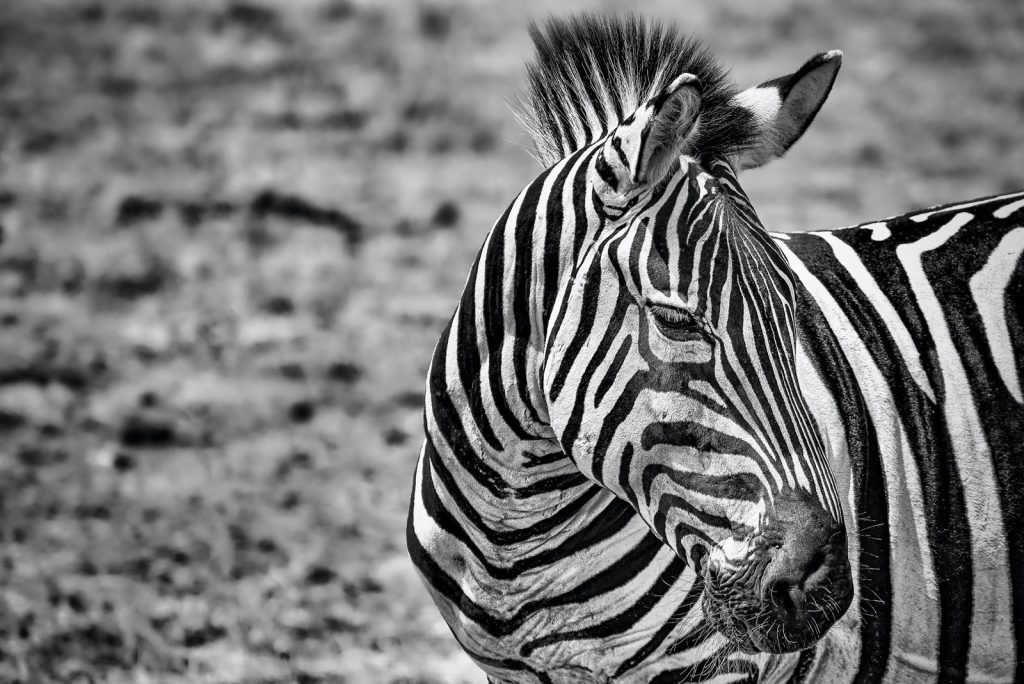
Nxai Pan is known for one of Africa’s notable zebra migrations. Following the summer rains, the park attracts large concentrations of migrating herbivores. Thousands of zebras arrive after the rains begin, joined by wildebeest and various antelope. Peak numbers often fall between about January and March, when nutrient-rich grasses cover the pans. The migration also brings predators, which makes this period the best for both herbivore and predator viewing.
The best travel time for the migration is roughly December to March. The rainy season, roughly December to April, delivers dramatic landscapes, young animals, green backdrops, and storm light for photographers. The dry season, May to October, offers cooler nights, easier road conditions, and concentrated game at waterholes, which suits first-timers or families seeking less heat. For a country-wide comparison, read our guide to the best time to visit Botswana for safari.
Shoulder months such as November and late April can be unpredictable. Early or late rains shift wildlife movements, so confirm current rainfall patterns with the camp or DWNP when planning. Allow flexibility in your itinerary, since a week’s difference in when the rains arrive can change what you see.
Famous Baines Baobabs and Ancient Baobab Trees
On the edge of Kudiakam Pan stands a cluster of ancient baobab trees that has become one of Botswana’s most photographed sights. The Baines Baobabs rise from flat, cracked earth with sculptural forms that look almost the same as they did when Thomas Baines painted them in 1862.
These baobabs are often described as many centuries old, and they grow slowly, which is why Baines’ original painting remains a recognizable match. Treat any specific age you read as an estimate.
Reaching the Baines Baobabs means following a turnoff from the main park track toward Kudiakam Pan. A basic campsite sits nearby with simple facilities and typically no running water, so travelers must be fully self-sufficient. Sunrise and sunset produce the best photographic light, with long shadows stretching across the pan. Respect the trees: no bark carving, stay on existing tracks, and pack out all food and rubbish. These ancient baobabs are irreplaceable.
Where to Stay: Nxai Pan Camp and Campsites
Accommodation inside the national park is deliberately limited, which preserves the isolation that makes this place distinctive.
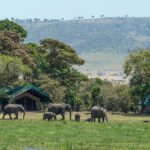
Nxai Pan Camp is the main lodge in the park. It sits on raised ground overlooking the main pan and a central waterhole that draws elephants, giraffe, and lions through the year. It offers tented units with private bathrooms, a pool, and guided activities. Rates and inclusions vary by season, and the camp may close for part of the year, so confirm availability before booking.
The park also has public campsites, including one near the main gate area and one near the Baines Baobabs. The gate-area site is easier for self-drivers who want quick access to game loops, while the Baines Baobab site is remote and best suited to experienced 4×4 travelers seeking isolation.
- Nxai Pan Camp suits travelers who want guided activities and comfort.
- The main-gate campsite works for self-drive visitors wanting easy access to game loops.
- The Baines Baobab campsite is for experienced 4×4 travelers seeking solitude.
Booking is essential in high season. Campsite reservations typically go through DWNP or authorized booking agents. Always confirm current park entry fees, which change, before setting out. For a wider budget view, see our Botswana safari cost guide.
Getting There, Roads, and Self-Drive Essentials
The main entrance to Nxai Pan National Park is reached from the A3 highway, roughly midway between Maun and Nata. Allow around three hours from Maun to the turnoff, then a sand track to the gate that takes considerably longer than the same distance on tar.
A high-clearance 4×4 is strongly recommended for all touring inside the park. Tracks are sandy year-round and can become muddy or waterlogged in the rainy season. The route to the Baines Baobabs crosses or skirts pan surfaces that may be impassable when wet. Lower your tire pressure in deep sand, carry a shovel, tow straps, and a high-lift jack, and avoid driving onto visibly wet pan surfaces.
There are no fuel stations, shops, or restaurants in the park. Fuel up in Maun or Gweta, and arrive with a full tank, reserve jerry cans, and ample drinking water.
Park gate hours shift by season, and fees can change. Contact DWNP or your chosen camp shortly before travel to confirm the latest information.
Safari Activities and Suggested Itineraries
Visitor activities in Nxai Pan include game drives, birdwatching, and in some cases guided walks with San guides, arranged through the lodge or desert guides operating in the area. At the camp, the typical daily rhythm follows an early morning game drive, a midday rest at the waterhole viewing deck, and an afternoon or sunset drive.
A practical two to three night itinerary for independent travelers:
- Day 1: Arrive by early afternoon. Settle into camp or campsite. Explore the main pan waterhole area in the late afternoon.
- Day 2: Spend a full day combining game viewing on the open pans with a trip to the Baines Baobabs. Allow generous time each way depending on conditions.
- Day 3: Take a final early morning drive, then depart toward Maun, Nata, or south into Makgadikgadi Pans National Park.
Nxai Pan fits well into a broader Botswana road trip. A common loop connects Nxai Pan, Makgadikgadi Pans National Park, the Boteti River area, and the Okavango Delta or Moremi Game Reserve. Solo self-drivers should consider traveling in convoy during the rainy season, and those unfamiliar with remote 4×4 travel may prefer lodge-based activities. For a full planning overview, start with our Botswana safari guide.
Responsible Travel and Safety in Nxai Pan
Nxai Pan is a true wilderness area. Lions, elephants, and other animals roam freely. Never walk away from vehicles or campsites except in designated areas or with a qualified guide. Keep a safe distance from all animals and avoid driving at night unless on a sanctioned night drive.
Stick to existing tracks to prevent scarring the pan surfaces. Use only designated fire pits at campsites. Keep noise to a minimum at waterholes.
Acknowledge the San heritage in the area. Choose operators that support local communities when possible, and ask permission before photographing local people.
Medical facilities are far from the park. Carry a good first-aid kit, share your itinerary with someone at home or in Maun, and consider a satellite communication device for remote travel. Self-drive visitors need their own rescue and backup plans.
FAQ
Do I really need a 4×4 to visit Nxai Pan National Park?
The tarred A3 road gets you close to the gate, but inside Nxai Pan National Park the tracks are deep sand, and in the wet season they can turn to mud. A high-clearance 4×4 is the safest choice. Lodge guests may be transferred in the camp’s own vehicles, but self-drivers should not attempt the pans in a two-wheel-drive vehicle.
How many days should I spend in Nxai Pan?
Plan at least two to three nights. That allows a full day for game drives on the main pan plus a visit to the Baines Baobabs, with buffer time for weather delays. Serious photographers or travelers combining Nxai Pan with Makgadikgadi or the Boteti River might stretch to four or five nights.
Is Nxai Pan suitable for children and first-time safari visitors?
A lodge stay can work well for families, but confirm the camp’s current policy on children. Camping in unfenced sites near wildlife requires more experience. First-time visitors without 4×4 skills should consider a lodge stay or travel with an experienced self-drive group.
Can I visit Nxai Pan National Park as a day trip from Maun?
A day trip is technically possible, but it means many hours of driving each way. Staying at least one night inside the park gives access to early morning and late-afternoon game drives, when animals are most active.
Do I need to book Nxai Pan Camp and campsites far in advance?
During the zebra migration period (roughly December to March) and Botswana school holidays, the camp and the limited campsites fill up. Book several months ahead for peak season. Check directly with the camp or DWNP to confirm permits, campsite availability, and payment requirements before starting your trip.