
The Okavango Panhandle is the northern stretch of the Okavango River, where the river enters Botswana and runs through deep, permanent channels before it spreads into the Delta. It is quieter than the seasonal floodplains farther south, and it suits safari travelers who care about birding, fishing, and slow water travel. Shakawe is the usual base, and the Tsodilo Hills lie within reach.
The Okavango River enters Botswana at the Panhandle
The Okavango River rises in the Angolan highlands and flows through Angola and Namibia before it crosses into Botswana. The Okavango River enters Botswana at the Panhandle, in the northwest of the country, near the Caprivi Strip border area. Published sources describe the Panhandle region as roughly 70 km long, though figures vary.
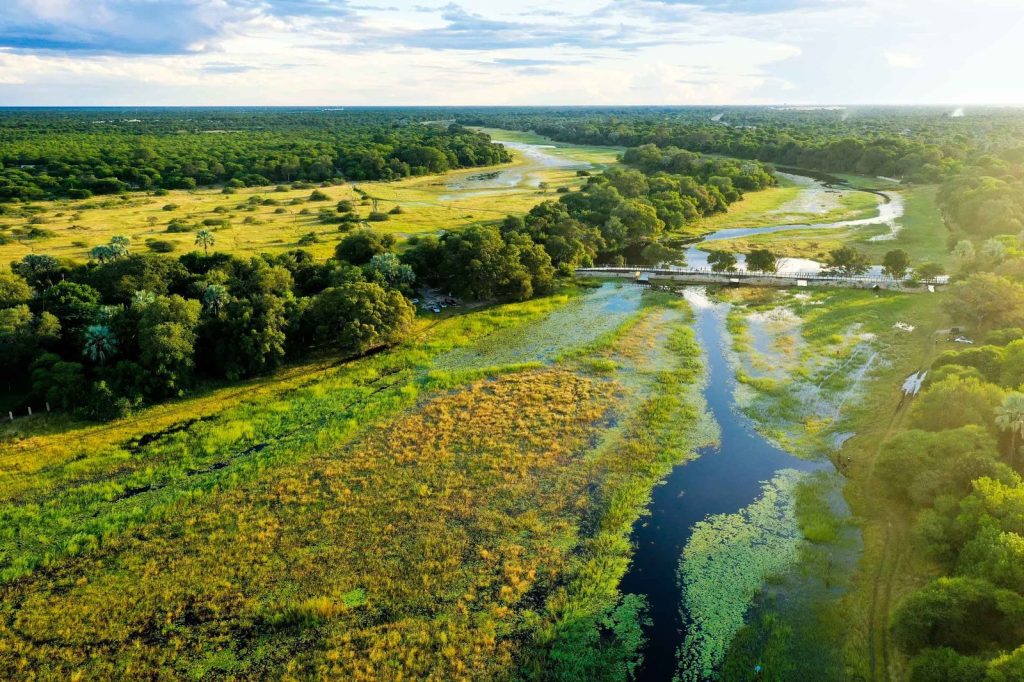
Here the river runs between thick banks of papyrus, and the channels are deep and fast flowing in places. Wide lagoons, islands, and swamps line the edge of the river, and the desert lies not far beyond. Our Okavango Delta guide explains how this northern section feeds the larger wetland downstream.
The Panhandle works differently from the Delta’s seasonal floodplains
In the Delta, floodwaters spread across a fan of seasonal floodplains, and water levels rise and fall through the year. In the Panhandle, the river stays in permanent waterways, so the experience stays fairly constant across seasons. Boat travel is the main way to explore, with a few walking trails and no long game drives.
That difference shapes your trip. The Panhandle offers water activities, bird watching, and fishing, while the southern Delta is known for mokoro trips and wildlife among the islands. If you want to compare the two, read about a mokoro safari in Botswana and the wider Botswana safari guide.
Birding is the headline reason to visit
Published sources say the region is home to hundreds of bird species, and bird watching is excellent along the river forests and lagoons. Fish eagles, carmine bee-eaters, and other river birds draw visitors. Pel’s fishing owl is the one many birders hope to see, though sightings are never guaranteed.
Migratory birds visit in the wetter months, from roughly October into the early part of the year, and some nest in the dry banks when water levels are low. Ask your lodge when the best birding is likely, because timing varies. Our Botswana birding guide covers species and seasons across the country.
Tigerfish and bream make the Panhandle a fishing destination
The Panhandle is known for excellent fishing, and tiger fishing for tigerfish and bream is the main draw. Published sources say about seventeen fish species live in this stretch of river, and catfish runs have drawn anglers between August and November. Rules for catch and release, gear, and permits change, so confirm them with your lodge and the local authorities before you book.
Fishing is typically done from a boat with a guide who knows the channels. If fishing is not your goal, a quiet houseboat trip is another way to spend a day, and the serenity of the water is part of the appeal. Rates for all of this change, so ask providers directly and see our Botswana safari cost page for budgeting advice.
Wildlife along the river includes hippos, crocodiles, and the elusive sitatunga
Hippos and crocodiles are common along the channels, and you will often see them from a boat. Papyrus banks are home to the sitatunga, a shy antelope that is rarely seen. Big game, including elephants, is more likely on the eastern side and in the drier areas than along the water itself, and most animals thrive away from the main channel.
Treat every riverbank with respect, because hippos and crocodiles are dangerous. Never swim in the river, and follow your guide’s instructions. Our guide to staying safe in Botswana explains broader safety points for tourists.
Visiting Tsodilo Hills from the Panhandle
The Tsodilo Hills rise from the flat landscape west of the river, and published sources place them about 40 km from the Panhandle. They are a UNESCO World Heritage Site, known for ancient rock paintings, and sources describe hundreds of rock art sites. Some paintings are said to be very old, though dates differ between accounts, and the historical and spiritual value of the site is widely recognized.
Nearby Tsodilo Hills visits usually mean a guided walk on sandy tracks, so ask your lodge about road conditions and vehicle needs. The location is remote, so plan fuel and water. Entry arrangements, local guides, and fees change, so confirm them in advance, and follow guide instructions to respect the area and the people who care for it.
Getting to the Panhandle and choosing a place to stay
Most travelers reach the Panhandle from Maun, either by a long road journey or by a light aircraft transfer. Road conditions and flight schedules change, so check current options with your lodge. Plan more time than the map suggests, and enjoy the quiet wilderness once you arrive.
Accommodation includes riverside lodges, fishing camps, and houseboats, and the tranquil setting suits a slow pace. Prices vary widely, so see our luxury vs budget camps guide and confirm rates with each provider. Trav Heir is a travel journal, not an operator, so book through the lodge or an operator you trust. For timing, see the best time to visit Botswana; the cooler months are often described as the most comfortable, with warm days and mild nights, but check current advice.
Frequently asked questions
What is the Okavango Panhandle?
It is the northern section of the Okavango River in Botswana, with permanent channels, papyrus banks, and lagoons, upstream of the Delta.
Is it safe to swim in the Okavango Delta?
No. Hippos and crocodiles live in these waters, so avoid swimming and follow your guide’s advice.
When is the best time to visit the Panhandle?
Birders often like the wetter months, and anglers often prefer the dry months from August to November. Conditions vary, so ask your lodge.
Is the Panhandle expensive?
Costs depend on the lodge, the season, and how you travel. Ask providers for current rates, because prices change.
Practical tips for planning an Okavango Panhandle trip
- Pack binoculars, a sun hat, and insect repellent.
- Confirm fishing rules and permits with your lodge.
- Ask about road conditions before driving to Tsodilo.
- Allow extra days for travel from Maun.
- Check malaria advice with your doctor before you go.
- Respect hippos, crocodiles, and local communities.
- Book flights and transfers early in the dry season.