
Makgadikgadi quad biking meerkats trips combine two of the most distinctive things you can do in central Botswana. Quad biking across the Makgadikgadi Pans and spending a morning with habituated meerkats are both offered by lodges and operators in the pans area, usually on a guided basis. This guide explains what to expect, how sunrise and sunset change the experience, and how to take part responsibly.
The Makgadikgadi Salt Pans are a vast salt landscape in the Kalahari Desert unlike the rest of Botswana
The Makgadikgadi Salt Pans are among the largest salt pans on earth and a memorable part of any Botswana safari, a pale, flat expanse in the Kalahari Desert that feels almost like another planet. They are the remnant of a massive extinct super-lake that once covered much of this part of southern Africa. In the dry season the surface is hard and cracked, with a horizon that seems to go on forever. After rain, parts of the area can hold shallow water and attract birds.
The pans suit travelers who want wide open spaces, silence, and big skies, a clear contrast to the water and reeds of the Okavango Delta. Many itineraries add a night or two here between Maun and Chobe National Park, as part of a wider Botswana safari. A delta safari and the pans make a good pairing, and a safari lodge or camp on the edge of the pans lets you explore both the desert and its wildlife.
Quad biking lets you cross the pans at a gentle pace
Guided quad biking on the pans is a popular activity at camps in the area. You ride as a group behind a guide, usually at a modest speed, across the open surface. Quad biking and meerkat visits are usually separate activities, so ask how your camp schedules them. Most operators give a short lesson first, so riding experience is not usually required.
Expect dust, sun, and wide-open landscapes. It is a straightforward adventure rather than a technical ride. Operators often provide helmets and scarves, but ask what is included. Check age and weight rules in advance, because they vary by operator. Some operators may also offer scenic helicopter flights over the pans, so ask what is on offer.
Sunrise and sunset change how the pans look and feel
Sunrise rides start in the cool, soft light, which is good for photos and comfortable temperatures. Sunset rides often end with a stop for drinks while the sky changes color across the flats, and clear skies after dark bring a huge spread of stars. Cold mornings may call for a hot chocolate or tea at the first stop. Midday can be hot and harsh, so many operators avoid it.
Some camps offer sleep outs on the pans, where you sleep under the stars in the Kalahari Desert with very little light pollution. Availability depends on the season and the operator, so confirm details when you book.
Habituated meerkats let you watch wild animals up close
Meerkats are small social mongooses that live in family groups and dig burrows in the ground, and meerkat colonies spend the day foraging for insects and other small prey. Habituated groups, and semi habituated groups that are still getting used to people, have gotten used to human presence over time, so visitors can sit quietly nearby without causing alarm. They are still wild animals and are not pets.
An early morning visit is common, when meerkats emerge from their burrows to forage and warm up in the sun, often standing on their hind legs to scan for danger. Guides usually ask you to sit on the ground and stay calm. Meerkats may climb on a person for a better lookout, which is a charming moment but should always happen on their terms.
Responsible practice protects both animals and landscape
Good operators set clear rules. They keep group sizes small, avoid feeding, and move vehicles slowly near burrows. Ask how the operator manages the meerkat group and how they limit visits.
On the pans, stay on marked routes and follow your guide’s line. Driving or riding off track can damage fragile surfaces and disturb wildlife. Take every piece of trash with you.
Do not touch or chase meerkats, and keep your voice low. If an animal shows stress, your guide should end the encounter. Choose operators that put the animals first. Responsible tourism helps support local communities and conservation efforts, so your choice of operator matters.
Plan your Botswana safari timing around the season and the zebra migration
The dry season, roughly from May or June to October, is typically the most practical time for quad biking, since the surface is firm. The wet season, roughly November to April, turns the grasslands green and brings fresh grazing that can draw zebras, wildebeest, springbok, and flamingos, and the longest zebra migration in Africa is often linked to this season, though the timing of the Makgadikgadi zebra migration changes from year to year. Predators such as lions and brown hyena may follow the herds across the nearby grasslands, and the seasonal wetlands can look completely different from the dry pans. The salt crust needs to be dry and firm enough to ride, so quad biking is generally not possible in the wet season, and the pans can turn into shallow, lush wetlands. Meerkat visits may also be affected by weather and burrow activity.
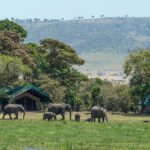
Our guide to the best time to visit Botswana for safari can help you place the pans in your wider route. For the other end of the spectrum, see Nxai Pan and Baines’ Baobabs, a national park area that is nearby and often combined with this one. Depending on the season, elephants and other wildlife may turn up in the nearby national park areas.
Kubu Island and ancient baobabs make a beautiful Botswana detour
Kubu Island is a granite outcrop rising from the salt pans, with ancient baobabs that have stood for centuries. Ancient baobab trees also line parts of the nearby national park areas, which is why many itineraries pair the pans with Nxai Pan. Access depends on the season and the condition of the surface, so confirm with your operator before you plan around it.
What to bring for the pans
Pack sunscreen, a wide-brimmed hat, sunglasses, and a scarf or buff for dust. Mornings and evenings can be cold, so bring layers, and add a warm jacket and gloves for sunrise rides. Wear closed shoes and long pants for quad biking.
Bring a camera, but keep it in a dust-proof bag when you ride. A refillable water bottle is useful, and a small flashlight helps at night. Ask your camp what they supply before you pack.
Delta safari add-ons and other questions about quad biking and meerkats
Do I need a license to ride a quad? Operators usually provide a short lesson and guide you. Rules differ, so confirm with the operator.
Can children join? Age limits vary. Ask the operator about both quad biking and meerkat visits.
Are meerkat sightings guaranteed? No. They are wild animals, and activity depends on weather and conditions.
Can I combine the pans with other areas? Yes. Many travelers pair the pans with the Central Kalahari or the Okavango Delta, and some add Kubu Island, a granite outcrop with ancient baobab trees. Many travelers from around the world describe a Botswana safari that includes the pans as an unforgettable experience. See our Botswana safari guide for routes.
Practical tips for the pans
- Book with an operator that explains its meerkat and quad rules clearly.
- Choose sunrise or sunset for comfort and light.
- Stay on the guide’s route and follow safety instructions.
- Sit quietly with meerkats, and never feed or chase them.
- Wear layers, sun protection, and closed shoes.
- Confirm age limits, seasonal availability, and costs with the operator.
- Of course, allow at least one night in the area, so you are not rushing.