
A scenic flight over the Okavango Delta shows you the landscape as a whole: winding channels, lagoons, islands, and the elephants, giraffes, and hippos that move through them. Most flights depart from Maun, and you can choose a small fixed-wing aircraft or a helicopter. This guide explains what each option offers, when to go, how bag limits work, and which safety questions to ask before you book.
Flight lengths, prices, and rules change, so confirm details with your operator before you commit.
Okavango scenic flights show the Delta as one living system
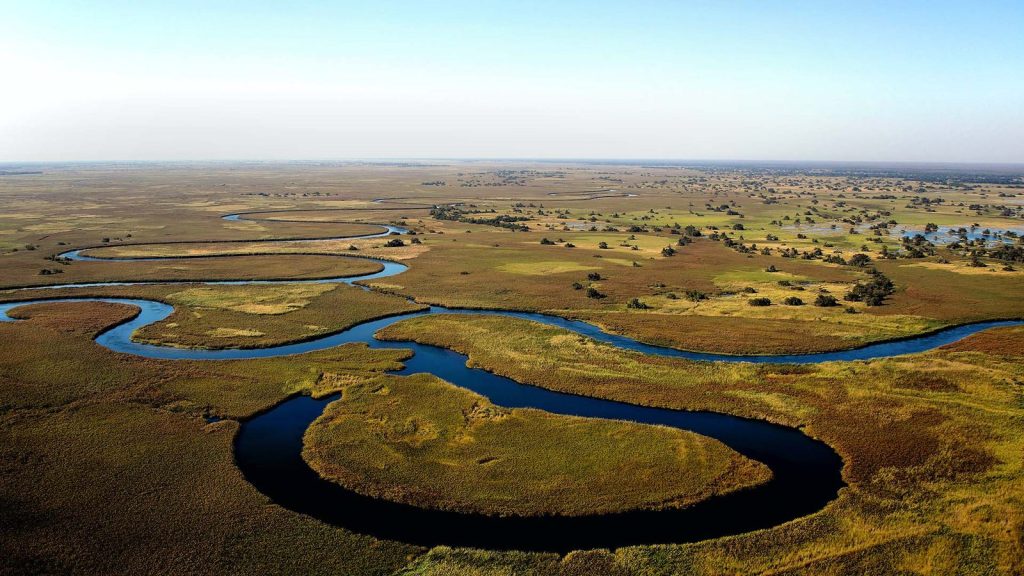
From the ground, the Delta can feel like a maze of reeds and water. From the air, the pattern becomes clear. Channels branch and rejoin, islands sit like green coins, and the network of lagoons and floodplains shifts with the seasonal flooding.
This is the best way to grasp the sheer scale of the Okavango Delta, a UNESCO World Heritage Site. Many travelers find it a breathtaking way to discover the Delta, and many say the view changes how they understand the rest of their safari. Our Okavango Delta guide explains how the water arrives and why it matters.
Small planes and helicopters offer very different views
A fixed-wing scenic flight in a light aircraft, such as a Cessna Grand Caravan or a similar type, usually lasts around 45 to 60 minutes, though lengths vary by operator. A window seat is common, but ask whether yours is guaranteed. Planes fly at a steady height and cover more ground, so they suit travelers who want the big picture.
A helicopter flight can fly lower, hover over a sighting, and sometimes offer doors-off options for unobstructed photography. Helicopter flights are often shorter, and some operators include a stop on an island for refreshments. Ask exactly what is included, because options differ.
You can often spot elephants, giraffes, and hippos from above
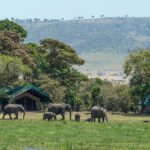
Wildlife viewing from the air is different from a game drive. You may see elephant herds crossing floodplains, giraffes at the edge of a line of trees, and hippos in deep channels. Buffalo and antelope can also show up as small dots moving across open ground, and you can see how wildlife moves between dry land and water.
Sightings are never guaranteed, and the aircraft will not follow animals closely. Treat the flight as a way to see the landscape, with wildlife as a bonus.
The best season depends on what you want to see
The Delta’s water arrives from rain that falls far upstream, so the flood often peaks during the dry months and looks very different from the rainy season. In the dry months, animals gather near water, and the contrast between green channels and dry land is striking. In the green season, the landscape is lush and skies can be dramatic, though weather can affect flights. Early November can be hot in the Delta region during the day.
There is no single best month. Read our best time to visit Botswana for safari guide, then ask your operator what the Delta is doing during your dates. Early morning and late afternoon flights usually give the best light for photography.
Maun Airport is the main departure point for flights over the Delta
Maun is the nearest international airport to the Delta and the primary hub for scenic flights, fly-in camps, and travelers heading into northern Botswana. Scheduled flights have connected Maun with Johannesburg, though schedules can change, so check current timings. If you are arriving by air, see our Maun airport guide for what to expect, and read our Maun guide for the town itself. For wider planning, our how to get to Botswana guide covers international routes.
Access to remote areas of the Delta is mainly by light aircraft, and shared charter flights are the most common way to reach camps. A late arrival into Maun can mean missing the onward flight and needing an overnight stay. Transfers from Maun commonly take roughly 15 to 30 minutes by air, so you may already be flying over the Delta on your way to camp. Road transfers into the heart of the Delta are uncommon, and long drives are rarely the way in.
Bag limits are strict on small aircraft
Small aircraft have tight weight limits, and soft-sided bags are the norm. Many operators cap luggage at around 20 kg per person, including carry-on, but limits vary. Hard suitcases usually do not fit in the cargo pod.
Ask your operator for the exact limit in writing, and remember that camera gear counts toward the allowance. Some flights weigh passengers and bags together, so confirm the weight in advance. For packing and money matters, see our Botswana money and tipping guide.
Safety questions to ask before you book
Small-aircraft flying in Botswana is common and is how most guests reach remote camps, but you should still ask questions. A good operator will answer directly.
- Is the company licensed to carry passengers, and can it show proof?
- How much experience does the pilot have on this route?
- How are aircraft maintained and inspected?
- What happens if weather forces a delay or cancellation?
- Does your travel insurance cover small-aircraft flights?
- For doors-off helicopter flights, what harness and briefing are used?
If an operator cannot answer these questions, choose another.
Photography tips for a flight over the Delta
Use a fast shutter speed to freeze motion, and keep your lens close to the window without touching it, since vibration can blur images. Wear dark, non-reflective clothing so you do not reflect in the glass. Early morning and late afternoon light adds depth to water and shadows.
A wide angle lens captures the scale of the landscape, while a short zoom helps you pick out elephants or hippos. Keep your strap and gear secure, especially on doors-off flights.
Combine a flight with a wider Botswana safari
A scenic flight fits easily into a longer Botswana adventure. Many travelers fly over the Delta, then explore the wilderness on foot or by vehicle at a camp. Others pair the Delta with Chobe National Park in the north (see our Chobe guide), or with neighboring countries such as Namibia or Zambia as part of a wider Africa trip.
Plan at least a week in Botswana if you want time on the ground as well as in the air, especially with children. Check availability early, since small operators have limited seats and aircraft.
Note that a flight can be arranged through your camp or booked directly, and either way you should take account of accommodation in Maun if timings slip. Allow about an hour for the whole experience, including the briefing, and keep your guests together at check-in so the crew can weigh bags and seat everyone safely. For wildlife and safari lovers, this is a top destination for a flight.
FAQ
How long does a scenic flight over the Okavango Delta last?
Fixed-wing flights generally last around 45 to 60 minutes, and helicopter flights are often shorter. Longer flights may be available on request, so confirm the duration with your operator.
Where do scenic flights depart from?
Most depart from Maun Airport, which is the main gateway to the Delta.
Is a helicopter flight better than a plane?
Helicopters can fly lower and may offer doors-off views. Planes cover more ground and may cost less. The better choice depends on your goals and budget.
How much does a scenic flight cost?
Prices vary by operator, aircraft, and duration, and they change over time. Request a current quote before booking and check what is included.
Practical tips
- Book flights early for peak months, and confirm the departure time.
- If your arrival is too late to continue by light aircraft, you may need to stay overnight in Maun.
- Pack soft bags and check the weight limit, especially when traveling with children.
- Wear layers, since the aircraft can be warm on the ground and cool in the air.
- Bring a wide angle lens and a short zoom.
- Do not forget water, sunscreen, and a hat.
- Ask about cancellation and weather policies.
- Check that your insurance covers small-aircraft flights.