
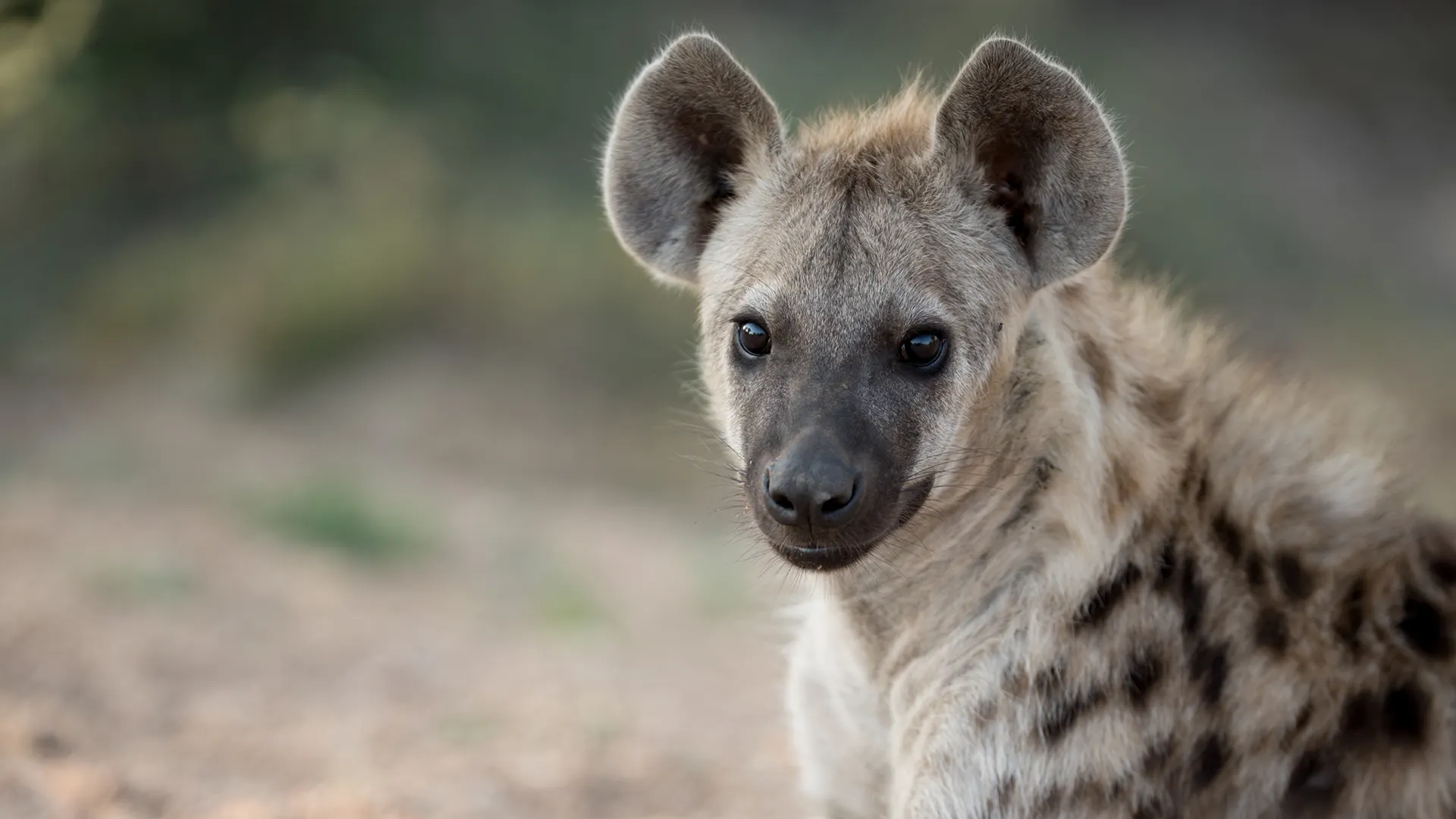
A spotted hyena is often heard before it is seen.
The sound may rise from the dark as a whoop, a cackle, or a low call rolling across the plains. Then a shape appears at the edge of a track: high shoulders, sloping back, heavy head, rounded ears, and eyes that miss very little. It pauses, listens, and moves on with a loping gait that can carry it for miles.
Few African animals are more misunderstood. The spotted hyena is often dismissed as a scavenger, but that is only part of the truth. It is also a powerful hunter, a clan animal, a bone-crusher, a rival to lions, and one of the most socially complex carnivores on the continent. To understand the spotted hyena is to look past old stories and watch the animal itself: intelligent, adaptable, vocal, and essential to the health of wild ecosystems.
Quick Facts Table
| Quick Fact | Details |
|---|---|
| Common name | Spotted hyena |
| Also known as | Laughing hyena |
| Scientific name | Crocuta crocuta |
| Animal group | Mammal, carnivore |
| Family | Hyaenidae |
| Closest relatives | More closely related to cats, mongooses, and civets than to dogs |
| IUCN status | Least Concern |
| Population trend | Generally considered decreasing outside some protected areas |
| Estimated population | Roughly 27,000 to 47,000 individuals |
| Main range | Sub-Saharan Africa |
| Habitat | Savannas, grasslands, open woodlands, semi-arid areas, scrub, and some montane habitats |
| Diet | Mostly carnivorous; hunts and scavenges |
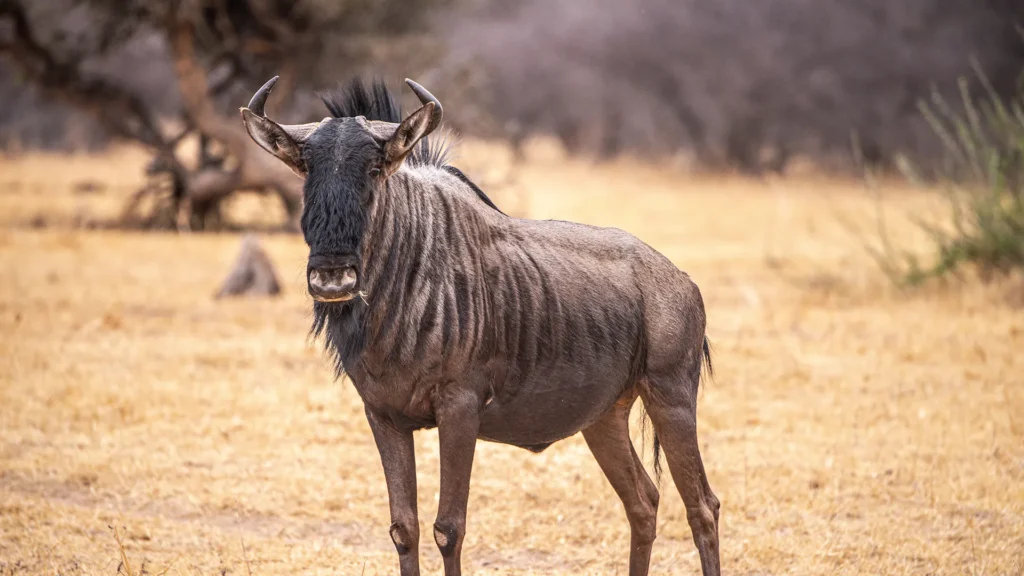
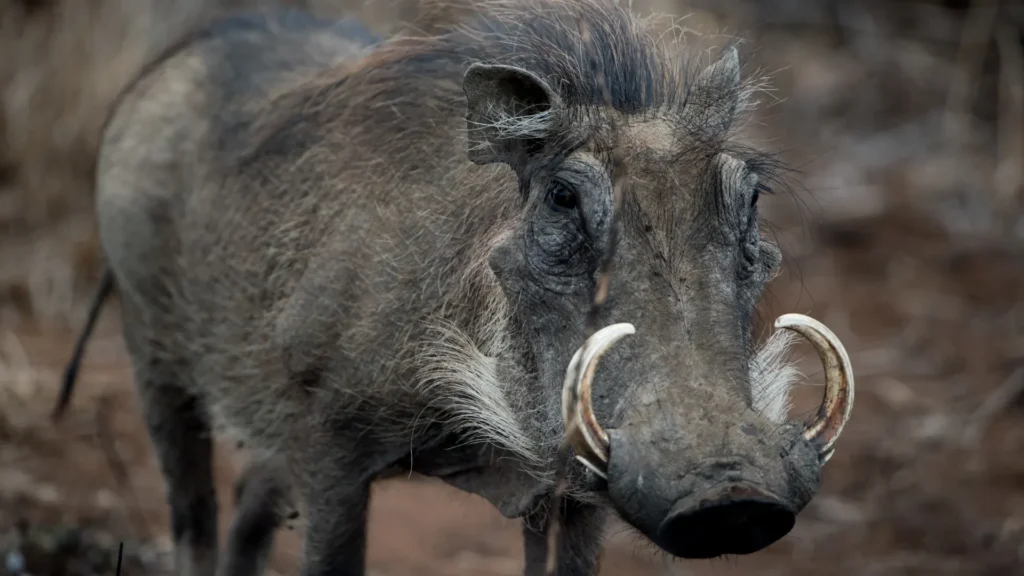
| Main prey | Wildebeest, zebra, antelope, gazelles, warthog, livestock in conflict areas, and carrion |
| Social structure | Female-dominated clans |
| Group name | Clan |
| Gestation | About 110 days |
| Typical litter | Usually 1 to 2 cubs, sometimes 3 |
| Lifespan | Up to around 25 years in the wild |
| Main threats | Persecution, habitat loss, poisoning, snaring, conflict with livestock owners, and decline outside protected areas |
| Responsible viewing note | Give clans, dens, and feeding animals space; never crowd a den or interfere at a kill |
What Is a Spotted Hyena?
The spotted hyena is the largest living member of the hyena family, Hyaenidae. Although it looks somewhat dog-like, it is not a dog. Hyenas belong to the suborder Feliformia, making them more closely related to cats, mongooses, civets, and genets than to wolves or domestic dogs.
The spotted hyena is the only living species in the genus Crocuta. It is native to sub-Saharan Africa and is one of the continent’s most successful large carnivores.
Spotted hyenas are famous for their calls, especially the high-pitched “laugh,” but their social life is even more remarkable. They live in clans with strict hierarchies, complex relationships, long-term recognition, cooperation, rivalry, and strong female dominance.
Top Questions
No. They may look dog-like, but spotted hyenas are more closely related to cats, mongooses, and civets.
No. Spotted hyenas are skilled hunters and often kill much of their own food. They also scavenge when opportunities arise.
The “laugh” is a vocalization often linked to excitement, stress, social tension, or feeding situations. It is not laughter in the human sense.
Yes. Spotted hyena clans are female-dominated, and females are often larger and socially higher-ranking than males.
They eat a wide range of animals, including wildebeest, zebra, antelope, gazelles, warthog, and carrion. They can crush and digest bone.
Globally, they are listed as Least Concern, but they are declining in many areas outside strong protected landscapes.
General Characteristics
Spotted hyenas have a strong, distinctive build. Their front legs are longer than their back legs, giving the body a sloping profile from high shoulders to lower hips. They have large heads, powerful necks, rounded ears, strong jaws, and a coarse coat marked with dark spots.
Their jaws are among the strongest of any carnivore relative to body size. They can crack large bones and digest parts of carcasses that many predators leave behind. This makes them important cleaners in ecosystems, but it should not reduce them to scavengers. They are also effective hunters.
Females are usually larger than males and dominate the social hierarchy. Spotted hyenas are famous for unusual female anatomy, including an enlarged clitoris that resembles male genitalia. This feature has shaped their reproductive biology and has long attracted scientific attention.
Adult spotted hyenas often weigh roughly 45 to 85 kg, with regional variation. Their gait is energy-efficient, allowing them to travel long distances while searching for prey, carrion, water, and clan members.
Habitat and Distribution
Spotted hyenas live across much of sub-Saharan Africa, though their range is more fragmented than it once was. They are found in savannas, open grasslands, dry scrub, woodlands, semi-arid areas, floodplains, and some montane regions.
They are absent or rare in dense rainforest, true desert, and heavily settled areas where conflict or persecution is high. Strong populations remain in major protected landscapes such as the Serengeti-Mara ecosystem, Ngorongoro Crater, Kruger, Etosha, Okavango, Chobe, Hwange, South Luangwa, Ruaha, and other large wildlife areas.
Spotted hyenas can live near people more successfully than many large carnivores, but this often brings conflict. They may scavenge waste, prey on livestock, or be blamed for livestock losses they did not cause. Poisoning and retaliatory killing are major local threats.
Behavior and Social Life
Spotted hyenas live in clans, which can range from a few individuals to more than 80 in prey-rich areas. Clan size depends on habitat, prey availability, competition, and protection.
Their societies are female-dominated. Females usually remain in the clan where they were born, while males typically disperse when they mature and join other clans. Rank matters deeply. A high-ranking female and her cubs have better access to food, social support, and survival opportunities.
Clans are not always seen together. Members may travel, hunt, rest, and forage alone or in small groups, then gather at kills, dens, territorial boundaries, or social centers. Their society is often described as “fission-fusion,” meaning groups split and rejoin over time.
Spotted hyenas communicate with a wide range of vocalizations, including whoops, laughs, groans, growls, grunts, squeals, and low calls. They also use scent marking, body posture, greeting ceremonies, anal gland secretions, and communal latrines.
The communal den is central to clan life. Cubs spend early life around dens, where they interact, nurse, play, and learn social rules. Adults may gather nearby, though mothers are especially important in cub care.
Diet, Hunting, and Scavenging
Spotted hyenas are powerful carnivores with a flexible diet. They hunt, scavenge, steal kills, and consume carcass remains that many other animals cannot use.
Their prey varies by region. In East African systems, wildebeest, zebra, and gazelles may be important. In southern Africa, prey can include impala, kudu calves, wildebeest, zebra, warthog, and other antelope. They may also take livestock in areas where wild prey is depleted or livestock is poorly protected.
Spotted hyenas hunt alone, in small groups, or in larger coordinated efforts. They are endurance hunters more than ambush specialists. They may test herds, identify vulnerable animals, and pursue prey over distance.
The idea that hyenas mainly steal from lions is misleading. In many ecosystems, hyenas kill much of their own food, and lions often steal kills from hyenas. The relationship between lions and hyenas is one of Africa’s most intense predator rivalries.
Their bone-crushing ability gives them an important ecological role. By consuming bones, skin, and leftovers, they recycle nutrients and reduce waste in the landscape.
Reproduction and Life Cycle
Spotted hyenas can breed throughout the year, though births may peak seasonally in some areas. Females usually give birth to one or two cubs after a gestation of about 110 days. Three cubs can occur but are less common.
Cubs are born more developed than many carnivore young. Their eyes are open, and they have teeth early. They are born with dark coats that gradually lighten and develop spots as they grow.
Birth is difficult for female spotted hyenas because of their unusual reproductive anatomy. Cubs are usually born in a private den and later moved to a communal den.
Unlike African wild dogs, spotted hyenas do not regurgitate food for their young. Cubs depend heavily on rich milk from their mothers and may nurse for more than a year. Hyena milk is high in fat and protein, helping cubs survive long intervals when mothers are away hunting or feeding.
Rank affects cub survival. Cubs of high-ranking females often gain better access to food and social opportunities, giving them a strong advantage from early life.
Taxonomy
Kingdom: Animalia
Phylum: Chordata
Class: Mammalia
Order: Carnivora
Suborder: Feliformia
Family: Hyaenidae
Genus: Crocuta
Species: Crocuta crocuta
The hyena family includes four living species:
| Species | Scientific Name | Notes |
|---|---|---|
| Spotted hyena | Crocuta crocuta | Largest hyena; highly social hunter and scavenger |
| Brown hyena | Parahyaena brunnea | Arid southern African scavenger and forager |
| Striped hyena | Hyaena hyaena | More solitary; found in parts of Africa, the Middle East, and Asia |
| Aardwolf | Proteles cristata | Insect-eating hyena relative, mainly feeds on termites |
Conservation Status
The spotted hyena is listed as Least Concern on the IUCN Red List because it remains widespread and relatively numerous compared with many large carnivores. However, this global status can hide local problems.
Many populations are stable mainly inside large protected areas. Outside those areas, spotted hyenas often face persecution, poisoning, snaring, road deaths, habitat loss, and conflict with livestock owners.
Major threats include:
- Retaliatory killing after real or suspected livestock losses.
- Poisoning of carcasses.
- Snaring and accidental trapping.
- Habitat loss and fragmentation.
- Decline of wild prey.
- Road deaths.
- Negative cultural attitudes and misunderstanding.
- Weak protection outside reserves.
Because spotted hyenas are adaptable, they may survive in human-dominated areas longer than more sensitive carnivores. But adaptation has limits. Persistent killing, poisoning, and habitat loss can remove them from landscapes where they once played an important ecological role.
Conservation priorities include better livestock protection, community education, anti-poisoning work, snare removal, prey recovery, protected-area management, and reducing false blame for livestock losses.
Human Relationship and Responsible Travel
Spotted hyenas are rewarding animals to watch, especially when travelers take time to understand clan behavior. A hyena sighting may include cubs at a den, adults greeting one another, a lone animal following scent trails, or a clan gathering around a kill.
Responsible viewing means keeping distance, especially near dens and feeding sites. Vehicles should not block hyenas from returning to a den, separate cubs from adults, or pressure animals at night with harsh lights.
At kills, patience matters. Hyenas may be feeding, competing, calling, or watching for lions. Crowding can change behavior and increase stress. Guides should allow space for natural interactions.
Travelers should also avoid repeating myths that reduce hyenas to dirty scavengers or villains. They are intelligent, socially complex carnivores with a vital ecological role.
A good hyena sighting is not only about seeing an animal. It is about listening to the wild social life around it.
Final Reflection
The spotted hyena belongs to the night sounds of Africa, but it also belongs to the daylight truth of the ecosystem. It hunts, scavenges, competes, cleans, raises cubs, defends rank, and reads the movements of lions, vultures, antelope, and people.
Its reputation has often been shaped by misunderstanding. Its real life is more interesting: female-led clans, long-distance travel, powerful jaws, complex calls, and intelligence shaped by social pressure.
To watch a spotted hyena well is to let go of the old caricature. What remains is one of Africa’s most capable carnivores, carrying the wild in its voice.