
The Big Five animals are the lion, leopard, African elephant, rhinoceros, and African buffalo. They are the most famous group of animals in African safari travel, often used as a shorthand for classic wildlife viewing.
The phrase did not begin as a photography or tourism term. It came from the colonial hunting era, when these five animals were considered among the most difficult and dangerous to hunt on foot. Today, the meaning has changed for many travelers. The Big Five are now symbols of African safari, conservation, wilderness, and the emotional pull of seeing large wild animals in their natural habitats.
A Big Five safari can be thrilling, but it should never be only about collecting sightings. Each animal has its own story: lions living in prides, leopards moving through shadow, elephants shaping landscapes, rhinos surviving under heavy protection, and buffalo holding their ground in powerful herds.
Top Questions About The Big Five
The Big Five are lion, leopard, African elephant, rhinoceros, and African buffalo.
The term came from big-game hunting and referred to five animals considered especially difficult and dangerous to hunt on foot. In modern safari travel, it usually refers to seeing and photographing these animals in the wild.
Yes, in some destinations it is possible, especially in South Africa’s Greater Kruger region and certain private reserves. But sightings are never guaranteed.
Leopards and rhinos are often the hardest. Leopards are secretive and solitary, while rhino sightings depend heavily on the destination and conservation protections.+
Some are under serious conservation pressure. African savanna elephants are listed as Endangered, black rhinos are Critically Endangered, lions and leopards are Vulnerable, while African buffalo are generally more widespread but still affected by habitat and disease pressures.
List of The Big Five Animals
1. Lion
The lion is often the animal travelers imagine first when they dream of safari. Strong, social, and deeply tied to the open savanna, lions bring drama to the landscape even when they are resting in the shade.
Unlike most cats, the african lion, panthera leo, lives in social groups called prides and can weigh up to 250 kg. A pride usually includes related females, their cubs, and one or more male lions. Females often do much of the hunting, while males defend territory and may protect the pride from rival males.
Lions are apex predators. They hunt wildebeest, zebra, buffalo, antelope, and other animals, but they also scavenge when opportunities appear. During the heat of the day, they may sleep for many hours, becoming more active in the cooler edges of morning, evening, and night.
Best places to see lions:
- Serengeti National Park, Tanzania
- Maasai Mara National Reserve, Kenya
- Okavango Delta, Botswana
- Chobe and Savuti, Botswana
- Greater Kruger, South Africa
- South Luangwa, Zambia
- Hwange National Park, Zimbabwe
Traveler note:A lion sighting is not always about action. Watching lion cubs play, females greet one another, or a pride listen to a lion’s roar carrying across the landscape can be just as memorable as seeing a hunt.
2. Leopard
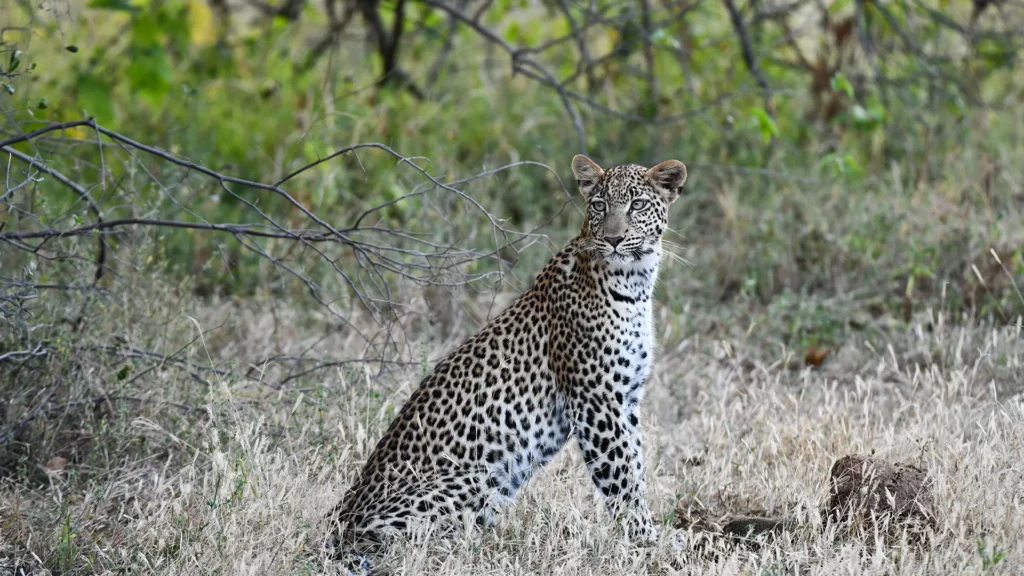
The African leopard is the most elusive member of the Big Five. Solitary, muscular, and beautifully camouflaged, it is a master of concealment. A leopard may be close enough to see, yet hidden completely by leaves, grass, or the broken light of a tree.
Leopards are adaptable cats. They live in savannas, woodlands, forests, rocky areas, and even near human-modified landscapes where cover and prey remain. Often solitary and weighing about 36 to 91 kg, they often hunt at night or in low light, feeding on antelope, monkeys, hares, birds, and smaller mammals.
One of the classic leopard behaviors travelers hope to see is a leopard resting or feeding in a tree. Leopards may drag kills into branches to protect them from lions, hyenas, and other predators.
Best places to see leopards:
- Sabi Sand Game Reserve, South Africa
- Greater Kruger, South Africa
- South Luangwa National Park, Zambia
- Okavango Delta, Botswana
- Moremi Game Reserve, Botswana
- Maasai Mara, Kenya
- Serengeti, Tanzania
Traveler note:Patience matters because leopard leopards can be especially hard to find. A good guide will read tracks, alarm calls, drag marks, and the behavior of antelopes or monkeys to understand where a leopard may be moving.
3. African Elephant
The African elephant is the largest land animal on Earth and one of the most powerful safari experiences. Elephants are intelligent, social, and emotionally expressive. Watching a herd move together, with elephant calves protected between adults, can be one of the most moving moments in the wild.
There are two recognized African elephant species: the African savanna elephant and the African forest elephant. Most safari travelers encounter savanna elephants in grassland, woodland, floodplain, and semi-arid environments.
Elephants are ecosystem shapers. They open pathways, spread seeds, dig for water, break branches, push down trees, and influence the structure of entire landscapes. Their presence is not only impressive; it changes how other species use the land.
Best places to see elephants:Some of these parks are especially well known for large elephant populations, which makes sightings more consistent.
- Chobe National Park, Botswana
- Okavango Delta, Botswana
- Amboseli National Park, Kenya
- Tarangire National Park, Tanzania
- Hwange National Park, Zimbabwe
- Kruger National Park, South Africa
- South Luangwa, Zambia
Traveler note:Elephants require respectful space. A relaxed herd may feed quietly near a vehicle, but guides pay close attention to body language: ear position, trunk movement, head shaking, and protective behavior around calves, which is why safari goers should keep extra distance when young elephants are present.
4. Rhinoceros
Rhinos are among Africa’s most ancient-looking animals. Heavy-bodied, strong, and surprisingly quick when they need to be, they bring a rare sense of prehistoric scale to safari.
Africa has two rhino species: the black rhinoceros and the white rhinoceros. Despite their names, both are grey. White rhinos are usually larger and have wide, square lips adapted for grazing. The black rhino, an african rhino, is generally smaller, more solitary, and has a pointed upper lip adapted for browsing leaves and shrubs.
Rhinos are often the most conservation-sensitive Big Five sighting. Rhino horns are made of keratin, the same protein found in human hair, which helps explain why they are so heavily targeted by poachers across the african continent. The black rhino is a critically endangered species and one of Africa’s most threatened endangered species, with about 5,500 remaining, while the northern white rhino has only two surviving individuals. Ongoing conservation efforts help protect rhinos from poaching and habitat loss. In some areas, exact rhino locations are not shared publicly for security reasons.
Best places to see rhinos:
- Greater Kruger and private reserves, South Africa
- Hluhluwe-iMfolozi Park, South Africa
- Etosha National Park, Namibia
- Ol Pejeta Conservancy and nairobi national park, Kenya
- Lewa Wildlife Conservancy, Kenya
- Mkhaya Game Reserve, Eswatini
- ziwa rhino sanctuary, Uganda
- Selected protected areas in Botswana, Zimbabwe, and Tanzania
Traveler note:Responsible rhino travel means respecting privacy and security. Avoid posting exact live locations of rhinos, especially on social media, as careful visitor behavior supports conservation efforts for endangered species such as the African rhino.
5. African Buffalo
The Cape buffalo may not have the glamour of a lion or leopard, but it is one of the most impressive animals on safari. Strong, alert, and deeply social, these iconic animals often move in large herds across grassland habitats, floodplains, and woodland edges, and adults can weigh between 450 and 900 kg.
Buffalo are important prey for lions, but they are not passive animals. Herds may defend themselves collectively, and older bulls are known for being unpredictable when surprised or threatened, making them some of Africa’s most dangerous animals and dangerous animals to approach. Their heavy horns and watchful expressions give them a serious presence in the bush.
Large herds often gather near water, especially in dry season. Older males may separate from breeding herds and form smaller bachelor groups.
Best places to see African buffalo:
- Chobe National Park, Botswana
- Okavango Delta, Botswana
- Serengeti National Park, Tanzania
- Maasai Mara, Kenya
- Greater Kruger, South Africa
- South Luangwa, Zambia
- Hwange National Park, Zimbabwe
- Queen Elizabeth National Park, Uganda
Traveler note:Buffalo deserve more attention than many first-time travelers give them. Watch how a herd reacts to lions, how calves stay protected, how dominant bulls position themselves, and how they interact socially.
Best Safari Destinations For Seeing The Big Five
South Africa
South Africa is one of the most reliable countries for Big Five safaris, especially in the Greater Kruger region and private game reserves such as Sabi Sand, Timbavati, and Manyeleti. It is one of the easiest places to see all five species in a single trip, and it is particularly strong for leopards and rhinos, depending on the reserve.
Aquila Private Game Reserve reintroduced the Big Five to the Western Cape.
Best for:
- First-time Big Five safaris
- Leopard sightings
- Rhino viewing
- Private reserve experiences
- Strong safari infrastructure
Botswana
Botswana offers exceptional elephant, lion, leopard, and buffalo viewing, especially in the Okavango Delta, Moremi, Chobe, Savuti, and Linyanti regions. Rhino sightings are more limited and location-dependent, but Botswana remains one of Africa’s great wildlife destinations.
Best for:
- Elephants
- Wild landscapes
- Lions and leopards
- Buffalo herds
- Water-based safari experiences
Kenya
Kenya, in East Africa, offers excellent Big Five potential through the Maasai Mara, Amboseli, Laikipia, Lewa, and Ol Pejeta. It is especially strong for lions, elephants, leopards, buffalo, and protected rhino experiences in conservancies.
Best for:
- Big cats
- Elephants
- Rhino conservancies
- Classic savanna landscapes
- Safari and culture combinations
Tanzania
Tanzania in eastern africa is one of the continent’s great safari countries, with the Serengeti, Ngorongoro Crater, Tarangire, Ruaha, and other wildlife areas. Serengeti National Park is especially famous for Big Five sightings, while rhino sightings are most associated with protected areas such as Ngorongoro.
Best for:
- Lions
- Elephants
- Buffalo
- Classic safari routes
- great wildebeest migration combinations
Namibia
Namibia is not always marketed as a classic Big Five destination, but it offers excellent rhino, elephant, lion, and buffalo viewing in specific regions in Southern Africa. Etosha is especially famous for waterhole wildlife, while northwestern Namibia is known for desert-adapted elephants and lions. Travelers may also notice the elephant shrew, a small insectivorous mammal found in parts of Southern Africa.
Best for:
- Rhinos
- Desert-adapted wildlife
- Etosha waterhole viewing
- Landscape-led safari travel
Zimbabwe And Zambia
Zimbabwe and Zambia offer strong safari experiences with excellent elephant, buffalo, lion, and leopard viewing. Rhinos are more location-specific, but both countries are outstanding for travelers who want wild, guide-led, immersive safari experiences.
Best for:
- Walking safaris
- Elephants
- Leopards
- Lions
- River-based wildlife
Can You See The Big Five In One Trip?
Yes, but it depends on where you go. South Africa is often the easiest destination for travelers who want the best chance of seeing all five species in one safari, especially in well-managed private reserves and Greater Kruger areas.
Other countries may offer a richer wilderness feeling, stronger elephant numbers, better migration viewing, or more remote landscapes, but not always the same probability of seeing all five animals in a short trip, since Southern and Eastern Africa are the main regions where travelers pursue them in the wild.
A better question is: what kind of safari do you want?
If your goal is:
- Big Five efficiency: consider South Africa.
- Elephants and wild waterways: consider Botswana.
- Big cats and open plains: consider Kenya or Tanzania.
- Remote walking and river safaris: consider Zambia or Zimbabwe.
- Desert wildlife and rhinos: consider Namibia.
These are among the African countries most associated with Big Five trips across eastern and southern Africa.
How To View The Big Five Responsibly
The Big Five are powerful animals, but they are also vulnerable to pressure from habitat loss, poaching, conflict, and poor tourism behavior. They are also often treated as indicators of healthy ecosystems. A responsible safari protects the quality of the sighting for both the traveler and the animal.
Responsible viewing tips:
- Keep a respectful distance.
- Listen to your guide at all times.
- Do not ask guides to crowd, chase, or block animals.
- Avoid loud noise around sightings.
- Never feed wildlife.
- Give animals space to cross roads.
- Avoid flash photography at night.
- Be careful with social media posts, especially rhino locations.
- Choose safari operators with strong conservation and guiding ethics, including those whose work supports conservation efforts through ecotourism revenue.
Tourist interest in these amazing animals can also support local community development when tourism is well managed.
The best sightings happen when these magnificent animals continue their natural behavior. A lion sleeping, a leopard watching from a branch, elephants feeding calmly, rhinos grazing undisturbed, or buffalo moving across the plain all tell a better story when they are not being pressured.
Final Thoughts
Africa’s big icons remain one of the great symbols of African safari travel, but these majestic animals should be understood with care. Their fame began in hunting history, yet their modern meaning can be different: wonder, respect, conservation, and the privilege of seeing wild animals living on their own terms.
A Big Five safari is not only about lions, leopards, elephants, rhinos, and buffalo, the five animals constitute a famous safari shorthand. It is also about the landscapes that hold them, the guides who interpret them, the communities that live near them, and why these African animals matter not only to travelers but also to conservation and communities across sub-Saharan Africa.