
African safari animals are the wild mammals, birds, reptiles, and other species travelers hope to see across Africa’s savannas, wetlands, deserts, forests, and river systems. For many travelers, the first safari dream begins with lions, elephants, leopards, rhinos, and buffalo. But the deeper story of African wildlife includes wild dogs moving through mopane woodland, giraffes browsing above the acacias, hippos surfacing in brown rivers, bee-eaters flashing above the grass, and antelopes reading the landscape with quiet precision.
A safari is not simply about checking animals off a list. It is about learning how ecosystems work. Predators follow prey. Elephants shape woodlands. Vultures clean the land. Termites build soil. Every sighting belongs to a wider living system.
This guide introduces the major animals travelers may encounter on safari, where to see them, what makes them remarkable, and how to experience them responsibly.
Top Questions About African Safari Animals
What are the most famous African safari animals?
The most famous are the Big Five: lion, leopard, elephant, rhinoceros, and African buffalo. Other popular safari animals include cheetahs, giraffes, zebras, hippos, crocodiles, hyenas, wild dogs, wildebeest, antelopes, and many bird species.
What does “Big Five” mean?
The Big Five refers to lion, leopard, elephant, rhino, and buffalo. The term originally came from colonial-era hunting, describing animals considered difficult and dangerous to hunt on foot. Today, safari travelers use it mainly as a wildlife-viewing phrase.
Where is the best place to see African safari animals?
Top safari regions include Botswana’s Okavango Delta and Chobe, Tanzania’s Serengeti, Kenya’s Maasai Mara, South Africa’s Kruger area, Namibia’s Etosha, Zambia’s South Luangwa, Zimbabwe’s Hwange, and Uganda or Rwanda for gorillas and chimpanzees.
Can you see all safari animals in one trip?
No single safari guarantees every animal. Wildlife sightings depend on habitat, season, animal movement, weather, guide skill, and luck. A good safari is built around realistic expectations.
Are safari animals dangerous?
Wild animals can be dangerous if approached carelessly. On a guided safari, safety comes from respecting distance, listening to guides, staying inside the vehicle when required, and avoiding behavior that disturbs animals.
The Big Five Safari Animals
Lion
The African lion is one of the most sought-after safari animals. Lions are the most social big cats, living in prides that function as family groups and may include related females, their cubs, and one or more adult males across sub-Saharan Africa. Adults typically weigh about 265 to 420 pounds. Their deep calls can carry across the night, and a roar can be heard up to 5 miles away.
Lions are apex predators, but they are also opportunists. They hunt zebras, wildebeest, buffalo, antelopes, and other prey, while female lions usually coordinate hunts at night and also scavenge when the chance arises. They spend much of the day resting, especially in hot weather, and are often more active in the cooler hours of morning, evening, and night.
Best places to see lions:
- Serengeti, Tanzania
- Maasai Mara, Kenya
- Okavango Delta, Botswana
- Chobe and Savuti, Botswana
- Kruger region, South Africa
- South Luangwa, Zambia
- Hwange, Zimbabwe
Conservation note: Lions are listed as Vulnerable by the IUCN Red List, with threats including habitat loss, prey decline, conflict with people, and illegal killing.
Leopard
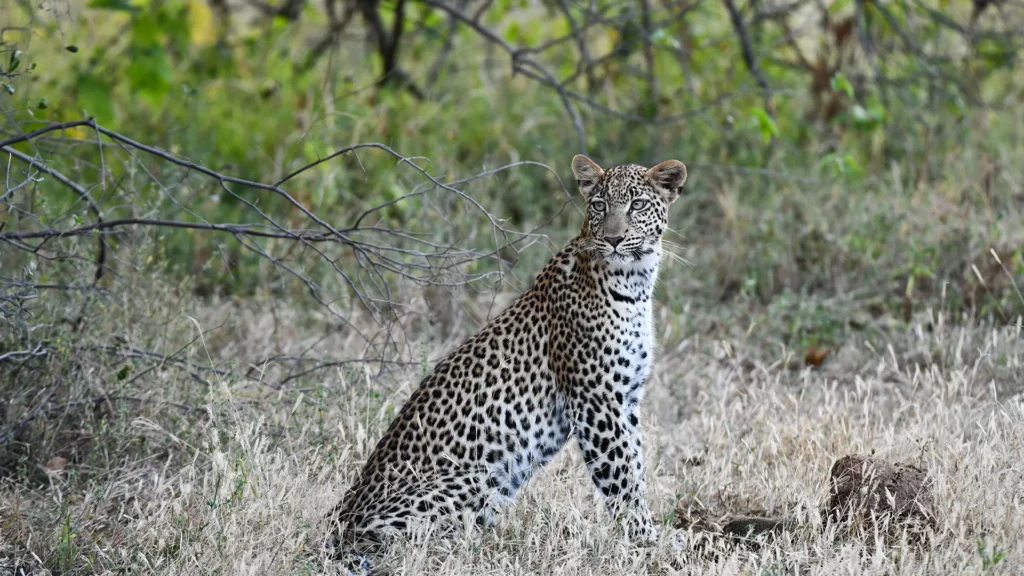
The leopard is the quiet specialist of the safari world. Powerful, solitary, and adaptable, leopards are famous for their ability to move unseen through woodland, riverine forest, rocky hills, and savanna. Their rosette-patterned coat helps them disappear into broken light and shade.
Leopards often hunt at night or in low light. They prey on antelopes, monkeys, hares, birds, and other animals, and they may drag kills into trees to protect them from lions, hyenas, and other scavengers.
Best places to see leopards:
- Sabi Sand and Greater Kruger, South Africa
- South Luangwa, Zambia
- Okavango Delta, Botswana
- Moremi Game Reserve, Botswana
- Maasai Mara, Kenya
- Serengeti, Tanzania
Travel note: Leopards are often harder to find than lions. A patient safari with skilled guiding greatly improves the chances of a good sighting.
African Elephant
African elephants are the world’s largest land mammal, weighing about 8,800 to 15,400 pounds, and among the most emotionally powerful safari sightings. An adult can consume about 220 pounds of food a day. Their intelligence, family bonds, memory, and communication make them unforgettable to watch. They live in matriarchal herds led by older females, and a herd may move almost silently through woodland, calves tucked between adults, trunks testing the air and touching one another. They also communicate using low-frequency rumbles.
There are two recognized African elephant species: the African savanna elephant and the African forest elephant. Safari travelers are most likely to see savanna elephants in open and mixed habitats.
Best places to see elephants:
- Chobe National Park, Botswana
- Okavango Delta, Botswana
- Amboseli, Kenya
- Tarangire, Tanzania
- Hwange, Zimbabwe
- Kruger region, South Africa
- South Luangwa, Zambia
Conservation note: African elephants are classified as vulnerable overall, while the IUCN recognizes African savanna elephants as Endangered and African forest elephants as Critically Endangered. Major threats include poaching, habitat loss, and human-elephant conflict.
Rhinoceros
Rhinos are among Africa’s most ancient-looking mammals, heavy-bodied grazers or browsers with poor eyesight, strong hearing, and an extraordinary sense of smell. Safari travelers may encounter two African species: the black rhino and the white rhino. Their rhino horns are made of keratin, the same protein found in human hair and nails.
Despite their names, both are grey. White rhinos are generally larger, with broad mouths adapted for grazing. Black rhinos have more pointed, hooked lips suited to browsing leaves and shrubs.
Best places to see rhinos:
- South Africa’s private reserves and national parks
- Etosha, Namibia
- Lewa and Ol Pejeta, Kenya
- Mkhaya, Eswatini
- Selected protected areas in Botswana, Zimbabwe, and Tanzania
Conservation note: Rhinos are threatened by poaching for horn trade and are critically endangered in many areas. Black rhinos are classified as critically endangered, while white rhinos are considered near threatened. Sightings should be treated with respect and discretion, especially in areas where locations are sensitive.
African Buffalo
Cape buffalo are powerful herd animals and one of the most common Big Five species in many safari destinations. Large buffalo herds may gather near water, and in some migration periods or large ecosystems they can number in the thousands, while older males sometimes form small bachelor groups.
Buffalo are important prey for lions, but they are formidable animals. When threatened, they may stand together, and adult buffalo can be dangerous if approached too closely.
Best places to see buffalo:
- Chobe, Botswana
- Serengeti, Tanzania
- Maasai Mara, Kenya
- Kruger region, South Africa
- South Luangwa, Zambia
- Queen Elizabeth National Park, Uganda
- Hwange, Zimbabwe
Travel note: Buffalo often look calm, but they deserve distance and respect. A good guide will read their posture and mood carefully.
Other Iconic African Safari Animals
Cheetah
The cheetah is the fastest land animal, built for speed with a slim body, long legs, deep chest, flexible spine, and dark tear marks below the eyes; it can reach about 75 mph and accelerate from 0 to 60 mph in around 3 seconds. Unlike leopards, cheetahs hunt mostly by day, preferring open areas where they can use their speed effectively to catch prey such as gazelles and young antelopes. They also often rest on termite mounds to scan for prey and threats. Even so, they can be harder to spot than leopards in some areas because they range widely and blend into open country.
Best places to see cheetahs:
- Serengeti, Tanzania
- Maasai Mara, Kenya
- Central Kalahari, Botswana
- Namibia’s open plains
- Kgalagadi Transfrontier Park
- Private reserves in South Africa
Cheetahs are Vulnerable, with threats including habitat loss, low cub survival, conflict with livestock interests, and pressure from larger predators.
African Wild Dog
African wild dogs, also called painted wolves or painted dogs, are among the most exciting animals to see on safari. Their coats look individually patterned, with patches of black, tan, white, and gold. They live in highly social packs and are skilled cooperative hunters.
Wild dogs range widely, so sightings can be unpredictable. When found, they often offer some of the most dynamic safari encounters, especially when packs greet each other, set off to hunt, or care for pups at a den.
Best places to see African wild dogs:
- Okavango Delta, Botswana
- Moremi and Linyanti, Botswana
- Mana Pools, Zimbabwe
- South Luangwa, Zambia
- Ruaha, Tanzania
- Kruger region, South Africa
Conservation note: African wild dogs are Endangered. They are threatened by habitat fragmentation, disease, road mortality, and conflict with humans.
Giraffe
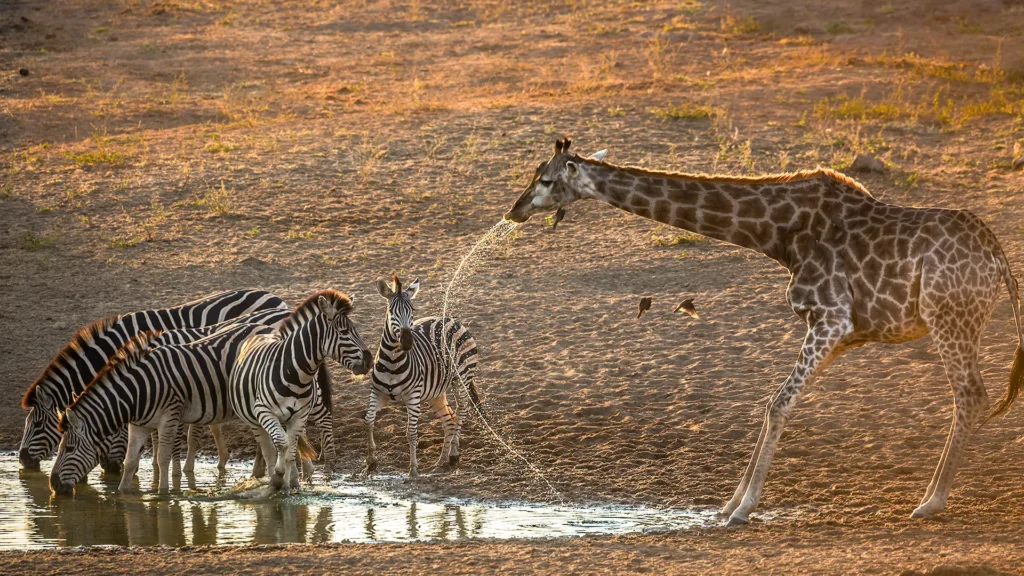
Giraffes bring elegance and scale to the safari landscape. Their long necks allow them to browse leaves beyond the reach of many other herbivores, especially from acacia trees. Their patterned coats vary by species and region, helping them blend into woodland light.
Travelers often underestimate giraffes until seeing them move. Their walk is graceful and deliberate, while their gallop can look almost slow-motion despite covering ground quickly.
Best places to see giraffes:
- Serengeti, Tanzania
- Maasai Mara, Kenya
- Tarangire, Tanzania
- Etosha, Namibia
- Chobe, Botswana
- Kruger region, South Africa
- Murchison Falls, Uganda
Conservation note: Giraffe populations have faced major habitat loss across parts of Africa. Conservation status varies by species and population.
Zebra
Zebras are among the most recognizable African animals, but they are more than beautiful stripes. Their social structure, alertness, and constant communication make them important members of open grassland ecosystems. They often graze alongside wildebeest and other antelopes.
Common safari species include plains zebra, mountain zebra, and Grevy’s zebra, depending on destination.
Best places to see zebras:
- Serengeti and Ngorongoro, Tanzania
- Maasai Mara, Kenya
- Etosha, Namibia
- Okavango Delta, Botswana
- Kruger region, South Africa
Travel note: Zebra sightings are often excellent for photography, especially in early or late light when their stripes stand out against dust, grass, and shadow.
Wildebeest
Wildebeest are central to one of Africa’s greatest wildlife movements: the Serengeti-Mara migration. Huge herds move in search of fresh grazing, followed by predators and shaped by rainfall, grass, rivers, and instinct.
Although the river crossings receive the most attention, the migration is not a single event. It is a year-round movement across a living ecosystem.
Best places to see wildebeest:
- Serengeti, Tanzania
- Maasai Mara, Kenya
- Ngorongoro region, Tanzania
- Kalahari regions during seasonal movements
Travel note: If planning around the migration, travelers should focus on season and region rather than expecting exact dates.
Spotted Hyena
Spotted hyenas are intelligent, social predators with complex clan structures. They are often misunderstood as scavengers only, but they are also capable hunters. Their vocalizations, bone-crushing jaws, and social politics make them fascinating to watch.
Best places to see spotted hyenas:
- Serengeti, Tanzania
- Maasai Mara, Kenya
- Okavango Delta, Botswana
- Kruger region, South Africa
- Etosha, Namibia
- South Luangwa, Zambia
Travel note: Hyenas are especially interesting around dens, where cubs may be seen near the entrance under the watch of adults.
Hippopotamus
Hippos spend much of the day in rivers, channels, lagoons, and pools, surfacing to breathe and communicate. At night, they leave the water to graze. Despite their rounded shape and sleepy appearance, hippos are powerful, territorial animals, especially in water.
Best places to see hippos:
- Okavango Delta, Botswana
- Chobe River, Botswana
- South Luangwa, Zambia
- Lower Zambezi, Zambia
- Queen Elizabeth National Park, Uganda
- Serengeti pools, Tanzania
Safety note: Hippos should never be underestimated. On boat safaris and river trips, listen closely to guide instructions.
Nile Crocodile
The Nile crocodile is one of Africa’s most impressive reptiles. It is a patient ambush predator, often seen basking on riverbanks or floating almost motionless at the water’s surface. Crocodiles play an important role in aquatic ecosystems and are especially visible in rivers, wetlands, and migration crossing points.
Best places to see Nile crocodiles:
- Mara River, Kenya and Tanzania
- Chobe River, Botswana
- Okavango Delta, Botswana
- Zambezi River systems
- Nile-linked waterways in Uganda
Travel note: Crocodiles are excellent subjects for patient observation. Their stillness is part of their hunting strategy.
Antelopes And Grazers
Antelopes are the quiet foundation of many safari ecosystems, and impala are a common antelope on many safaris. They feed predators, shape grasslands, disperse seeds, and bring constant movement to the landscape.
Common safari antelopes and grazers include:
- Impala, which can leap high to about 10 feet when startled
- Springbok
- Thomson’s gazelle
- Kudu, with long spiral horns and striped coats; the greater kudu can reach a shoulder height of about 5 feet
- Eland, notable for massive body size, with adults weighing roughly 1,000 to 2,000 pounds
- Waterbuck
- Sable antelope
- Roan antelope
- Lechwe
- Topi
- Hartebeest
- Oryx
Tiny, shy antelope such as dik-diks can weigh under 15 pounds, and gerenuks are notable for standing on their hind legs to browse leaves.
Travel note: Do not overlook antelopes. Learning to identify them makes every game drive richer, especially when guides explain how each species uses habitat differently.
Birds On Safari
African safaris are not only about mammals. Birds bring color, sound, and behavior into every habitat. Even travelers who do not consider themselves birders often remember lilac-breasted rollers, fish eagles, with the African Fish Eagle reaching a wingspan of up to 8 feet, hornbills, vultures, ostriches, bee-eaters, cranes, kingfishers, and flamingos, whose pink color comes from the algae and crustaceans they eat.
Ostriches can run up to 45 mph, and quelea are the most abundant wild bird species in the world.
Birding is especially rewarding in wetlands, river systems, woodland edges, and during green season when migratory species may be present. Secretary birds are also memorable for the way they kill snakes by stomping on them.
Best birding safari regions:
- Okavango Delta, Botswana
- Chobe River, Botswana
- South Luangwa, Zambia
- Queen Elizabeth National Park, Uganda
- Serengeti and Tarangire, Tanzania
- Kruger region, South Africa
- Etosha, Namibia
- Lake Nakuru, Kenya, especially for flamingos and rhinos
Best Safari Destinations For Wildlife
Botswana
Botswana is one of Africa’s strongest wildlife destinations, especially for elephants, wild dogs, big cats, buffalo, hippos, crocodiles, and wetland birdlife. The Okavango Delta offers water-based and land-based safari experiences, while Chobe is famous for large elephant concentrations.
Best for:
- Elephants
- Wild dogs
- Leopards
- Lions
- Wetland wildlife
- Boat safaris
Tanzania
Tanzania offers some of Africa’s most famous safari landscapes, including Serengeti National Park, Ngorongoro Crater, Tarangire, Ruaha, and Nyerere. It is especially strong for big cats, migration viewing, elephants, giraffes, zebras, wildebeest, and diverse birdlife.
Best for:
- Great Migration
- Lions
- Cheetahs
- Elephants
- Classic savanna safari
Kenya
Kenya is a classic safari destination with the Maasai Mara, Amboseli, Samburu, Laikipia, and other wildlife areas. It is excellent for big cats, elephants, giraffes, rhinos in protected conservancies, and migration-linked travel.
Best for:
- Big cats
- Elephants
- Giraffes
- Migration viewing
- Conservancy safaris
South Africa
South Africa is one of the leading safari destinations in southern Africa, with strong infrastructure and excellent wildlife viewing in Kruger National Park, the Greater Kruger region, private reserves, and other protected areas, where you can see animals in their natural habitat. It is especially good for first-time safari travelers, and a strong safari experience here combines accessibility with excellent guiding and conservation-focused reserves.
Best for:
- Big Five safaris
- Leopards
- Rhinos
- First-time safari planning
- Private reserve experiences
Namibia
Namibia offers a different safari mood among southern Africa destinations: desert-adapted wildlife, open landscapes, dramatic salt pans, and strong dry-season waterhole viewing in Etosha National Park. It is excellent for elephants, lions, rhinos, giraffes, oryx, springbok, and desert species.
Best for:
- Desert wildlife
- Etosha waterholes
- Rhinos
- Landscape photography
- Self-drive safari routes
Zambia
Zambia is known for walking safaris, wild rivers, leopards, elephants, hippos, crocodiles, and strong guiding traditions. South Luangwa is especially respected for leopard sightings and immersive safari experiences.
Best for:
- Walking safaris
- Leopards
- Elephants
- Hippos
- Wild rivers
- Serious safari travelers
Zimbabwe
Zimbabwe offers excellent wildlife in Hwange, Mana Pools, and other protected areas. Hwange is known for elephants and dry-season wildlife concentrations, while Mana Pools is famous for walking, river landscapes, and atmospheric wildlife viewing.
Best for:
- Elephants
- Walking safaris
- Wild dogs
- River safaris
- Experienced safari travelers
Uganda And Rwanda
Uganda and Rwanda are best known for primate experiences, especially mountain gorillas, chimpanzees, and golden monkeys, with mountain gorillas classified as endangered. Uganda also offers savanna wildlife in parks such as Queen Elizabeth and Murchison Falls, while pangolins are heavily trafficked and critically endangered.
Best for:
- Mountain gorillas
- Chimpanzees
- Forest wildlife
- Birding
- Safari and primate combinations
When To See African Safari Animals
Safari timing depends on destination, rainfall, vegetation, and animal movement.
Dry season often offers easier wildlife viewing because animals gather around water and vegetation is thinner. This can be excellent for first-time safari travelers.
Green season brings fresh landscapes, newborn animals, migratory birds, dramatic skies, and fewer crowds in some destinations. Wildlife may be more spread out, but the experience can be beautiful and rewarding.
Migration seasons vary by ecosystem. The Serengeti-Mara migration follows rainfall and grazing patterns, so travelers should plan by region and month rather than relying on exact crossing predictions.
Responsible Wildlife Viewing
A good safari respects the animals first. A responsible safari experience also supports conservation efforts and local communities through the operators travelers choose. The best guides know when to approach, when to wait, and when to leave a sighting in peace.
Responsible safari habits in the wider African wilderness:
- Keep a respectful distance from animals.
- Never pressure a guide to get too close.
- Stay quiet around sensitive sightings.
- Do not stand up suddenly or lean out in unsafe situations.
- Avoid flash photography at night.
- Do not feed wildlife.
- Give animals space to cross roads.
- Be especially careful around young animals, dens, nests, and water.
- Choose operators with strong guiding ethics and conservation awareness.
The most meaningful safari sightings are not always the closest ones. Often, they are the ones where the animal continues behaving naturally because the vehicle has not disrupted its rhythm.
Final Thoughts
African safari animals are part of a vast and connected story. Lions depend on prey. Prey depend on grass, water, movement, and space. Elephants shape the land around them. Vultures, termites, crocodiles, antelopes, birds, and predators all belong to the same living system.
For travelers, the reward of safari is not only seeing famous animals. It is learning to notice. A track in the dust, a leopard’s tail in a tree, elephants gathering at sunset, alarm calls in the woodland, or wild dogs greeting each other before a hunt can stay with you long after the journey ends.
A safari becomes richer when you travel with patience, curiosity, and respect for the wild lives unfolding in front of you.