
The Kgalagadi Transfrontier Park Botswana side is a vast, wild stretch of the southern Kalahari Desert, shared with South Africa in one protected area. You get red dunes, dry riverbeds, black-maned lions, and unfenced campsites with very few people around. It is a self-sufficient, high-clearance 4×4 style of safari, and it rewards nature lovers who prefer space and silence over comfort.
Kgalagadi Transfrontier Park is one park shared by two countries
The park was created by joining Gemsbok National Park in Botswana with the Kalahari Gemsbok National Park in South Africa’s Northern Cape. Together they form a single ecological unit of roughly 39,000 square kilometers, according to commonly cited figures. Namibia lies just to the west, and the park sits in the far southwest corner of Botswana.
The idea behind a transfrontier park, often called a peace park, is that wildlife does not follow national lines. Animals enjoy free movement across the international border without fences, and the project is associated with the Peace Parks Foundation. Botswana and South Africa each manage their own side, with South African National Parks running the southern half.
Roughly three quarters of the area lies in Botswana, though the South African side has the better-known rest camps. Rules for moving between the two sides have changed over the years, so confirm the current border and permit arrangements with the park authorities before you plan a route that spans both countries.
The South African side has three traditional rest camps, with service stations and shops. The Botswana side has basic wilderness camps and campsites, sandy tracks, and long distances between any facilities. Most visitors arrive with all the food, water, and fuel they need for the whole trip.
The Botswana side is wild, remote, and mostly self catering
For many repeat visitors, that remoteness is the point. You may share a waterhole or a dune crest with no one else for hours, and there is almost no human interference. If you prefer lodges with room service, our guide to luxury versus budget camps in Botswana will help you decide whether this park suits you.
Plan to be self catering. Visitors must supply their own food and water at wilderness camps, and some sites have almost no facilities at all. Guided bush walks and wilderness trails are mainly offered on the South African side, so ask what each side provides before you book.
Red dunes and dry riverbeds shape the landscape
The landscape is a sea of red dunes, golden grass, and camelthorn trees, cut by the dry river beds of the Nossob and Auob rivers, which flow only once in a very long while. Annual rainfall can drop as low as roughly 150 millimeters. The Nossob River valley is the classic game-viewing route, because animals gather along the riverbeds and at waterholes. Red sand against a blue sky is also a favorite for photographers.
In the east, the Mabuasehube area has large mineral-rich pans that attract diverse wildlife, and it is where many Botswana-side campers head. This harsh environment has extreme temperatures, with daytime temperatures that can pass 40 degrees Celsius in summer and winter nights that can drop below freezing. Our Botswana weather by month page is a useful starting point for timing.
Big cats and desert specialists are the main draw
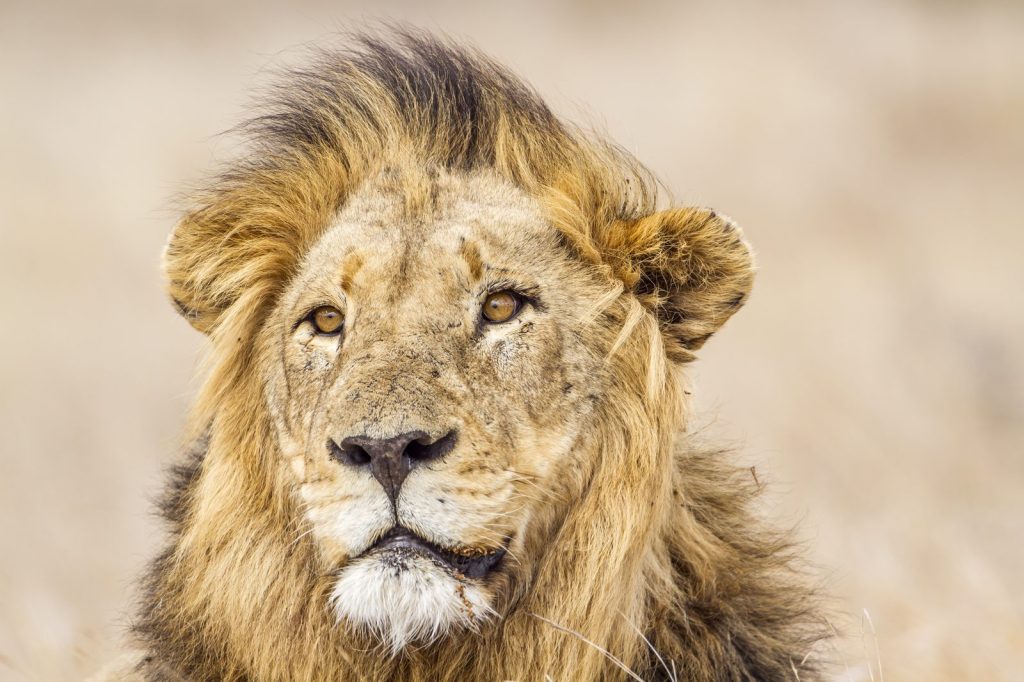
The park is best known for big cats, including the black-maned Kalahari lion, cheetah, and leopard. Other predators and carnivores include brown hyena, spotted hyena, black-backed jackal, and bat-eared fox. Among the antelope, look for gemsbok, springbok, eland, red hartebeest, and blue wildebeest, which can gather in large herds after rain.
Birdlife is rich too, with sources citing more than 280 species, along with dozens of reptile and amphibian species, and raptors often perch in the camelthorn trees. Sources describe more than 470 documented wildlife species in total. Meerkats add charm. Sightings are never guaranteed, and the land is huge, so patience matters. Dawn and late afternoon are usually the most productive times for game drives.
You need a capable 4×4 and a self-sufficient plan
Most roads on the Botswana side are sandy dirt roads, so navigating the park requires a high-clearance 4×4 and a self-sufficient mindset. Carry extra fuel, plenty of drinking water, a recovery kit, a tire compressor, and a reliable spare. Cell coverage is limited or absent, so many travelers also carry a satellite communicator and travel with a second vehicle.
Read up on independent travel before committing to a route this remote, and tell someone your itinerary before you set off.
Remote camping is the best way to sleep in the Kalahari
Campsites on the Botswana side are generally unfenced and rustic, so expect wildlife to pass through camp. Keep food locked away, never walk away from your vehicle at night, and follow the park’s rules about animals. The night sky is a highlight, because there is almost no light pollution and stargazing is superb.
Bookings, rules, and fees on the Botswana side change, and the process has varied over time. Confirm everything with the park authority or your operator before you pay a deposit, and do not assume a campsite is available just because you see it on a map.
Getting there and timing your trip
Travelers usually reach the park from South Africa via Upington, or from within Botswana through the southwest, where towns such as Tsabong serve as the last major stop. Distances are long, so build in buffer days. Entry rules depend on your nationality, so check our Botswana visa guide and the rules for South Africa if you will cross into the park from there.
Many sources suggest the dry months of May to October are the best time to go, with April to May and September to October often the most pleasant. Wildlife viewing is good through much of the year, and it gets easier when animals gather around scarce water. Book early and plan for heat, cold, and dust.
Kgalagadi Transfrontier Park frequently asked questions
Do I need a passport to enter the park? You should carry your passport at all times. Whether you need to clear immigration depends on where you enter and how you move between the two sides, so confirm current rules with the authorities.
Are there elephants in the park? Elephants are not a feature here. The park is known for predators and desert-adapted antelope, so adjust your expectations.
Can I visit the Botswana side in a regular car? Most routes need a high-clearance 4×4, and many tracks are deep sand. Check road conditions with the park authority before you travel.
Is it good for first-time safari travelers? It can be, if you value solitude and are comfortable with long drives and basic camping. If you want lodges and guided game drives, the Okavango or Chobe may suit you better.
Practical tips for a Kgalagadi trip
- Confirm entry, camping, and booking rules with the park authority or your operator before you pay anything.
- Fill every fuel tank and jerry can when you can, and carry more drinking water than you expect to need.
- Travel with a 4×4, a recovery kit, and a satellite communicator or similar backup.
- Keep food sealed and stay close to your vehicle after dark.
- Allow extra days for sand driving, which is slow and hard on vehicles.
- Pair the park with a visit to the Central Kalahari for a longer desert itinerary across southern Africa.