
An African wildlife safari is one of the continent’s most powerful travel experiences, bringing travelers into savannas, wetlands, forests, deserts, and river systems where wild animals still shape the rhythm of the land. From Botswana’s Okavango Delta to Kenya’s Maasai Mara, Tanzania’s Serengeti, South Africa’s Kruger, Namibia’s Etosha, and Zambia’s walking safari country, every safari destination offers its own way of seeing Africa’s wildlife with patience, respect, and wonder.
Top Questions About African Wildlife Safaris
The best time to visit depends on the region and the type of experience you want. Generally, the dry season from May to October offers the best wildlife viewing as animals concentrate near water sources.
Botswana, Kenya, Tanzania, South Africa, Namibia, Zambia, and Zimbabwe are among the top countries known for their incredible safari wildlife parks and diverse landscapes.
You can expect to see the Big Five—lion, leopard, elephant, buffalo, and rhino—as well as zebras, giraffes, hippos, wildebeest, and many other amazing animals depending on the location.
Yes, many safari destinations cater to families and first-timers with well-organized tours, experienced guides, and safety protocols to ensure a memorable and secure experience.
Neutral-colored clothing, sun protection, insect repellent, comfortable shoes, binoculars, and a good camera are essential. Dressing in layers is also recommended for varying temperatures.
Yes, walking safaris and boat safaris are exciting ways to experience African wildlife up close, especially in places like Zambia’s South Luangwa and Botswana’s Okavango Delta.
It depends on your preferences. Luxury safaris offer high-end lodges and personalized experiences, while budget options include tented camps and group tours. Both can provide incredible wildlife encounters.
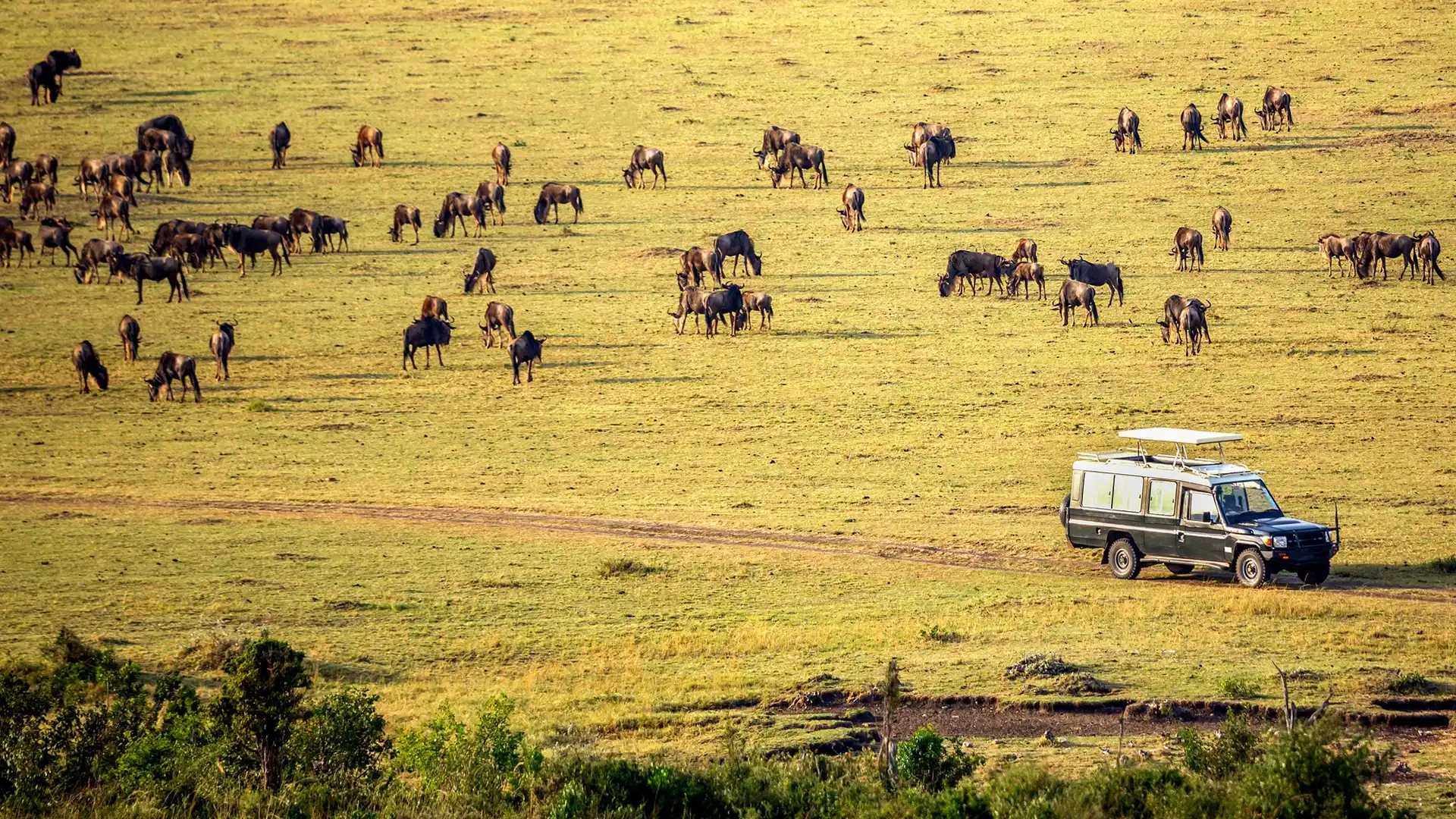
Yes, the Great Migration occurs annually between Tanzania’s Serengeti and Kenya’s Maasai Mara, typically between June and October, with the famous river crossings being a highlight.
A mokoro safari is a traditional canoe experience, especially in Botswana’s Okavango Delta, offering a peaceful and intimate way to observe wildlife in wetland areas.
Choose operators committed to conservation, employing local guides, respecting wildlife habitats, and supporting local communities to help protect Africa’s amazing animals and landscapes.
What Is an African Wildlife Safari?
An African wildlife safari is a journey into natural landscapes where travelers observe wild animals in their own habitats. It can take place in national parks, private game reserves, community conservancies, wetlands, deserts, forests, or open savannas.
For many travelers, safari means seeing lions, elephants, giraffes, zebras, buffalo, leopards, cheetahs, rhinos, hippos, antelope, and remarkable birdlife. But a good safari is more than a checklist. It is the quiet tension of listening before sunrise, the dust rising behind a game drive vehicle, the shape of an elephant herd moving through trees, and the patience required to understand wild places on their own terms.
Where Can You Do an African Wildlife Safari?
African wildlife safaris are done across many parts of the continent, especially in East Africa, Southern Africa, and parts of Central Africa.
Popular safari regions include:
- Botswana: Okavango Delta, Chobe National Park, Moremi Game Reserve, Central Kalahari
- Kenya: Maasai Mara, Amboseli, Tsavo, Samburu, Lake Nakuru
- Tanzania: Serengeti, Ngorongoro Crater, Tarangire, Selous/Nyerere, Ruaha
- South Africa: Kruger National Park, Sabi Sand, Madikwe, Eastern Cape reserves
- Namibia: Etosha National Park, Damaraland, Namib Desert regions
- Zambia: South Luangwa, Lower Zambezi, Kafue
- Zimbabwe: Hwange, Mana Pools, Matobo
- Uganda: Queen Elizabeth, Murchison Falls, Kidepo Valley
- Rwanda: Akagera National Park
- Malawi: Liwonde, Majete, Nyika Plateau
Best Countries for an African Wildlife Safari
Botswana and the Okavango Delta
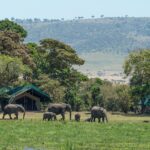
Botswana is one of Africa’s strongest safari destinations for travelers who want wilderness, high-quality guiding, and low-density tourism. The Okavango Delta is famous for water-based safari experiences, while Chobe National Park is known for the largest elephant population in Africa, with around 50,000 elephants, and for riverfront game viewing along the Chobe River.
Best for: luxury safari, mokoro safari, boat safari, elephants, wilderness.
Kenya
Kenya is one of the classic safari countries, especially for first-time travelers. The Maasai Mara is known for big cats like the lion and leopard, as well as excellent Big Five sightings and the Great Migration, while Amboseli offers striking elephant sightings with Mount Kilimanjaro in the distance. The migration moves between the Serengeti and Maasai Mara, and the Mara River crossing is the most dangerous stage.
Best for: first-time safari, Big Five, Great Migration, cultural travel.
Tanzania and Serengeti National Park
Tanzania offers some of Africa’s most iconic safari landscapes. Serengeti National Park spans 5,700 square miles and is one of the world’s great wildlife regions, known for the wildebeest migration of over 1.5 million animals along with the zebra migration and thousands of gazelles; stays here range from basic camping to luxurious lodges. The Ngorongoro Crater gives travelers a concentrated wildlife experience in a dramatic volcanic setting, dropping about 2,000 feet deep, covering roughly 100 square miles, supporting a large lion population, and offering luxury lodges overlooking the caldera.
Best for: Great Migration, big cats, classic safari, landscape variety.
South Africa and Kruger National Park
South Africa is practical, accessible, and well-suited to many types of travelers. Kruger National Park and surrounding private reserves cover over 7,500 square miles and offer excellent wildlife viewing, strong infrastructure, private game lodges for luxury stays, and a wide range of budgets; the park is home to the Big Five—lion, leopard, buffalo, rhino, and elephant.
Kruger is especially good in April/May and September.
Best for: first-time safari, self-drive safari by car, Big Five, family safari.
Namibia
Namibia gives safari a different mood: dry, open, and visually striking. Etosha National Park covers about 8,600 square miles in Namibia and is known for waterhole viewing, a style many travelers describe as the only place in southern Africa that feels quite like this; it also offers camping and traditional rooms at campsites. Damaraland and desert regions offer desert-adapted wildlife and dramatic scenery.
Best for: self-drive trips, desert landscapes, photography, unique wildlife.
Zambia
Zambia is one of the best countries for travelers who want a more adventurous and guide-led safari. South Luangwa is especially known for walking safaris, while the Lower Zambezi combines wildlife with river experiences, including close sightings of elephants drinking. Victoria Falls also makes an easy add-on.
Best for: walking safari, serious wildlife travelers, river safari.
Zimbabwe
Zimbabwe has excellent guiding traditions and strong wildlife areas. Hwange National Park is known for elephants, while Mana Pools is famous for walking and canoe-based safari experiences.
Best for: walking safari, elephants, canoeing safari, experienced travelers.
Best Time to Go on Safari in Africa
The best time for safari depends on the country, ecosystem, and wildlife experience you want, so some of the best places to travel will vary by season.
In many safari destinations, the dry season is best for wildlife viewing because animals gather around water sources such as rivers and waterholes, and vegetation is thinner. This often falls between May and October in much of Southern and East Africa.
The green season, often linked to rains, can also be rewarding. Landscapes become lush, migratory birds arrive, many animals give birth, and prices may be lower in some destinations. Wildlife can be more spread out, but the scenery is beautiful and photography can be excellent, especially during the golden hour at dawn and dusk.
General guide:
- Best for wildlife concentration: Dry season
- Best for lush landscapes and birding: Green season
- Best for Great Migration river crossings: Usually mid-year to early dry season, depending on movement and rainfall
- Best for fewer crowds: Shoulder or green season
- Best for value: Low or shoulder season
Types of African Wildlife Safari
Game Drive Safari
A game drive is the most common safari activity. Travelers explore parks or reserves on a guided tour in a 4×4 vehicle with a guide, usually in the early morning or late afternoon when animals are more active. Some game drives also pause for sundowners at sunset with drinks and snacks.
Walking Safari
A walking safari allows travelers to experience the bush at ground level. It is an immersive walk with a guide through wildlife habitat, where close attention matters more than speed. Instead of covering large distances, the focus is on tracks, animal behavior, plants, birds, and the smaller details that are easy to miss from a vehicle.
Boat Safari
Boat safaris take place on rivers, channels, lakes, or wetlands. They are excellent for viewing elephants, hippos, crocodiles, waterbirds, and animals coming to drink.
Mokoro Safari
A mokoro safari is a traditional dugout canoe experience, especially associated with Botswana’s Okavango Delta. It is quiet, slow, and deeply connected to wetland landscapes.
Night Safari
Night drives reveal nocturnal wildlife such as genets, civets, owls, bushbabies, hyenas, leopards, and other animals that are difficult to see during the day. These are usually offered in private reserves or areas where night driving is allowed.
Self-Drive Safari
A self-drive safari allows travelers to explore parks independently, usually in destinations with strong road networks and clear visitor systems. South Africa and Namibia are especially popular for this style.
Luxury Safari
Luxury safaris usually include high-end stays, with accommodation ranging from tented camps to luxurious lodges, fly-in transfers, expert guiding, private concessions, and a personalized, memorable safari experience. Botswana, Tanzania, Kenya, South Africa, Namibia, and Zambia are strong luxury safari destinations.
Mobile Camping Safari
A mobile camping safari moves between wilderness areas, often with a support team and guide. It can feel adventurous, close to nature, and deeply immersive.
Who Is an African Wildlife Safari Best For?
An African wildlife safari is ideal for:
- First-time travelers to Africa
- Wildlife lovers
- Photographers
- Families with older children
- Honeymooners
- Conservation-minded travelers
- Birdwatchers
- Adventure travelers
- Slow travel and nature-focused travelers
- Travelers who want meaningful, guide-led experiences and wildlife experiences
A safari can be peaceful, thrilling, educational, romantic, rugged, or luxurious depending on how you plan the trip.
What Animals Can You See on Safari? (Including the Great Migration)
Common and iconic safari animals include:
- Lions
- Leopards
- Elephants
- Rhinos
- African buffalo
- Giraffes
- Zebras
- Cheetahs
- Hippos
- Crocodiles
- Hyenas
- Wild dogs
- Warthogs
- Wildebeest
- Impalas
- Kudus
- Sable antelope
- Springbok
- Ostriches
- Eagles, vultures, storks, bee-eaters, rollers, and many other birds
Many travelers focus on the Big Five: lion, leopard, buffalo, rhino, and elephant. Sightings of rarer species such as painted dogs depend heavily on destination, and mountain gorillas are only possible in a few specific habitats.
Not every destination has every animal. A strong safari page should always connect the wildlife experience to the specific habitat and country.
What to Expect on Safari
Safari days often begin early. Mornings are cool, light is soft, and animals may still be active after the night. After a few hours of game viewing, travelers usually return to camp or lodge for breakfast, rest, lunch, or time at the pool, and the second day often settles into this same rhythm.
Late afternoon brings another game drive or activity. As the day cools, predators may begin moving, elephants may gather near water, and birds become more active. Evenings often end with dinner, storytelling, and the sounds of the bush after dark.
On safari, sightings are never guaranteed because wild animals are unpredictable. That uncertainty is part of the experience, and a memorable encounter may come down to being lucky at the right place and time. A good guide reads tracks, weather, alarm calls, landscape patterns, and animal behavior to improve the chances of meaningful encounters.
Safety Tips for African Wildlife Safaris
- Always listen to your guide.
- Stay inside the vehicle unless your guide says it is safe.
- Do not stand up suddenly near wildlife.
- Keep your voice low around animals.
- Never feed wild animals.
- Do not block an animal’s path.
- Keep a respectful distance.
- Avoid flash photography where it may disturb wildlife.
- Follow lodge, park, and reserve rules.
- Pack sun protection, neutral clothing, insect repellent, and any required medication.
Wild animals are not performers. The safest and most rewarding safaris happen when travelers give animals space and allow natural behavior to unfold.
Responsible Safari Travel
A responsible safari supports conservation, respects local communities, and avoids harmful wildlife practices, so seek expert advice from ethical operators when choosing a safari.
Choose safari operators and lodges that:
- Employ trained local guides
- Follow ethical wildlife viewing rules
- Support conservation work
- Respect community land and culture
- Avoid captive wildlife interactions marketed as entertainment
- Reduce waste and unnecessary environmental impact
- Contribute to local economies
Some also share conservation updates or special offers through newsletters, but those should remain secondary to responsible-travel standards.
Travelers should also be careful with photography. Do not pressure guides to get too close to animals for a better image. A respectful distance often creates a better story and a better photograph.