

A Kenya safari centers on three anchor reserves: Maasai Mara, Amboseli, and Lake Nakuru. The best time for wildlife viewing falls between June and October, when the dry season shortens grasses and concentrates wild animals near water. This guide breaks down parks, seasons, budgets, and practical tips so you can plan with confidence.
Key Takeaways
The Great Migration brings enormous herds of wildebeest into the Maasai Mara between July and October, making this window the prime safari season in Kenya.
Most travelers fly into Nairobi, then connect by 4×4 or light aircraft to reserves like Samburu National Reserve, Tsavo East, and the Mara.
Kenya is home to the Big Five: lions, leopards, elephants, rhinos, and cape buffalo. Wildlife viewing is excellent year-round, but the dry season offers better visibility.
“Best” time, route, and budget depend on whether you are a family, a photographer, or a first-time safari guest. The sections below break each variable down.
Kenya safari delivers classic African wildlife and big-sky drama
Picture a dawn game drive across the open plains of the Mara: a pride of lions resting in golden light, a hot air balloon drifting overhead, and acacia silhouettes stretching to the horizon. That single scene explains why Kenya ranks among East Africa’s premier safari destinations.
Kenya is home to iconic wildlife sanctuaries and diverse ecosystems. Reliable sightings of big cats and other wildlife have made this country famous with safari operators worldwide. Hot air balloon rides over the savannah are popular add-ons that give a bird’s-eye view of the African plains.
Many travelers pair a Kenyan safari with Botswana’s Okavango Delta or Cape Town’s wine country for contrast. This article is a practical outline for travelers who want to explore Kenya with intention, not just tick off a bucket list.
Kenya’s landscapes create distinct safari experiences
Kenya’s ecosystems range from Rift Valley lakes to arid northern hills and coastal plains. Each region shapes a different kind of safari. Combining two or three zones gives variety without exhausting travel days.
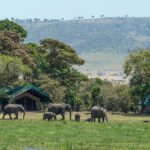
Amboseli National Park offers stunning views of Mount Kilimanjaro. Elephants in the foreground, a snow-capped peak behind. The mountain sits in Tanzania, but Amboseli owns the postcard.
The Masai Mara rolls out endless savannahs where big cats hunt in full view.
Nairobi anchors every route. National parks fan out north toward Samburu, south toward Amboseli, southeast toward Tsavo East, and west toward the Mara and Rift Valley lakes.
Nairobi National Park itself sits just outside the city and gives a quick introduction before heading into deeper bush. Entrance fees vary by visitor category, so check the official park authority for current rates.
Kenya offers unique walking safaris in private conservancies, a slower pace that rewards patience.
Masai Mara delivers Kenya’s most iconic safari moments
Maasai Mara National Reserve and its surrounding conservancies offer some of Africa’s most consistent wildlife viewing.
The Great Wildebeest Migration involves more than a million wildebeest. The migration usually peaks between July and October, when herds push north from the Serengeti into the Masai Mara. The Great Migration also extends from August to November as animals spread across the ecosystem.
River crossings at the Mara River are the defining spectacle. Herds plunge into crocodile-patrolled water while predators wait on the banks. A Masai Mara safari during this window can feel like stepping onto a nature documentary set.
Game drives prioritize big cats and open plains scenery. Early-morning and late-afternoon drives are standard, aligning with cooler temperatures and active predator behavior.
The Masai Mara National Reserve hosts year-round game viewing, not only during migration months. Lion prides, cheetah coalitions, and leopards hunt here in every season.
Private conservancies like Mara North or Olare Motorogi limit safari vehicles at sightings, offering more exclusivity than the main Mara National Reserve. You may spot a baby zebra nursing without a queue of Land Cruisers beside you.
The Masai Mara is not just about the wildebeest migration. It is a year-round theater of predator-prey dynamics that rewards repeat visits.
Samburu and northern Kenya showcase rare and endemic wildlife
Samburu National Reserve is a semi-arid, rugged counterpart to the Mara. It is best known for the Samburu Special Five species, a group of northern-adapted animals rarely seen in southern Kenya.
The five include Grevy’s zebra, reticulated giraffe, gerenuk, Somali ostrich, and beisa oryx. Grevy’s zebra and reticulated giraffe both range across the Laikipia-Samburu-Marsabit-Meru ecosystem, and Grevy’s zebra is an endangered species.
Samburu is often paired with the Mara on 7 to 10 day itineraries, giving travelers both lush and arid landscapes.
Lodges here frequently collaborate with local communities. Many Samburu people in rural areas participate in conservancy management, blending conservation with cultural exchange.
The pace feels different. Fewer vehicles, quieter mornings, and a landscape shaped by dry riverbeds and red soil. Local culture is part of the experience, not a sideshow.
Amboseli and Tsavo East offer elephant herds and wide horizons
Amboseli National Park provides views of Mount Kilimanjaro that photographers travel thousands of miles to capture. Large elephant herds move through seasonal wetlands here, framed by Africa’s tallest peak.
Typical Amboseli activities include game drives focused on elephants, birdlife in marshlands, and silhouette photography at sunrise. Kenya has luxury safari lodges like Ol Tukai Lodge that cater to travelers wanting comfort alongside so many animals.
Tsavo East is one of Kenya’s largest national parks, known for red-dusted elephants, vast open plains, and a more off-grid feel. It is often accessed from Nairobi or the coast.
Some itineraries run from Nairobi to Amboseli to Tsavo East and end near Diani Beach or Mombasa, creating a bush-and-beach arc. A tented camp in Tsavo offers an immersive overnight experience where you fall asleep to the sounds of all the animals around you.
Lake Nakuru and the Rift Valley lakes add birds and contrast
Lake Nakuru is renowned for its flamingos and diverse bird species. The national park also shelters both black and white rhinos.
Flamingo numbers have shifted sharply over time. Counts across the Rift Valley lakes have shown far fewer Lesser Flamingos at Nakuru than in earlier peak years. Rising water levels and changing alkalinity are key factors.
Lake Naivasha offers a contrasting stop with boat trips to see hippos and waterbirds. Nearby, Hell’s Gate National Park allows cycling and walking among zebras and giraffes.
The Rift Valley works as a decompression zone between intense game drives in the Mara and Amboseli. A few hours from Nairobi, it slots easily into most Kenya tours.
Kenya safari seasons shape what you see and spend
Kenya’s equatorial climate features two main dry seasons and two rainy periods.
The best time for safaris in Kenya is June to October. The main dry season shortens grasses, concentrates abundant wildlife near water sources, and clears roads for reliable game drives. It is also the busiest and most expensive stretch of the year.
January and February offer a secondary dry window with clearer skies and active predator behavior. Local experts often recommend this period for travelers who want fewer crowds.
Kenya’s rainy season runs from March to May (“long rains”), bringing greener landscapes but muddy tracks and some lodge closures. A shorter rainy spell around October to December can also affect access.
The dry season offers better wildlife visibility, but wildlife viewing is excellent year-round in Kenya. Shoulder months can deliver great value and a fantastic time with fewer safari vehicles on the road.
Budgets, styles, and routes define your Kenya safari
Kenya safari tours range from shared budget trips to fly-in luxury itineraries. The spectrum is wide enough that almost every traveler can find a fit.
Budget: Shared group tours typically cost the least per person, with several guests per vehicle. These trips cover core parks with basic but clean accommodations.
Mid-range: Mid-range safaris typically combine the Mara with Nakuru, Amboseli, or Samburu over a week or more. Kenya provides opportunities for luxury tented accommodations on safari even at this tier.
High-end: Luxury safaris typically cost several times more than shared tours, with fly-in transfers, private conservancies, and exclusive guiding.
Operator price lists vary widely by season and group size, so request written quotes before you commit. Kenya offers both budget and luxury safari experiences. Safari travelers should also budget for extras. Tipping guides and lodge staff is customary, and your operator can advise on current norms. Withdrawal fees at ATMs can add up, so carry some cash from Nairobi. A good tour guide or tour director can shape your entire trip more than the lodge you sleep in.
Classic routes for most travelers include:
6 to 7 days covering Maasai Mara and Lake Nakuru
8 to 10 days adding Amboseli or Samburu
Longer safaris layering in Tsavo East plus a coastal stay
Practical planning keeps your Kenya safari smooth and respectful
Logistics, health precautions, and cultural respect matter as much as choosing the right park.
Most travelers arrive via Jomo Kenyatta International Airport in Nairobi. From there, transfers to Wilson Airport for domestic flights are short.
Pack lightweight clothing in neutral colors like khaki. Bring layers for chilly early morning game drives. Pack sunscreen and insect repellent for safari trips.
Travelers should have a visa to enter Kenya. Check the official eVisa portal for current requirements. Consider vaccinations and malaria prophylaxis before traveling, and consult your home country’s health authority.
English and Swahili are official languages. Basic Swahili phrases go a long way. Stay alert to local norms, especially in rural areas and when visiting communities.
Kenya is widely regarded as a safe country for tourism. Standard travel precautions apply, as they would anywhere.
Combinations with Botswana, Cape Town, and Victoria Falls amplify your trip
Many visitors pair a Kenya safari with other African highlights.
Combining Kenya with Botswana gives a contrast between Mara savannahs and Okavango Delta waterways. It suits travelers who prioritize wildlife immersion across different ecosystems. Some also cross into Tanzania’s Ngorongoro Crater for a crater-floor game drive.
Adding Cape Town works well for food, coastline, and culture after a week in the bush. Southern Africa offers a completely different rhythm compared to East Africa.
Victoria Falls extensions slot in before or after Kenya, appealing to travelers seeking a dramatic landmark plus optional water sports and helicopter flights.
For beach time after a safari, consider Kenya’s own coast. Funzi Island, south of Mombasa, offers mangrove channels and quiet sand. The country has enough range that you can fill weeks without repeating yourself.
Ethical choices and community partnerships enrich your Kenya safari
Many conservancies in the Maasai Mara, Laikipia, and Samburu ecosystems operate through partnerships with local communities.
Cultural visits to Maasai villages are popular safari activities. Visitors can meet Maasai villagers during safaris and learn about traditional Maasai homes and practices. Kenya offers immersive experiences with local communities, and cultural exploration is included in many safari itineraries.
Visit a Maasai community to learn about their culture and traditions. When these visits are run transparently and with community consent, they support livelihoods directly.
Ol Pejeta Conservancy in Laikipia protects the last remaining northern white rhinos and runs a chimpanzee sanctuary. Lewa Wildlife Conservancy is the best place to see rhinos in Kenya, with strong community-based management. Nearby, Nairobi’s elephant orphanage tells rescue stories of calves raised for eventual release.
The tourism industry in Kenya increasingly rewards operators who limit vehicle numbers at sightings, stay on designated tracks, and avoid disturbing animals. Choosing these operators is one of the clearest ways your spending supports conservation.
Elephant populations in Kenya have grown from roughly 16,000 in the 1980s to nearly 37,000 by 2024. Lion populations now number about 2,600. These recoveries show what sustained conservation funding, partly driven by safari tourism, can achieve.
Frequently Asked Questions About Kenya Safaris
These answers tackle practical questions that do not fit neatly into the main sections. For current visa rules and health advisories, always check official government sources.
How many days do I really need for a Kenya safari?
Five to seven days can cover a focused Maasai Mara and Lake Nakuru trip. Eight to ten days allow adding Amboseli or Samburu. Travelers already visiting Botswana, Cape Town, or Victoria Falls might treat Kenya as one segment of a two- to three-week African journey.
Is Kenya or Botswana better for a first African safari?
Neither is objectively better. Kenya offers the Great Migration in Masai Mara, a dense lodge network, and a wide range of price points. Botswana offers more water-based safaris and lower visitor density in areas like the Okavango. Choose based on season, budget, and whether you prefer shared or more exclusive experiences. An African safari in either country is an amazing experience.
Can I include a hot air balloon flight in my Kenya safari?
Sunrise balloon flights are widely available over the Maasai Mara. They are usually optional, must be prebooked, and depend on weather. Many guests describe ballooning as the ultimate way to see the savannah from above, watching the landscape of the Lion King come alive beneath you.
Is it realistic to visit Kenya and Victoria Falls on one trip?
Yes. Many multi-country itineraries connect Kenya with Victoria Falls using regional flights via Nairobi, Johannesburg, or Lusaka. Factor in extra travel days and verify visa requirements for each country. It is logistically common but benefits from advance planning.
What should I expect from daily game drives in Kenya?
Expect early-morning and late-afternoon drives in open-sided or pop-top 4x4s, guided by a trained tour guide. Midday is for rest, lunch, and maybe a dip in the lodge pool. Sightings are never guaranteed, but Kenya’s protected areas offer strong odds. A good guide will help you stay alert, read animal behavior, and enjoy a fantastic time on the African plains.